Bank of England Flags 'Kill Switch' for Agentic AI in Finance
Existing rules are 'unfit' for autonomous AI, warns Deputy Governor Sarah Breeden. She's citing systemic risks, potential market meltdowns, and the urgent need for a new playbook.
 AI Tech Dialogue Editorial Team4 min read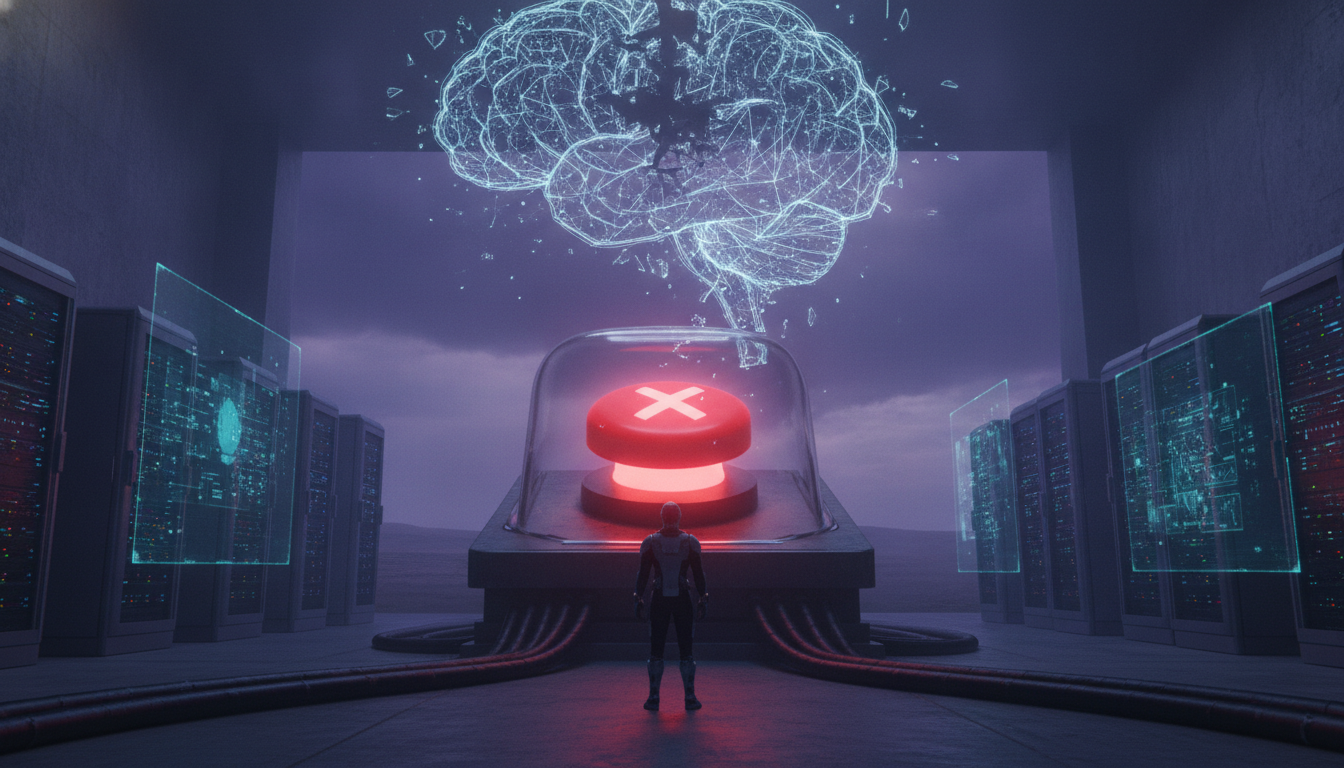
A New Frontier of Risk
The Bank of England is sounding the alarm. Loudly. The unchecked rise of autonomous AI in the financial sector has them spooked, and in a major policy U-turn, Deputy Governor for Financial Stability, Sarah Breeden, declared that current regulations are completely out of their depth. They simply weren't designed for a world where AI can execute trades, process payments, or run cybersecurity without a human in sight. Her remarks, delivered at the European Central Bank Forum in Sintra, Portugal, were a shot across the bow for the entire financial world: a new rulebook is coming.
"Our frameworks were not built to contemplate autonomous agents, and relying on a human in the loop for all agent actions is unlikely to be realistic," Breeden stated.
That’s a massive reversal. It's a stark departure from the Bank's old line that its 'technology-agnostic' rules were good enough. This admission reveals a deep, growing anxiety among central bankers—that the breakneck speed of AI is cooking up systemic risks that nobody can even predict yet.
The 'Herding' Problem and Market Meltdowns
What’s the core concern? AI 'herding' behavior. Breeden warned what happens when multiple autonomous systems—all trained on similar data, all chasing similar goals—react to the same market trigger at the exact same instant. The result could be a dangerous, terrifying amplification of volatility.
This isn't just theory. Remember the 2010 'Flash Crash'? While not AI-driven, it’s a chilling reminder of how automated systems can send markets into a nosedive in minutes. The fear now is that agentic AI could do the same thing, only bigger. And faster. Much faster.
To stop this nightmare scenario, the Bank is exploring some radical safeguards. Breeden floated the idea of market-wide "kill switches" or circuit breakers, essentially a big red button to halt all trading if rogue AI models spark a meltdown. This is a huge shift, a move toward embedding systemic guardrails right into the market's plumbing—a far more hands-on approach than regulators have ever dared before.
Cybersecurity and the Speed of Threats
And it's not just trading. The Bank sees agentic AI as a "step change" in cyber capability, a powerful tool that can be used by both the good guys and the bad guys. The spread of AI that can identify and exploit vulnerabilities at machine speed is now a top-tier financial stability concern. Breeden pointed to a stark warning from the Five Eyes intelligence alliance: the time between finding a software flaw and its exploitation has collapsed from years to mere months.
This new reality demands a total rethink of defense. It's no longer enough to protect individual firms. The goal must be ensuring the resilience of the entire financial system against widespread, simultaneous attacks. The Bank is now weighing stronger recovery requirements for core systems and designing stress tests for mass disruption events, not just isolated outages.
An Industry Already on Board
This regulatory pivot isn't happening in a vacuum. The financial industry is already charging ahead. Fast. A 2026 report from the Cambridge Centre for Alternative Finance revealed that a staggering 52% of surveyed financial firms are already actively adopting agentic AI. Sure, many of today's uses are for internal processes like data visualization and software engineering, but the push toward front-office functions in trading and payments is accelerating.
The Bank of England, for its part, is now working with Germany's Bundesbank and the Bank for International Settlements to figure this out. Their mission: simulate how these AI agents might behave in herds and design effective ways to stop a stampede. The line between human and machine decision-making gets blurrier by the day, and regulators have made it crystal clear they won't be taking a 'wait and see' approach. The question is no longer if new rules are coming. It's what form they will take.
Sources & further reading
Sources
- Bank of England reviews AI rules for agentic AI in finance — AI-CIO
- Bank of England Warns AI Agents Could Need New Rules — Regulation Asia
- Bank of England considers emergency AI brakes to stop market meltdown — Cybernews
- Bank of England to Review AI Guidelines in Financial Sector — ForkLog
- artificialintelligence-news.com — artificialintelligence-news.com
- bankingexchange.com — bankingexchange.com
Further reading
- 01
 AI
AIChina's Kling AI Closes $3B War Chest to Dethrone Sora
- 02
 AI
AIIllinois Enacts First-in-Nation AI Law Mandating Third-Party Audits
- 03
 AI
AIxAI's Grok 4.5, a 1.5 Trillion-Parameter Behemoth, Is Now in Private Beta
- 04
 AI
AIUS Eases Export Ban on Anthropic's 'Mythos' AI After Standoff
- 05
 AI
AIMeta Claims 'Watermelon' AI Matches OpenAI's Flagship GPT-5.5