AI, Machine Learning, Deep Learning, and Generative AI Are Not the Same
It's easy to drown in the alphabet soup of AI. Here's a simple, no-jargon guide to what these buzzwords actually mean and how they all fit together.

Let's Get This Sorted: An AI Terminology Guide
It feels like every conversation is buzzing with the same handful of words. AI. Machine learning. Deep learning. And now, the star of the show, generative AI. They get tossed around like synonyms. They are not. Using them correctly isn't just about sounding smart—it’s about actually understanding the forces reshaping our world. This isn't some dense technical manual. It's a simple guide to help you build a clean mental map, starting with the core concept: machine learning vs deep learning and their place in the bigger AI universe.
Think of it like a set of Russian nesting dolls. Artificial Intelligence (AI) is the biggest doll, the all-encompassing idea. Inside it is Machine Learning (ML). Open that one, and you’ll find Deep Learning (DL). And generative AI? That's a spectacular new trick, a specific *application* powered mostly by those innermost dolls.
Artificial Intelligence (AI): The Big Idea
Artificial intelligence is the big one. It’s the grand, overarching field of computer science dedicated to a single quest: building machines that can perform tasks that typically require human intelligence. Things like reasoning, problem-solving, learning, and seeing the world. When your navigation app picks the fastest route through a traffic jam, that’s AI. When Siri or Alexa gets your command right? AI again. But here's the catch. Not all AI learns from experience. Early AI systems, often called “expert systems,” were just built on a mountain of hand-coded if-then rules. They were intelligent, sure, but they were rigid.
Machine Learning (ML): The System That Learns
This is where things get interesting. Machine learning is a subset of AI where systems aren't explicitly programmed for every scenario. They learn directly from data. Instead of feeding a computer a strict rulebook, you just dump in a huge amount of data and let it figure out the patterns on its own. It’s the difference between telling a kid, “A car has four wheels,” and just showing them a thousand pictures of cars until they can spot one in a crowd. That’s the core of the machine learning vs deep learning distinction right there.
Look at your email’s spam filter. You didn't give it a list of every possible spammy phrase. It was trained on millions upon millions of emails that people had already marked as “spam” or “not spam.” From that, it learned the statistical likelihood that certain words or senders signal junk. Every time you mark an email as spam, you're making it smarter. That's a classic example of what's called supervised learning. You also see it at work in the recommendation engines on Netflix that somehow know what you'll want to watch next and the fraud detection systems flagging a weird charge on your credit card.
Deep Learning (DL): Learning on a Deeper Level
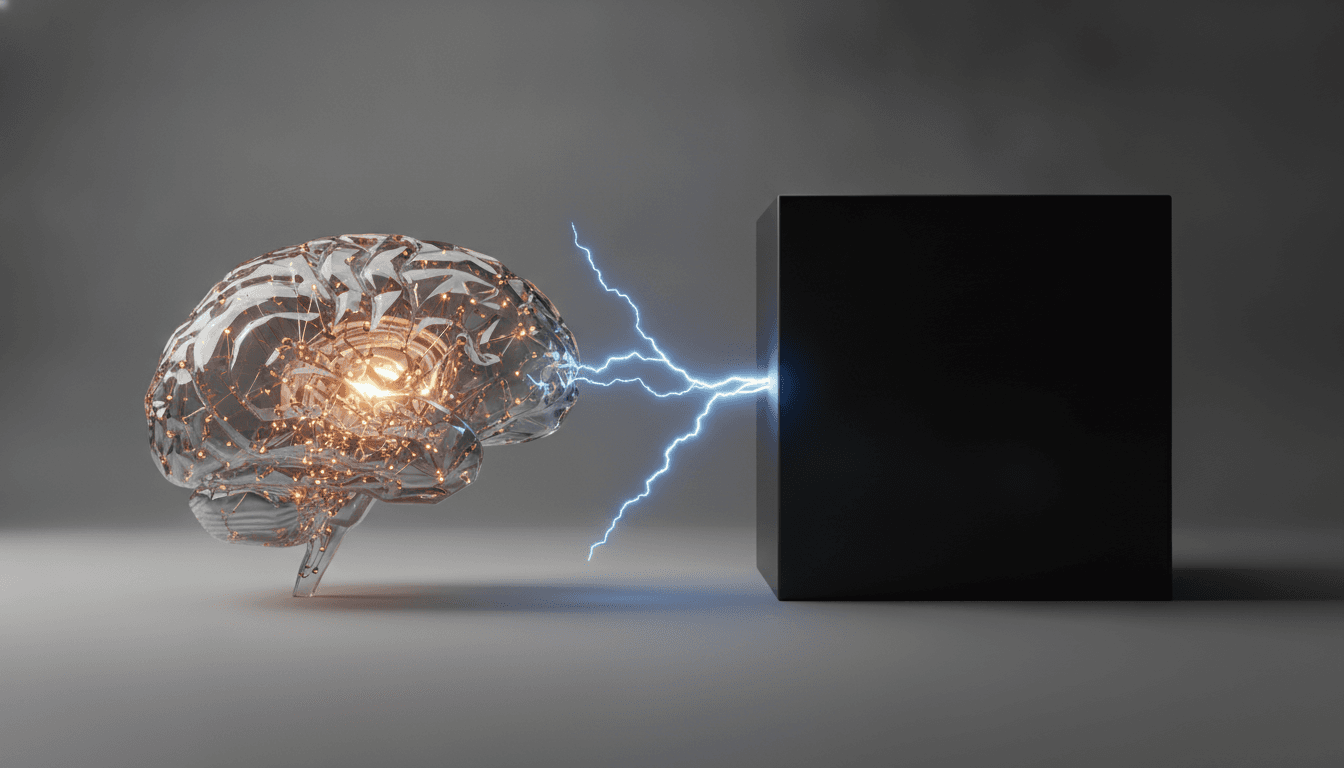
Deep learning is a specialized, and much more powerful, subset of machine learning. The “deep” part isn’t just marketing speak. It refers to the structure of its models: multi-layered artificial neural networks, which are inspired by the tangled wiring of the human brain. If machine learning is showing a child pictures of cars, deep learning is letting them see, touch, and hear thousands of cars to build a richer, more intuitive model of what a 'car' really is. These deep neural networks have layers upon layers, and each one learns to spot progressively more complex features in the data.
Let’s take image recognition. A traditional ML model might need a human to pre-process photos and point out key features—this is an ear, this is a whisker. A deep learning model figures all that out automatically. The first layer of its network might learn to see simple edges and colors. The next layer combines those edges to recognize shapes, like an eye. A layer deeper still puts those shapes together to see a cat's face. This uncanny ability to learn features from massive, raw datasets is what makes deep learning so potent. It's the engine behind self-driving cars recognizing pedestrians and voice assistants transcribing your speech.
But that power comes at a cost. Deep learning models are notoriously hungry. They require immense amounts of data and staggering amounts of computing power, often leaning on specialized hardware like the GPUs that companies like Nvidia are famous for.
Generative AI: The Creator
So, where does the hottest term in tech fit in? Generative AI explained is surprisingly simple: it's a type of AI that can create brand-new, original content. It doesn't just analyze data; it *generates* something novel from the patterns it has learned. It's no surprise that today’s most powerful generative systems—like the models behind ChatGPT or image creators like Midjourney—are all built using deep learning techniques, especially an architecture called the transformer.
The difference is stark. Machine learning predicts if an email is spam. Generative AI writes a brand new email from scratch. Deep learning can identify a cat in your photo library. Generative AI can conjure a photorealistic image of a cat that has never existed. It composes music. It writes computer code. It’s a creator.
This technology is rapidly being plugged into everything from enterprise software, like Salesforce's Einstein GPT, to consumer apps. It’s the application that sits atop the pyramid, built on the solid foundations of machine learning and, specifically, deep learning. And its most advanced forms, often called frontier AI, are pushing the boundaries of what's possible, a topic we've covered in pieces like Frontier AI's Wild June.
Why the Vocabulary Matters
Knowing this AI terminology isn't just academic. It's your best defense against hype. When a company announces an “AI-powered” feature, you can now ask the right questions. Is it really AI, or just a bunch of rules? Is it using machine learning to make smarter predictions from your data? Is it a deep learning model that understands complex information like voice? Or is it using generative AI to create something entirely new? This is more than an AI basics explained piece; it’s a framework for critical thinking. As these tools become woven into our lives, knowing what’s actually under the hood is the first step toward using them wisely. And as we've covered in The Hidden Costs of AI, understanding the tech is crucial to navigating its real-world impact.
Related Articles


This article was produced with AI assistance under human direction, and reviewed and fact-checked by a named editor before publication. How we work.
Frequently asked questions
- What is the main difference between AI and machine learning?
- Artificial Intelligence (AI) is the broad science of creating machines that can perform human-like tasks. Machine learning (ML) is a specific subset of AI where systems learn from data to find patterns and make predictions without being explicitly programmed. Think of AI as the entire field, and ML as a powerful technique within that field.
- How is deep learning different from machine learning?
- Deep learning is a specialized subfield of machine learning. While traditional machine learning often requires humans to help define features in the data, deep learning uses complex, multi-layered neural networks to learn these features automatically. This makes it particularly effective for complex tasks with unstructured data like images, audio, and natural language.
- Is generative AI a type of machine learning?
- Yes, generative AI is an application that is typically powered by deep learning models, which are themselves a type of machine learning. While most machine learning is used to classify or predict outcomes based on data, generative AI uses its learned patterns to create entirely new content, such as text, images, or code, in response to a prompt.
- Can you give a simple analogy for AI, machine learning, and deep learning?
- Imagine a set of Russian nesting dolls. AI is the largest, outermost doll representing the entire concept of intelligent machines. Inside it is machine learning, the doll that learns from examples. Inside that is deep learning, a smaller, more complex doll that uses brain-like networks to learn more intuitively. Generative AI isn't another doll, but a special ability of the inner dolls to create new things.