Microsoft's MAI Models: It's Complicated with OpenAI
Microsoft just rolled out its own seven-model 'MAI' family at Build 2026. This isn't just another product—it's a dramatic, aggressive pivot from its deep reliance on OpenAI to own the entire AI stack.
 AI Tech Dialogue Editorial Team6 min read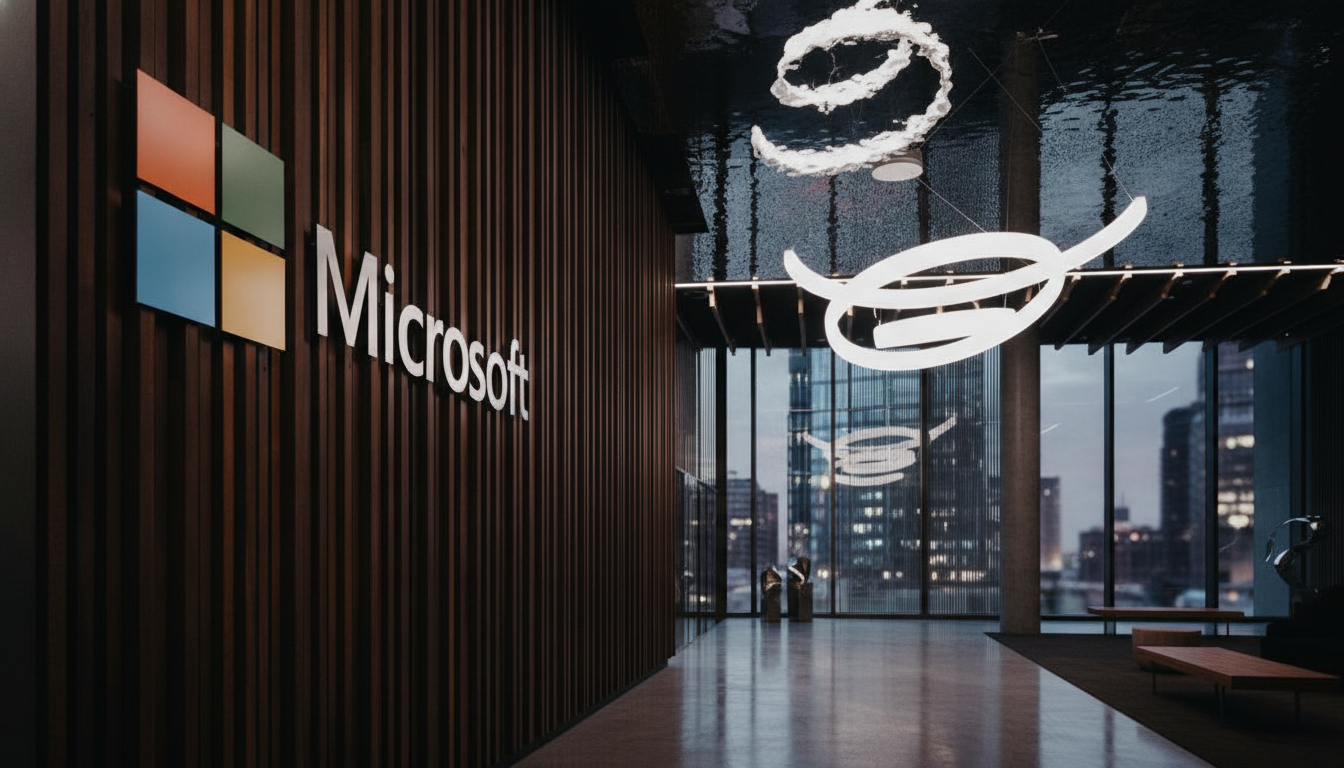
The Breakup Everyone Saw Coming
The open relationship is over. At its annual Build conference on June 2, 2026, Microsoft pulled the wraps off 'MAI,' a new family of seven proprietary AI models. This is the company's most decisive step yet toward what executives are calling “long-term self-sufficiency.”
Don't call it a product launch. It's a strategic declaration.
For years, Microsoft was OpenAI's biggest backer and its main pipeline into the enterprise. So deep was the partnership that many people saw them as a single entity. That era is done. Microsoft isn't content to just resell someone else's magic anymore. It wants to be the source.
The announcement, captained by Microsoft AI CEO Mustafa Suleyman, laid out a full spectrum of in-house models. They're designed to handle everything. Complex reasoning. Coding help. Image generation. This move puts Microsoft in direct competition not just with its partner OpenAI, but with pretty much every other major player in the AI game. The message is brutally clear: depending on an outside lab for your core tech is a vulnerability you can no longer afford.
Meet the MAI Family
One model to rule them all? Not anymore. Microsoft is rolling out a tiered family of models, each tuned for different jobs—which is the standard industry playbook now, of course. The lineup is a direct shot at the workloads currently owned by models from OpenAI, Anthropic, and Google.
- MAI-Thinking-1: This is the headline act. Microsoft's first homegrown reasoning model is a sparse Mixture-of-Experts (MoE) beast with roughly 35 billion active parameters and a massive 256,000-token context window for chewing on complex, multi-step tasks. And Microsoft is hammering one point home: it was trained from scratch on clean, commercially licensed data. No 'distillation' or imitation of third-party models like GPT-4. For enterprise customers terrified of data provenance lawsuits? That’s a powerful sales pitch. Microsoft claims it matches Anthropic's powerful Claude 4.6 Opus on software engineering tasks and even beat Sonnet 4.6 in blind human evaluations.
- MAI-Code-1-Flash: Here's the speed demon for developers. A lightweight, efficient model built specifically for coding, it's already being wired into GitHub Copilot and Visual Studio Code. The company claims it solves tough coding problems with up to 60% fewer tokens than its peers. Cheaper and faster for the daily grind.
- A Full Multimodal Suite: The family tree branches out from there. It includes MAI-Image-2.5 for text-to-image and editing, MAI-Transcribe-1.5 for speech-to-text, and MAI-Voice-2 for natural speech generation. Naturally, each one has a zippier 'Flash' variant.
Why Build When You Can Buy?
Control. And money. Think about it. Every time a user touches an OpenAI-powered feature inside a Microsoft product, a check gets written. Across Windows, Microsoft 365, and Azure, those costs are astronomical. Building your own models is a massive upfront investment, sure, but it gives Microsoft total dominion over cost, performance, security, and how deeply it can integrate its AI stack. It’s the difference between being a tenant and owning the building.
Wells Fargo analysts called the launch a major step toward “reducing third-party reliance/margin unlocks.” But the strategy isn't just about saving cash. It's about owning the entire platform, from the custom silicon humming in Azure data centers all the way to the AI agents running on your desktop. One analyst said it best: Microsoft is shifting from an enterprise AI platform provider to an enterprise AI infrastructure builder.
Look, this didn't happen overnight. Rumors of Microsoft building its own models to compete with its partners have been swirling for more than a year. Back in April 2026, the company tweaked its agreement with OpenAI, making its license non-exclusive and letting OpenAI serve its models through other clouds. The writing was on the wall.
The Road Ahead
So, is Microsoft kicking OpenAI to the curb? Not yet, anyway. OpenAI’s models are still on Azure, and Microsoft is still a major shareholder.
But the power dynamic has shifted. Irrevocably.
Microsoft is now both partner and predator. And it’s playing offense. The MAI models will pop up not just on Azure AI Foundry but on third-party platforms like OpenRouter and Fireworks AI. That’s a clear signal Microsoft wants its models to fight it out in the open market.
The early reviews are mixed. Some testers find the models work just fine, but they aren't blowing away top contenders like Claude and Gemini. But outperforming rivals on day one might not have been the point. The real story here is the creation of what Microsoft calls its "Hill-Climbing Machine"—an internal, repeatable system for rapidly and reliably getting better. By owning the whole pipeline, Microsoft is betting it can out-iterate everyone else for the long haul. As Satya Nadella put it at Build: “The time has come for every company to move from consuming a frontier model to fully participating at the frontier.” With the MAI family, Microsoft is finally taking its own advice.
Sources & further reading
Sources
- Biggest AI Developments June 2026 — Essential Breakthroughs — AI Foresight 360
- June 2026 AI Releases: NVIDIA, Anthropic, Microsoft, OpenAI — ThursdAI
- Top AI launches of June 2026 (Dev tools & AI models) — Reddit
- enterprisedna.co — enterprisedna.co
- medium.com — medium.com
Further reading
- 01
 AI
AIChina's Kling AI Closes $3B War Chest to Dethrone Sora
- 02
 AI
AIIllinois Enacts First-in-Nation AI Law Mandating Third-Party Audits
- 03
 AI
AIxAI's Grok 4.5, a 1.5 Trillion-Parameter Behemoth, Is Now in Private Beta
- 04
 AI
AIUS Eases Export Ban on Anthropic's 'Mythos' AI After Standoff
- 05
 AI
AIMeta Claims 'Watermelon' AI Matches OpenAI's Flagship GPT-5.5