The Subscription Economy Explained: Why Everything Became a Monthly Fee
From movies to meal kits, the recurring monthly fee has conquered commerce. It's a fundamental reshaping of how businesses operate—and how we spend our money.

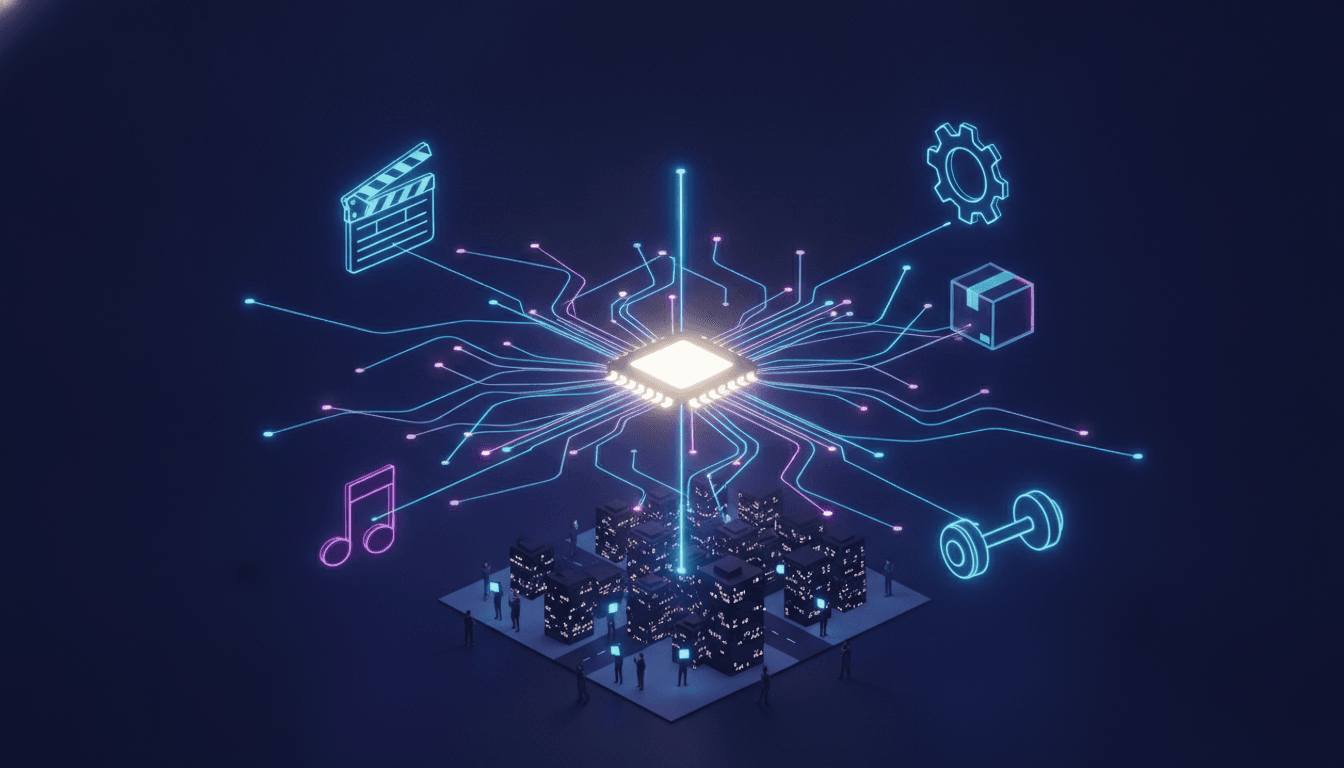
That monthly bill on your credit card statement isn't just a trend. It's the engine of a massive economic shift. What started with book publishers back in the 17th century has exploded into the dominant subscription business model of our time. It's everywhere. Your streaming services, the software running global corporations, even your morning coffee beans. This isn't just a new way to pay; it's a total re-evaluation of value for both companies and customers. And for many of us, it comes with a growing sense of financial whiplash.
The numbers are staggering. The global subscription economy hit an estimated $492.34 billion in 2024. Projections? They're soaring to $1.5 trillion by 2025, according to UBS Wealth Management. Marketing LTB puts that figure even higher, at a potential $2.1 trillion. Companies built on this model have seen revenues grow five times faster than S&P 500 companies over the last decade. North America is the epicenter, capturing over 45% of the global market this year. This wasn't an accident. It’s a strategy, fueled by a powerful business logic that prizes stable cash flow and stickier customer relationships.
The Allure of Recurring Revenue: Why Businesses Switched
For businesses, the appeal is intoxicatingly simple. Predictability. Gone are the feast-or-famine sales cycles that gave CEOs ulcers. A subscription model delivers a steady, reliable stream of income. That makes financial forecasting, budgeting, and managing cash flow immeasurably easier. Investors love it, too—they often value subscription-based companies at higher multiples because the risk is lower and the returns are so consistent.
Think about the difference. A traditional software company sells you a license once and then just hopes you'll come back for an upgrade years later. A Software-as-a-Service (SaaS) provider like Adobe or Microsoft 365? They get your monthly or annual payment locked in, ensuring a continuous stream of cash to fund their next big idea. This lets them reinvest constantly, pushing out updates and new features that keep you hooked without asking for another huge one-time purchase.
It's about more than just the balance sheet. Subscriptions are a powerful tool for building loyalty. When a customer commits to a recurring payment, they simply stick around longer, which skyrockets their lifetime value (CLV). And everyone knows that keeping a customer you already have is vastly cheaper than finding a new one. This isn't about trapping people. It's about building an ongoing relationship where a company has to prove its worth month after month. As an article on Bizee puts it, “Loyalty in this model isn't built through points programs — it's built through service performance and positive experience repeated over time.”
Then there's the data. It's a golden ticket. Companies gain incredible insight into what you like, how you use their service, and what you might want next. This firehose of data allows for hyper-personalization, tailoring the service so perfectly to your tastes that it feels indispensable. Think Netflix's recommendation engine or a curated Birchbox that feels like it was packed just for you. This feedback loop ensures the product evolves right alongside its users.
The media industry is the perfect case study. We stopped buying albums and movies. Now, we subscribe to Spotify and Netflix for a flat monthly fee that unlocks a massive content library. Even buttoned-up sectors are getting in on the action. Financial services, for example, now routinely use recurring payment structures for everything from budgeting apps to investment platforms.
The Consumer's Calculus: Convenience, Cost, and Commitment
What’s the hook for consumers? Convenience. Subscriptions offer instant access with a low barrier to entry—often a free trial or a cheap first month. It simplifies life. No more remembering to re-order razors or comparing prices on software. People love the ease of "set it and forget it" payments, knowing the latest show or a fresh bag of coffee will just... appear.
But that convenience has a price. The services pile up. Rocket Money found that the average American household spends around $219 a month on subscriptions. Another report puts it even higher, at $273 per month. Here's the catch: a C+R Research survey discovered that 74% of us underestimate what we're actually spending, often by a huge margin. Worse, a shocking 42% of consumers are still paying for subscriptions they forgot they even had.
This slow creep of recurring charges completely changes a household's finances, turning what used to be discretionary purchases into fixed costs and crushing budget flexibility. Psychologically, it's easy to fall for the "sunk cost fallacy"—that feeling that you have to use a service more to justify the money you've already spent, whether you're getting real value or not. In this new world, loyalty isn't an emotional bond. It's a cold, hard calculation. Every single billing cycle is a referendum on whether the service is still worth the cost.
Navigating the Swell: The Rise of Subscription Fatigue
With subscriptions taking over every corner of our lives, the backlash was inevitable. Enter subscription fatigue. It’s that feeling of being completely overwhelmed by the sheer number of services demanding a monthly fee and the headache of trying to manage them all. A Deloitte survey confirmed that nearly half of US consumers feel buried by their options, while Marketing LTB reported that 41% of consumers are actively feeling the burn.
The causes are obvious. Option overload. A feeling that you're not getting enough value. Repetitive content. And the simple, infuriating complexity of tracking a dozen different accounts. When subscribers get disenchanted, they cancel. This churn is a huge problem for these businesses, with industry averages hovering around 5.3% monthly—and much higher for things like subscription boxes. Startups, listen up: you have to validate your model fast, or you'll become just another churn statistic. (How to Test a Startup Idea Before It Kills Your Paycheck)
And regulators are watching. They’re cracking down on "dark patterns"—those sneaky design tricks that make it a nightmare to cancel a subscription. The Federal Trade Commission (FTC) has already gone after big names like Uber and Amazon for these tactics. The message is clear: customers demand transparency and an easy way out. Any business that makes it hard to pause or cancel is asking for trouble.
To survive, companies have to fight fatigue by delivering relentless, personalized value. That means constant innovation, great customer service, and crystal-clear billing. Some, like Oura and WHOOP, have a clever model where you buy the hardware and then pay an ongoing fee to unlock its full power—a very sticky ecosystem. But even then, the total value has to justify the total cost. The subscription economy is here to stay, but it demands constant work. As consumers get smarter, the only companies that will thrive are the ones that truly earn that recurring payment, month after month. (Your Unseen Digital Footprint: The Secret Life of Your Data)
Related Articles



This article was produced with AI assistance under human direction, and reviewed and fact-checked by a named editor before publication. How we work.
Frequently asked questions
- What is the subscription economy?
- The subscription economy is a business model where customers pay a recurring price at regular intervals for access to a product or service, rather than making a one-time purchase. This model fosters ongoing customer relationships, providing businesses with predictable revenue streams and opportunities for continuous engagement and personalization across various industries like software, media, and physical goods.
- Why did businesses shift to a subscription model?
- Businesses shifted to subscriptions primarily for predictable, recurring revenue, which stabilizes cash flow and simplifies financial forecasting. This model also enhances customer loyalty and retention, leading to higher customer lifetime value. It provides valuable data for personalization and enables continuous product improvement, making companies more attractive to investors and fostering sustainable growth.
- What is subscription fatigue for consumers?
- Subscription fatigue is the feeling of being overwhelmed and frustrated by the increasing number of subscription services available and the burden of managing multiple monthly fees. Consumers often experience it due to option overload, a perceived lack of sufficient value from some services, or difficulty tracking their cumulative spending, leading to disengagement and cancellations.
- How much do consumers spend on subscriptions monthly?
- The average American household spends approximately $219 to $273 monthly on various digital and physical subscriptions. A significant portion of consumers, around 74%, tend to underestimate their actual spending on these services, and about 42% admit to paying for subscriptions they no longer actively use.
- How can businesses combat subscription fatigue?
- Businesses can combat subscription fatigue by consistently delivering high, personalized value, offering flexible subscription options (like pausing or easy cancellation), and maintaining transparent billing practices. Proactive customer service and continuous innovation, ensuring the service evolves with customer needs, are crucial to retaining subscribers in a competitive market.
Sources & further reading
Sources
- medium.com — medium.com
- wikipedia.org — en.wikipedia.org
- allpurposeguru.com — allpurposeguru.com
- nector.io — nector.io
- marketingltb.com — marketingltb.com
- nami.ml — nami.ml