Thales Swallows Exail in €3.9B Deal to Forge Naval Tech Giant
The French defense giant is snapping up autonomous systems specialist Exail, forging a new powerhouse set to dominate the multi-billion-dollar market for underwater warfare.
 AI Tech Dialogue Editorial Team6 min read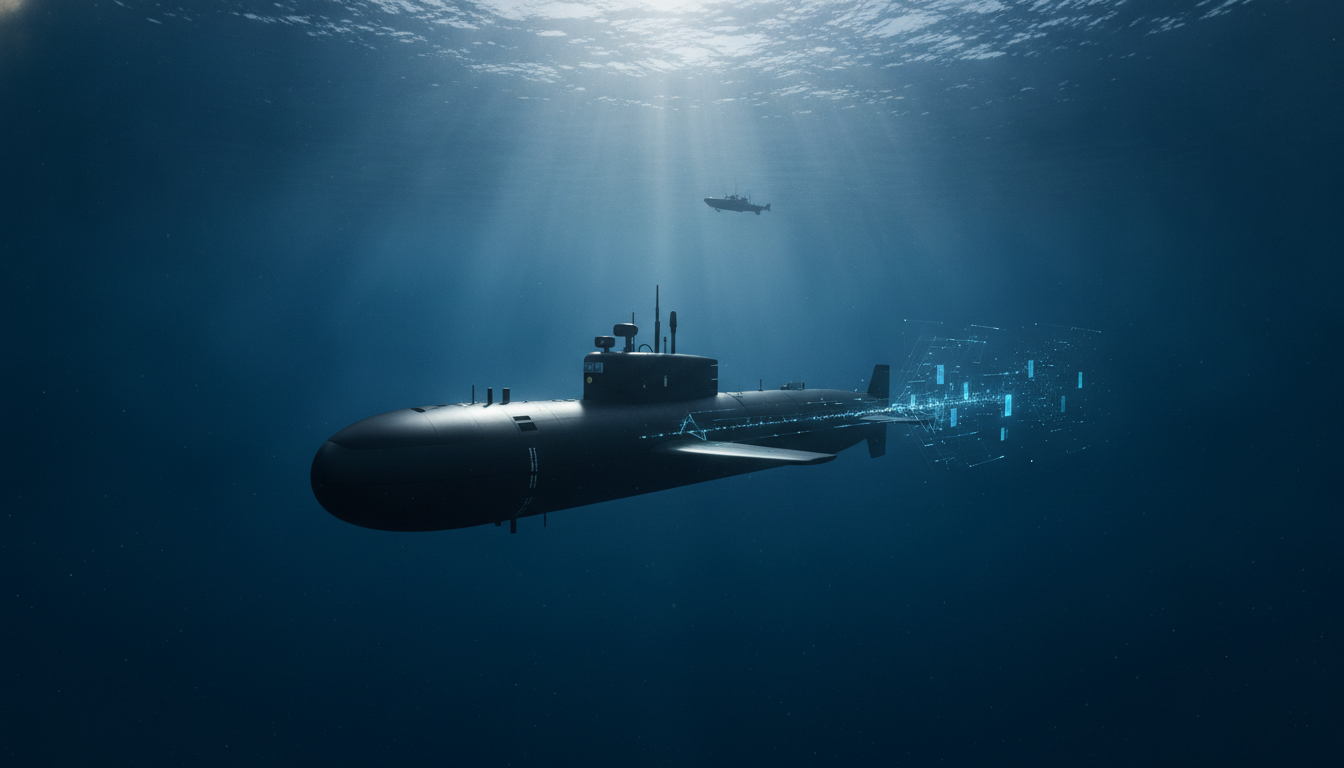
A New Powerhouse in Naval Technology
Thales is making a huge play for the future of naval warfare. In a move that redraws the industry map, the French defense and tech group announced a landmark agreement to acquire Exail Technologies. It's a monster deal. The Thales Exail acquisition puts a €3.9 billion enterprise value (€2.19 billion in equity) on the maritime robotics specialist, instantly forging a new European champion in the critical underwater domain. This isn't just another acquisition; it's a major consolidation that arms Thales with a formidable portfolio of unmanned underwater vehicles and next-gen navigation systems.
So, how will it work? In two steps. Thales will first buy the combined 35.51% stake held by Exail's founding Gorgé family for €134.00 per share. That first buy-in comes at a steep 44% premium over Exail's unaffected share price from June 25, 2026—a move that then triggers a mandatory tender offer for 100% of the company's shares at the same price. This all came together just days after rival French firm Safran backed out of its own talks with Exail, clearing the runway for Thales's bid. The whole thing, assuming regulators sign off, should be a done deal by early 2028.
The Strategic Play: Why Exail is a Critical Target
What makes Exail such a prize? The company, born from the 2022 merger of ECA Group and iXblue, is a leader in high-tech, dual-use gear. It's the top European player in maritime robotics for mine countermeasures. It's also number two globally for naval inertial navigation systems. Think autonomous underwater vehicles (AUVs), unmanned surface vessels (USVs), and hyper-accurate navigation sensors. This is precisely the hardware that will define the next generation of naval ops.
And for Thales, this isn't just about getting bigger. It's a fusion of perfectly complementary strengths. Thales already has deep know-how in sonar, electronic warfare, and integrated combat systems. What it lacked was Exail's laser focus on the autonomous platforms that are rapidly becoming non-negotiable. The combination means Thales can now offer the whole package—from a single sensor to a complete unmanned system tackling complex missions like anti-submarine warfare or seabed mapping. This kind of integration is exactly what customers are now demanding. For a look at how these massive deals come together, it’s worth understanding the M&A process detailed in What Really Happens During a Company Merger? An M&A Process Explained Simply.
The deal also creates a giant in inertial navigation. Thales mostly uses Ring-Laser Gyroscope technology; Exail is the specialist in Fiber-Optic Gyroscopes. Putting these two leading, ITAR-free European technologies under one roof? That covers the entire spectrum of high-performance navigation for clients in over 80 countries.
Unlocking a €500 Million Revenue Opportunity
Thales is talking big numbers. Really big. The company expects the deal to generate an extra €500 million in revenue within 10 years from commercial synergies alone. The plan? Use Thales's massive global sales network to push Exail's advanced systems to a much wider audience. But the synergies aren't just about sales. Thales is also targeting over €90 million in run-rate revenue and cost savings by 2032.
In a July 6, 2026, statement, Thales Chairman and CEO Patrice Caine laid out the vision. “With this acquisition, Thales and Exail plan to join forces,” he said. “Together, thanks to our talents and capabilities, we will strengthen our high-technology industrial base and innovation for our world-class defence and civil customers, while reinforcing Europe's technological sovereignty.” Exail Chairman and CEO Raphaël Gorgé echoed that, noting that joining Thales would give his teams an “enhanced ability to develop leading sovereign and dual-use technologies for a growing client base globally.”
This is just the latest major move in a tech and defense sector scrambling for a competitive edge. We saw a similar logic when Nemetschek sealed its HCSS deal to create a construction AI powerhouse, proving the trend toward snapping up key innovators is here to stay.
Riding the Wave of Autonomous Maritime Defense
The timing on this Thales Exail acquisition couldn't be better. Why? Because the autonomous maritime market is exploding. Escalating geopolitical tensions and the urgent need for persistent surveillance without risking human lives are fueling soaring demand for unmanned naval systems. One recent analysis valued the global autonomous naval vessel market at $1.65 billion in 2024, projecting it to grow at a compound annual growth rate (CAGR) of 9.6% through 2034. Another report, zeroing in on the defense sector, is even more bullish. It sees the market jumping from $3.8 billion in 2025 to a staggering $12.1 billion by 2034, a 14.5% CAGR.
This market is long past the small-scale experiment phase. We're talking about the deployment of fully networked fleets of unmanned vessels essential for everything from hunting mines and submarines to gathering intelligence and protecting critical infrastructure. By grabbing Exail, Thales isn't just buying another company. It's securing a leadership position in a market that will define naval power for decades. The fusion of Thales's systems integration muscle with Exail's robotics brilliance creates a formidable competitor, perfectly poised to deliver the sophisticated, autonomous solutions modern navies desperately need.
Frequently asked questions
- What is the total value of the Thales Exail acquisition?
- The Thales Exail acquisition is based on an enterprise value of €3.9 billion. Thales will acquire the Gorgé family's initial 35.51% stake at a price of €134.00 per share, which will be followed by a mandatory tender offer for all remaining shares at the same price.
- Why is Thales acquiring Exail Technologies?
- Thales is acquiring Exail to significantly increase its scale and capabilities in the underwater warfare and naval inertial navigation markets. Exail's expertise in autonomous maritime drones and robotics complements Thales's existing portfolio of sensors and combat systems, allowing the combined company to offer fully integrated solutions.
- What key technologies does Exail specialize in?
- Exail Technologies is a high-tech industrial group specializing in autonomous robotics, advanced navigation, and photonics. Its key products include autonomous underwater vehicles (AUVs), unmanned surface vessels (USVs), and high-performance inertial navigation systems based on Fiber-Optic Gyroscope technology.
- What are the expected financial benefits of the Thales-Exail deal?
- Thales anticipates significant financial benefits, targeting an additional €500 million in revenue within 10 years from commercial synergies. The company also projects achieving over €90 million in combined run-rate revenue and cost synergies by 2032, with the deal expected to be accretive to earnings per share in the first year.
Sources & further reading
Sources
- Proposed acquisition of Exail - presentation — Thales
- Safran Moves to Acquire Exail Technologies in €2.19 Billion Deal — Intellizence
- binance.com — binance.com
- investing.com — investing.com
- marketscreener.com — marketscreener.com
Further reading
- 01
 Business
AI Gold Rush: VC Investment Shatters Records at $392 Billion
- 02
 Business
Microsoft's AI Gambit: 4,800 Jobs Cut in Massive Restructuring
- 03
 Business
The Bottom Line: Why Keeping Customers Beats Chasing New Ones
- 04
 Business
Microsoft Bets $2.5B on Frontier, Its New Enterprise AI Unit
- 05
 Business
Zoom Acquires Common Room to Unify Sales Intelligence