China's Moonshot AI Unleashes Kimi K3, a 2.8T Behemoth and the World's New Largest Open-Source Model
It's a direct challenge to Western AI. Beijing's Moonshot AI just unleashed Kimi K3, a colossal 2.8-trillion-parameter model that now stands as the largest open-source AI in the world.
 AI Tech Dialogue Editorial Team6 min read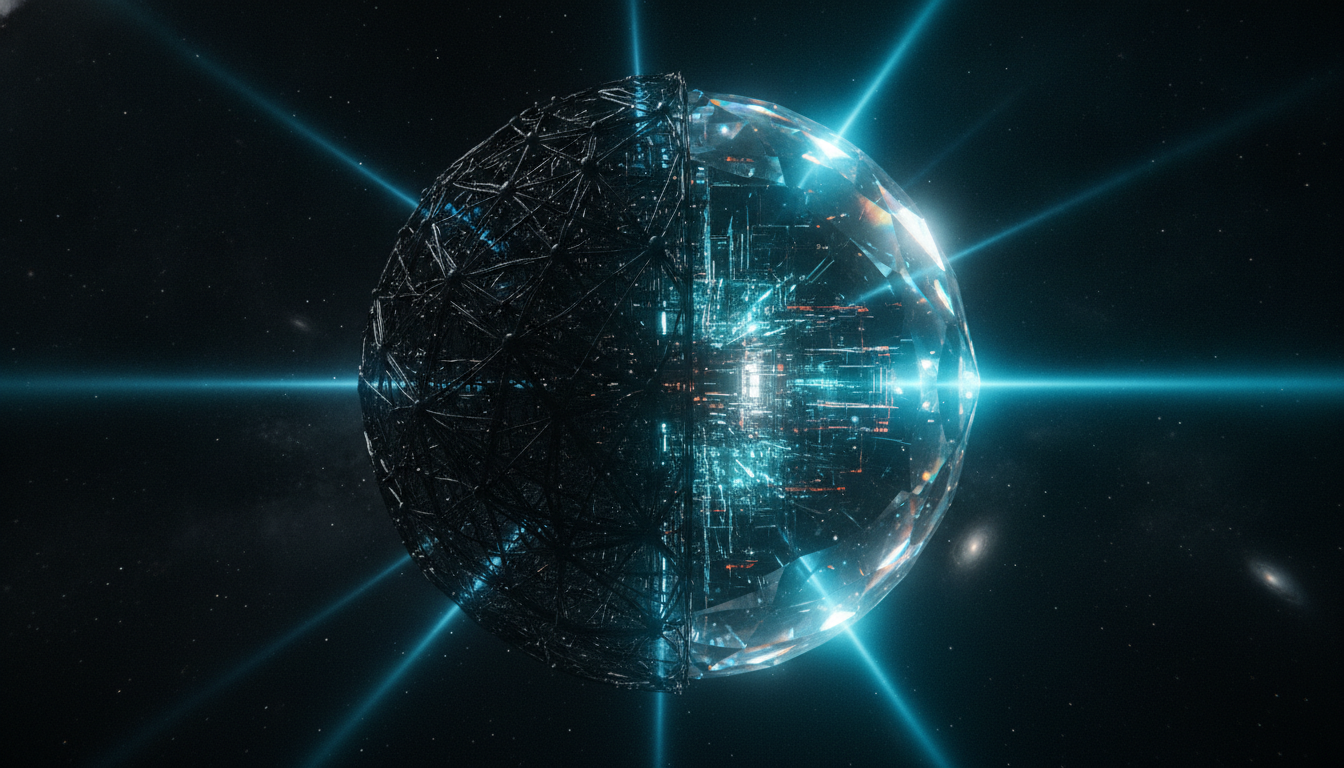
A New Titan Has Entered the Arena
The global AI race just hit a new gear. A high one. Beijing-based Moonshot AI has released Kimi K3, a staggering 2.8-trillion-parameter model that now absolutely dwarfs every other open-source artificial intelligence on the planet. This wasn't a quiet launch; announced on July 16, 2026, it's a direct shot across the bow, putting a Chinese firm squarely at the bleeding edge of AI development and kicking off a new era for the open-source community. The full model weights drop July 27.
Moonshot AI has moved with astonishing speed. Founded in just March 2023 by Yang Zhilin, a Tsinghua University grad and ex-Googler, the company (known as Yuezhi Anmian in China) isn't just flexing its muscles with Kimi K3's size. This is a strategic play. It's about reclaiming leadership after competitor DeepSeek challenged its market position back in 2025. What a comeback, backed by roughly $1.5 billion in funding from giants like Alibaba.
What Can a 2.8 Trillion Parameter Model Actually Do?
So what can a 2.8 trillion-parameter model actually do? The numbers are just formidable. Its 2.8 trillion parameters—think of them as the internal variables it uses to process information—dwarf the competition. One executive even compared them to neural connections, allowing the model to "store more knowledge... think deeper, and answer more accurately." Kimi K3 also boasts native multimodal capabilities, so it understands text, images, and video from the ground up, not as some tacked-on feature. But the real headline grabber? Its massive 1-million-token context window.
That colossal context window is a big deal. It lets the model process and remember information from huge documents, entire codebases, or rambling conversations without dropping the thread. But how is that even practical? Moonshot built proprietary architecture to pull it off, including something called Kimi Delta Attention—a slick mechanism that makes decoding up to 6.3 times faster in these long-context situations. The takeaway is simple: Kimi K3 isn't just a giant. It's an agile one, built for the really hard stuff like advanced software engineering and deep knowledge work.
The benchmarks tell a striking story. Kimi K3 performs right up there with the top-tier proprietary systems from giants like OpenAI and Anthropic on tests measuring real-world task automation and coding. It's not an exaggeration. According to analytics firm Artificial Analysis, K3 scored 1,687 on the GDPval-AA v2 benchmark, nipping at the heels of Anthropic's Claude Fable 5 Max and OpenAI's GPT-5.6 Sol Max. And in some coding arenas, like Frontend Code Arena? It actually took the top spot.
The Open-Source Gambit Changes the Game
Releasing Kimi K3's weights is a bombshell. Suddenly, developers, researchers, and smaller companies worldwide have unprecedented access to a true frontier-level model, a gift from Moonshot AI. This is a watershed moment for the open-source movement, which has often felt like it's playing catch-up, lagging months or years behind the capabilities of closed systems. Not anymore. This provides a powerful foundation for others to build upon and could accelerate innovation across the industry. Want to leverage it? Understanding how to fine-tune an AI model will be critical.
This decision also carries serious geopolitical weight. Of course it does. With the U.S. government tightening restrictions on tech exports, China has gone all-in on building its own independent AI ecosystem. We're talking everything from AI-native hardware to foundational models. The rise of Kimi K3 is the clearest sign yet that these efforts are bearing fruit, creating a powerful new pole in the world of AI development. It's the same push for self-reliance driving other Chinese firms to build custom processors and escape Nvidia's orbit.
A New Front in the AI Wars
Moonshot's strategy is aggressive. No question. The free version is already live on their site, but look at the API pricing: $3 per million input tokens and $15 per million output tokens. That pricing is competitive, sure, but it's also aligned with Western standards—a clear signal that Moonshot believes it can compete on pure quality, not just on cost. This is a direct challenge to the business models of its American rivals.
Kimi K3's release puts immediate, intense pressure on the industry's incumbents. For years, the biggest and best models were kept under lock and key, available only through an API. Moonshot just shattered that precedent. This forces a real conversation about where AI development goes from here. Will the most powerful systems stay proprietary, or will open source keep closing the gap? It's a classic disruptor story, not unlike the ongoing battle between Perplexity vs. Google in AI search.
So, how will the rest of the industry respond? That's the big question. A 2.8-trillion-parameter open-source model is now in the wild, which means the technological barrier to entry for building top-tier AI has just been lowered. Dramatically. The race for artificial general intelligence just got a whole lot more interesting.
Frequently asked questions
- What is Kimi K3?
- Kimi K3 is a 2.8-trillion-parameter large language model developed by the Beijing-based company Moonshot AI. Released in July 2026, it is the world's largest open-source AI model, featuring a 1-million-token context window and native multimodal capabilities for understanding text, images, and video.
- How does Kimi K3 compare to GPT-4o or Claude 3.5?
- On several key industry benchmarks, Kimi K3 demonstrates performance comparable to top-tier proprietary models like OpenAI's GPT-5.6 and Anthropic's Claude Fable 5. It has shown state-of-the-art results in specific areas like frontend coding benchmarks, though some initial reviews note a gap in overall user experience compared to the most polished closed-source models.
- Is Kimi K3 truly open-source?
- Yes, Moonshot AI has committed to releasing the full model weights for Kimi K3 by July 27, 2026. This will make the entire 2.8-trillion-parameter model accessible to the public, allowing researchers and developers worldwide to study, modify, and build upon it, a significant event for the open-source AI community.
- Who is behind Moonshot AI?
- Moonshot AI was founded in March 2023 by Yang Zhilin, a graduate of Tsinghua University with previous research experience at Google. The company, known as Yuezhi Anmian in China, has quickly become one of the country's most prominent AI startups, securing significant funding from investors like Alibaba to compete in the global AI race.
- What is a 1-million-token context window?
- A context window refers to the amount of information an AI model can consider at one time. Kimi K3's 1-million-token context window is exceptionally large, allowing it to process and analyze the equivalent of thousands of pages of text or entire codebases in a single prompt. This is crucial for complex tasks that require understanding extensive background information.
Sources & further reading
Sources
- China's Moonshot AI releases Kimi K3, the largest open-source model ever, rivaling top U.S. systems — VentureBeat
- Kimi K3 Max Is Here: Moonshot's 2.8-Trillion-Parameter Flagship Just Changed the Frontier Conversation — Medium
- Moonshot AI launches Kimi K3 — Constellation Research
- Kimi (chatbot) - Wikipedia — Wikipedia
Further reading
- 01
 AI
AIEmbodied AI Unleashes Robots With Human-Like Dexterity and Control
- 02
 AI
AIOpenAI Unleashes GPT-5.6, But the Real Story Is an AI That Does Your Job
- 03
 AI
AIChina's DeepSeek Forges Its Own AI Chip to Escape Nvidia's Orbit
- 04
 AI
AIMeta's Muse Spark 1.1 Is Here to Power AI Agents—And This Time, You're Paying
- 05
 AI
AIGoogle Cloud's AlphaEvolve Is Here to Invent New Algorithms