How to Use AI to Write a Resume That Actually Gets Interviews
Stop letting AI ghostwrite your resume. Here's a practical guide on using it as a powerful assistant—to tighten, tailor, and proofread your way past the bots and into the interview pile. Because recruiters can spot the fakes a mile away.
 Salman Oukati Sadegh6 min read
The AI Gauntlet: Your Job Hunt's New Gatekeeper
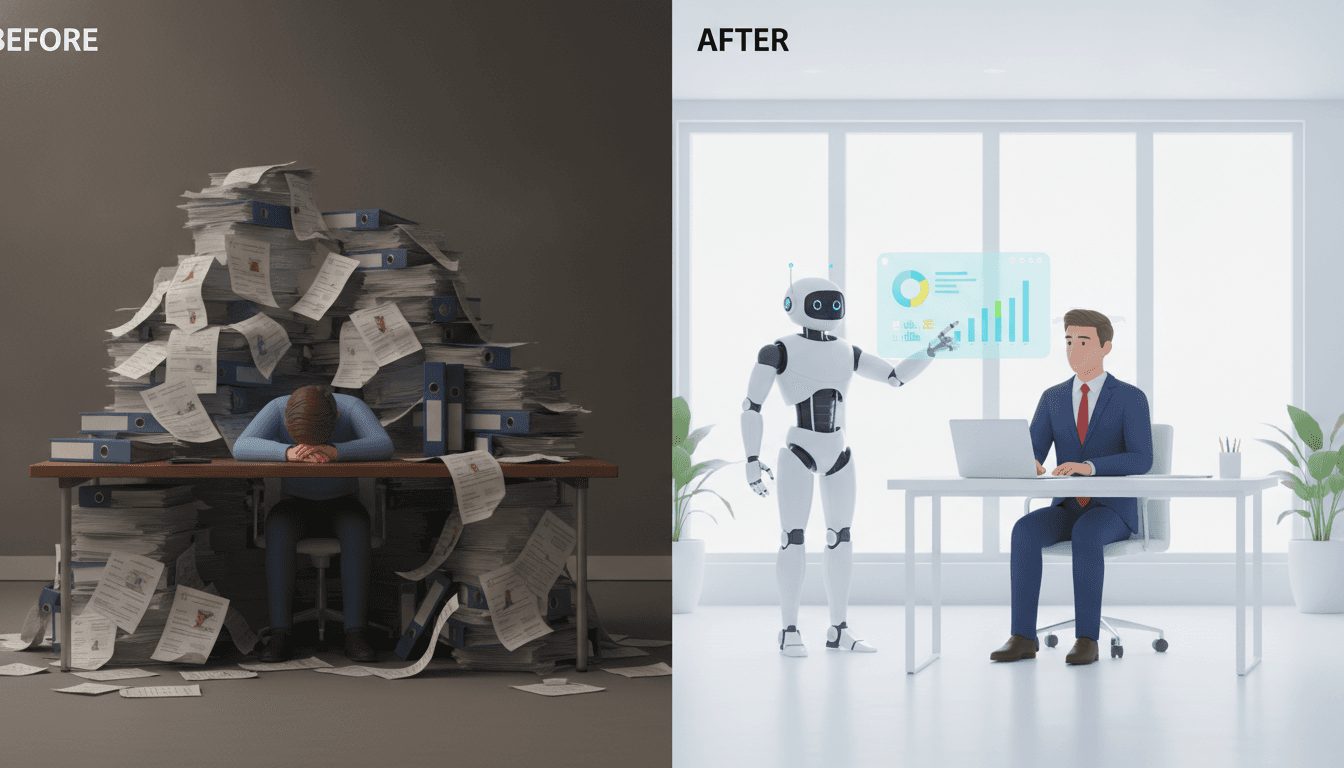
A perfect resume in seconds. That's the promise of artificial intelligence. But there's a catch, and recruiters are getting wise. A resume that sounds like a robot wrote it is a fast track to the 'no' pile. So learning how to use AI to write a resume isn’t about outsourcing the job. It's about augmenting your own skills. The goal: an AI-assisted document, not an AI-generated one.
And the stakes are high. Why? Because the other side is armed with AI, too. By 2026, a staggering 87% of companies will use AI in their recruitment process, mostly for screening candidates. Your resume has to first please an algorithm—the dreaded Applicant Tracking System (ATS)—before a human ever lays eyes on it. These systems demand precision. They scan for keywords and formatting. Pass that test, and you face a person who is getting terrifyingly good at spotting the soulless, generic phrasing of a raw AI draft. And they are not impressed. As Laurie Chamberlin, head of LHH Recruitment Solutions, puts it, a good recruiter can spot an AI-written application 'from a mile away.'
Think of this as your framework for using AI as a co-pilot. You'll learn to use tools like ChatGPT or dedicated AI resume builders to sharpen your content, nail the tailoring for each role, and squash errors. This isn't cheating. It’s about using the tech smartly to build a resume that beats the bots *and* the bias against them.
Step 1: Use AI as a Brainstorming Partner, Not a Writer
Do not ask an AI to write your resume from scratch. Ever. A generic prompt delivers a generic result, stuffed with hollow buzzwords—think 'results-driven' or 'dynamic team player'—that recruiters see a hundred times a day. It screams low effort.
You need to start with your own work. A master document with all your roles, responsibilities, and actual achievements. Then, you bring in the AI for ideas and angles. Feed it a job description for a role you want and ask it to identify the core requirements. A great prompt would be: "Analyze this job description for a Senior Marketing Manager. What are the top 10 keywords and core competencies the employer is looking for?" This gives you a clear target. Now you can ask the AI to help frame your experience within that context.
Refining Bullet Points with Concrete Metrics
Here's where AI really shines: turning bland descriptions of your duties into powerful, achievement-focused bullet points. It's a common struggle for people to quantify their impact, but metrics are exactly what hiring managers crave.
Give the AI a bullet point from your draft and ask for a rewrite. For instance:
- Your Draft: "Managed the company's social media accounts."
- Your Prompt: "Rewrite this resume bullet point to be more impactful and include metrics. I was responsible for Instagram and Twitter, where I posted daily and grew the audience."
- Potential AI Suggestion: "Grew company's social media presence across Instagram and Twitter, increasing follower count by 25% over six months through consistent daily engagement and content strategy implementation."
The trick is to provide the raw, truthful material and let the AI help you shape the language. But you have to verify everything. AI can hallucinate details if you don't give it enough context, and you must be able to defend every single claim on your resume in an interview. Some of the best AI writing tools for content creators can also help you find the right tone for your industry.
Step 2: The Art of the AI-Powered Tailoring Engine
Tailor your resume. Every single time. A generic resume blasted to a hundred openings gets worse results than ten highly targeted applications. This is where an AI resume builder guide becomes critical. Tools like Kickresume, Enhancv, and Rezi were built for exactly this.
The process is straightforward. You upload your master resume and paste in the job description. The AI then runs a gap analysis, showing you keywords from the job post that are missing from your resume. It will even suggest ways to rephrase your experience to mirror the employer's language. This helps you sail past the ATS filters. And it's non-negotiable. A 2026 report found that a minuscule 0.5% of applicants receive a job offer, so passing that first automated screen is everything.
Prompting General AI for Tailoring
Don't want a specialized tool? You can get a general model like Claude or Gemini to do the heavy lifting with a killer prompt. Try this:
"Act as a career coach. I am providing my current resume and a job description for a role I want. Rewrite my 'Work Experience' section to better align with this job description. Use the exact keywords and phrasing from the job description where it matches my experience. Reorder the bullet points under each job to prioritize the most relevant accomplishments. Do not invent any new skills or experiences."
That level of specificity forces the output to be both optimized and authentic. The goal is to mirror the employer’s language to talk about work you actually performed.
It's translation, not fiction.
Step 3: The Human Edit—Your Final, Crucial Pass
After the AI has helped you brainstorm, beef up, and tailor, you must step in. This is the most important part. A machine-polished draft is just a starting point. Recruiters are getting sharp, spotting the tells of an unedited AI doc—the stuffy tone, the repetitive sentences, the missing personality. Bonnie Dilber, a recruiter at Zapier, says nearly a quarter of the resumes she sees are obviously AI-written. Why? They're robotic and lack real detail.
Read every line out loud. Seriously. Does it actually sound like you? Did you swap out bland AI verbs like "utilized" for stronger words like "built" or "ran"? Crucially, did you add specifics an AI could never know? Name the key projects. Mention the software versions you mastered. Talk about the tangible outcomes that show you were there.
Proofreading with an AI Assistant
While the story needs your touch, AI is an amazing proofreader. Use it for a final check on:
- Grammar and spelling mistakes
- Inconsistent formatting (like date styles or end-of-bullet punctuation)
- Clarity and wordiness
This is a low-risk, high-reward move. It cleans up the kind of careless errors that get you disqualified, letting you focus on the substance. The job search is now a conversation between people and machines; you have to manage it. For companies, understanding the real cost of implementing AI and picking from the best AI tools for small businesses in 2026 is just the other side of this same coin.
So, what's the best way to tailor a resume with AI? A hybrid approach. Let the machine handle the grunt work—the keyword analysis, the first-draft phrasing. But the story? The specifics? The voice? That has to be yours. That's what gets you past the bots and into the interview.
Drafted with AI assistance. How we work.
Frequently asked questions
- Can recruiters tell if I used AI to write my resume?
- Yes, recruiters can often spot the signs of a purely AI-generated resume. These resumes frequently use generic buzzwords, have a robotic or overly formal tone, and lack specific, quantifiable achievements. While AI is a powerful tool for brainstorming and tailoring, it's crucial to heavily edit the output to inject your personal voice and unique experiences to avoid being flagged as low-effort.
- What is the best way to use ChatGPT for my resume?
- The best way to get ChatGPT resume help is to use it as an assistant, not a ghostwriter. Start with your own draft, then feed ChatGPT a specific job description and ask it to identify keywords. Use it to rewrite individual bullet points to be more impactful by providing it with your accomplishments and asking it to add metrics. Finally, use it to tailor your entire resume to the job description, but always review and personalize the final version.
- How do I make my resume pass ATS scans?
- To pass Applicant Tracking Systems (ATS), your resume should mirror the keywords and phrases found in the job description. AI tools are excellent for this. You can use a dedicated AI resume builder to automatically analyze the job post and suggest keywords. Also, ensure your formatting is simple, using standard section headers like 'Experience' and avoiding tables, columns, or graphics that can confuse the parsing software.
- What are the biggest mistakes to avoid when using AI for resume writing?
- The biggest mistake is accepting the first draft an AI produces without significant editing. This leads to a generic document that recruiters can easily spot. Another major error is allowing AI to invent or exaggerate your skills and accomplishments, which can destroy your credibility in an interview. Always treat the AI output as a starting point and spend time personalizing it with your authentic voice and specific, verifiable achievements.
- Are dedicated AI resume builders better than ChatGPT?
- Dedicated AI resume builders like Jobscan, Rezi, or Kickresume offer specialized features that general models like ChatGPT lack. These tools are built specifically to analyze job descriptions, provide ATS compatibility scores, and offer structured templates designed to pass automated screening. While ChatGPT is powerful for rewriting text, a dedicated AI resume builder provides a more focused, end-to-end workflow for job application optimization.
Sources & further reading
Sources
- employerbranding.news — employerbranding.news
- demandsage.com — demandsage.com
- acilearning.com — acilearning.com
- utpb.edu — online.utpb.edu
- forbes.com — forbes.com
- myjobflow.com — myjobflow.com