The Real Cost of Implementing AI Is Not the Subscription Fee
That $30-per-user AI license is a rounding error. The real money gets spent on data prep, integration, training, and maintenance. Here’s how to budget for reality, not the sales pitch.
 Salman Oukati Sadegh6 min read
The Sticker Price vs. The Real World
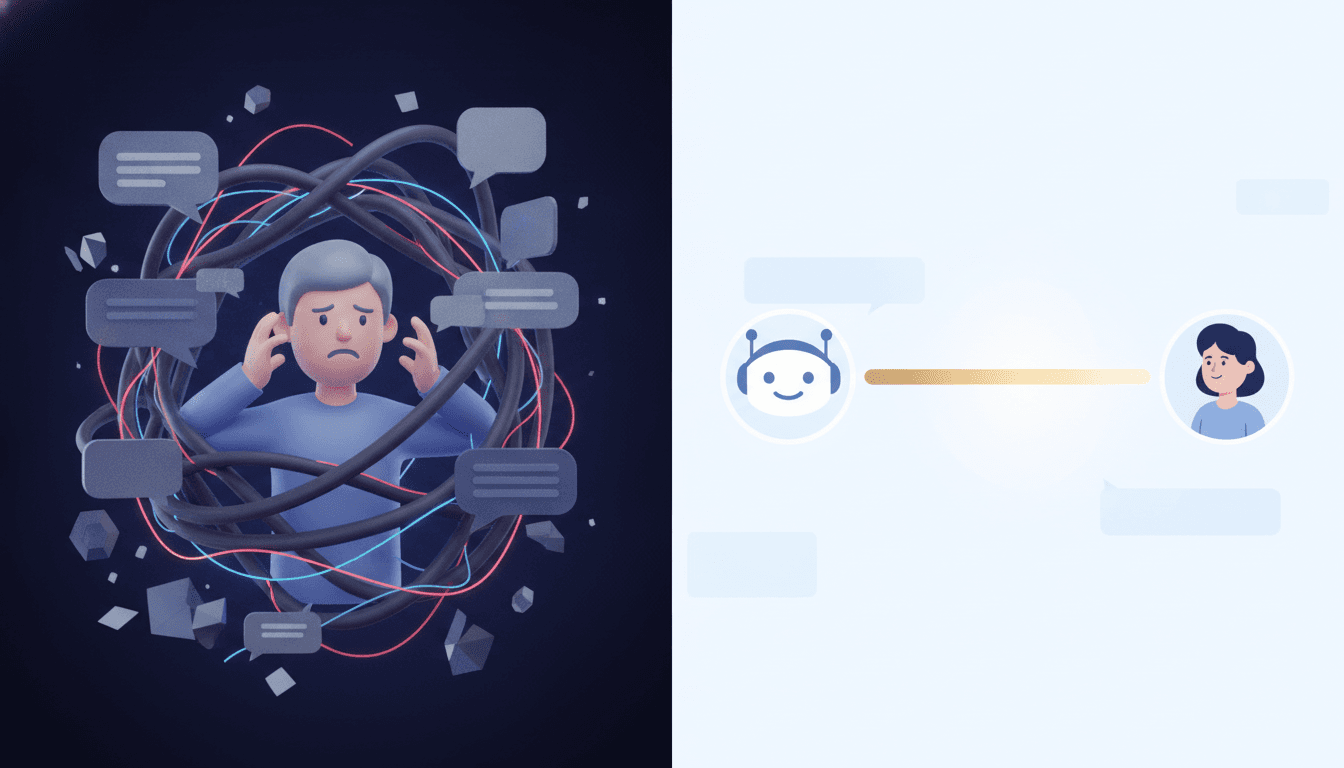
It sounds great. Thirty bucks a user for a powerful new AI tool. So the finance department runs the numbers, signs the check, and the project kicks off. Six months later? It’s a bonfire of cash. Your best engineers are threatening to walk and that promised ROI has completely vanished. Sound familiar? It’s a story unfolding in boardrooms everywhere, a painful lesson in the massive gap between the sticker price and the real cost of AI implementation.
That software license is bait. Pure and simple. A 2024 Deloitte survey found that for every dollar spent on the AI software itself, companies spend another $2 to $4 just getting it to work—on infrastructure, people, and integration. It gets worse. A shocking 85% of organizations blow their AI project cost estimates by more than 10%. Many miss the mark by over 50%. The sticker price is a lure, but it’s the total cost of ownership that actually derails a promising AI strategy before it ever takes flight.
The Hidden Costs of Business AI That Blindside Managers
Getting from a cool proof-of-concept to a real, scalable AI system is precisely where budgets shatter. Seriously. That single leap can swell costs three to five times as you wrestle with rickety infrastructure and data that refuses to talk to other data. So where’s all that money going? It hides in a few key places every business leader needs to see coming.
Data Preparation: The Unseen Iceberg
AI runs on data. Obvious, right? But most companies discover their data isn't fuel—it's sludge. Cleaning it up becomes the single biggest, most underestimated expense of the entire project, devouring 50-80% of the timeline and up to 40% of the budget. You can't get a single valuable insight until your data is collected, scrubbed, labeled, and governed. And no, this isn't a one-and-done job.
- Cleaning and Labeling: Your raw business data is a wreck. It’s a tangle of duplicate records, old info, and clashing formats. Just paying for data annotation can cost anywhere from $10,000 for a simple job to over $90,000 if the dataset demands true subject matter experts to make sense of it.
- Integration and Pipelines: Getting your data out of its prison—those siloed legacy CRMs and ERPs—is heavy, expensive engineering work. That integration phase alone can run a mid-sized project between $20,000 and $80,000. For a major enterprise deployment? This piece can gobble up 40-60% of the entire build cost.
Talent and Training: The Human Element
You can't just buy AI off the shelf. You need people who actually know how to wield it. Good ones. The talent war for specialized AI engineers is brutal, and they command salaries well over $120,000. But this isn't just about hiring a few data scientists and calling it a day.
You have to train your people. Properly. Just dropping a tool like one of the best AI writing assistants in their lap and hoping for the best is a recipe for failure. The payoff for doing it right, however, is huge. A 2025 Harvard Business Review analysis found every dollar invested in formal change management and training generated $3.40 in additional AI ROI. You should plan on spending $1,000 to $3,000 per employee for solid foundational training. Why? A Microsoft-IDC report confirms it: formal programs deliver a $3.70 ROI for every dollar invested, because trained employees are almost three times more proficient than their colleagues left to figure it out alone.
Integration and Infrastructure: The Technical Debt
AI tools don't live on an island. They have to be stitched directly into your existing business workflows, and your infrastructure must be strong enough to handle them. Surprise: many companies find out—the hard way—their current tech stack wasn't built for this. Cue the expensive, unplanned upgrades.
- Systems Integration: Connecting AI to your existing software is a beast of a job. For mid-sized companies, that beast can cost anywhere from $25,000 to $150,000. For larger enterprises, don't be shocked to see invoices north of half a million dollars.
- Cloud and Compute Costs: The raw computational power needed for AI, especially generative models, will make your cloud bills explode. Infrastructure can easily swallow 30-45% of the total AI spend. We’re talking enterprise-level training workloads that cost anywhere from $200,000 to over $2 million. Annually.
Planning Your AI Adoption Budget: From Upfront Costs to Ongoing Oversight
A realistic AI adoption budget has to account for the entire lifecycle, not just day one. This is a long-term commitment. In fact, you should expect annual maintenance costs to run between 15% and 30% of the initial development cost. That system you spent $100,000 to build? It's going to need another $30,000 every single year for monitoring, updates, and security. Period.
And that ongoing oversight is not optional. AI models go stale. It's a known problem called 'model drift,' and it means they need constant retraining just to stay accurate. Then you layer on governance and compliance, which brings its own costs, especially in regulated industries. Some reports even suggest that successful AI agent implementations, like those being explored with tools like OpenAI's GPT-5.6, need 15-20 hours of human babysitting every week just to stay on track.
So, forget simple spreadsheet math for calculating AI ROI for business. You have to look beyond hard metrics like cost savings and include fuzzier benefits—like happier customers and faster decisions. The organizations that actually win with AI don't treat it like a software purchase. They see it as a fundamental business transformation. They build a rock-solid data foundation before they ever chase a shiny new tool, and they only scale what they've already proven works. The costs are real. They're big. But for those who budget for reality, the returns can be immense.
Drafted with AI assistance. How we work.
Frequently asked questions
- What is the real cost of implementing AI in a business?
- The real cost of AI implementation goes far beyond software subscriptions. For mid-sized companies, a first project can range from $40,000 to $400,000. This total cost includes significant expenses for data preparation, integration with existing systems, employee training, infrastructure upgrades, and ongoing maintenance, which can be 3-8 times the initial software fee.
- What are the biggest hidden costs of business AI?
- The biggest hidden costs are data preparation and integration. Data prep, which includes cleaning and labeling, can consume up to 40% of the total budget and 80% of the project timeline. Integrating the AI tool with your existing software like CRMs and ERPs is another major expense, often underestimated in initial planning and requiring significant engineering resources.
- How much should I budget for AI employee training?
- A realistic budget for effective, foundational AI training is between $1,000 and $3,000 per employee. While basic online courses can be cheaper, customized programs that address your specific business workflows deliver a much higher return on investment. Simply providing access to AI tools without structured training rarely leads to significant productivity gains.
- What are the ongoing costs of maintaining an AI system?
- You should plan for annual maintenance costs to be 15-30% of your initial implementation investment. For a system that cost $200,000 to build, this means budgeting $30,000 to $60,000 each year. These costs cover essential activities like model retraining to prevent performance degradation (model drift), security updates, infrastructure scaling, and continuous monitoring.
Sources & further reading
Sources
- rework.com — resources.rework.com
- glean.com — glean.com
- xenoss.io — xenoss.io
- dancumberlandlabs.com — dancumberlandlabs.com
- softwareseni.com — softwareseni.com
- cloudzero.com — cloudzero.com