AI Automation vs. Human Jobs: A Manager's Guide to Smart Decisions
Stop thinking about replacing people. Start thinking about rebalancing work. Here's the framework for deciding what AI should do—and what it absolutely shouldn't.
 Salman Oukati Sadegh6 min read
The Automation Decision Is Not Just About Cost
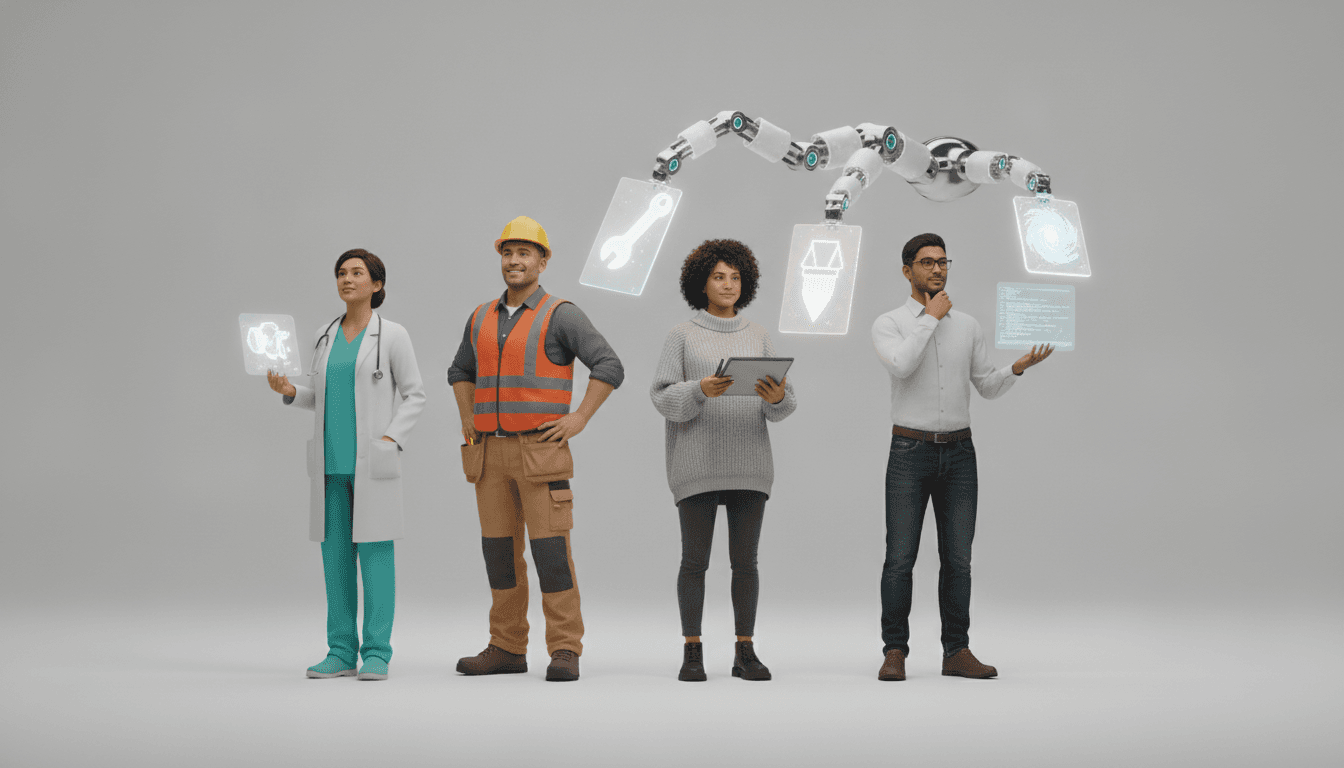
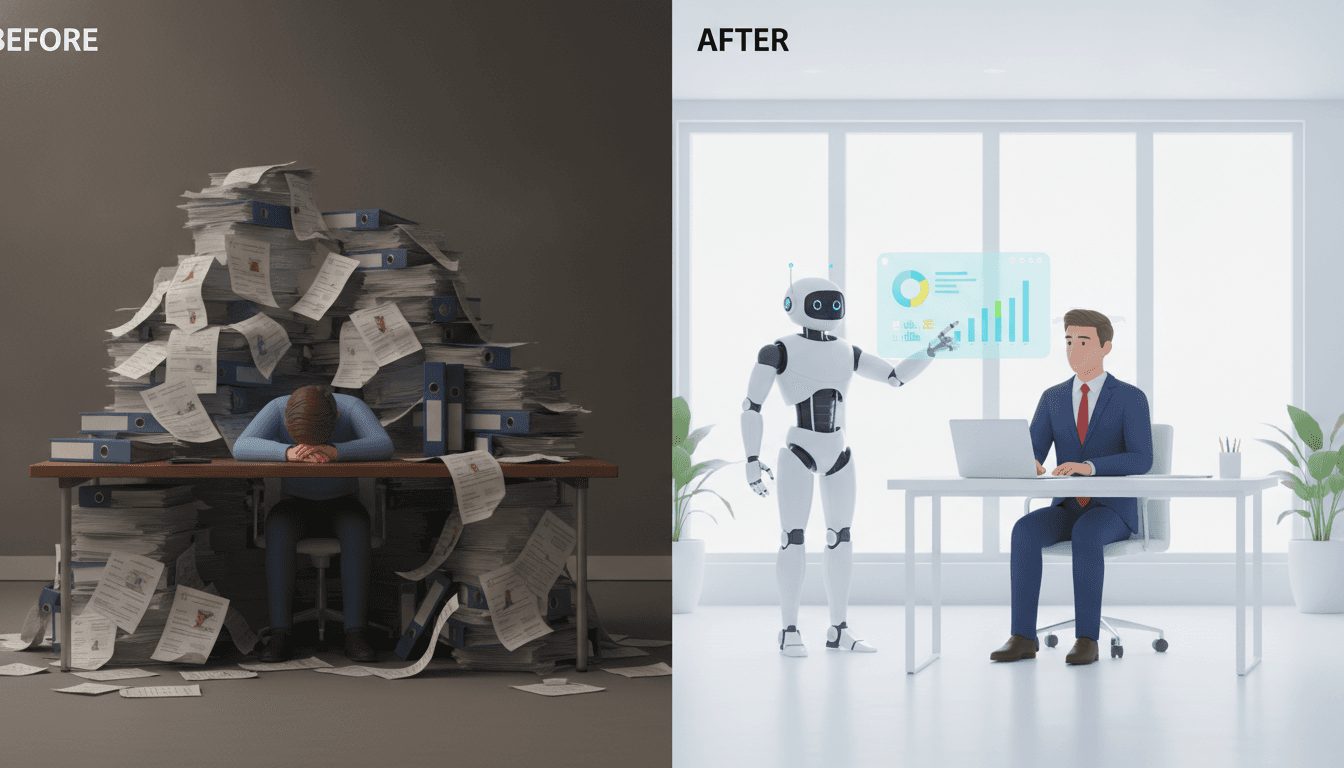
The debate is over. The question isn't *if* machines will change work. It's *how* managers should steer that change. The impulse to automate is often framed as a simple cost-benefit analysis: can a machine do it cheaper? This is a dangerously narrow view. Rush the job, and you'll tank morale, wreck the customer experience, and create a whole new set of problems. The real goal? A hybrid model where AI handles the grunt work. That frees up your best people for the stuff that actually requires a human brain: creativity, tough judgment calls, and real connection.
So, managers need a framework. A real one, that goes beyond just saving a buck. Think AI crushes morale? Wrong. A 2024 Workable survey found that for over half of workers (52.4%), AI has actually been a *positive*. Only 5.2% saw it negatively. When it's done right, AI isn't a threat; it's an assistant. The trick is automating *tasks*, not jobs—and bringing your team along for the ride. It's all about people. A 2025 report from the MIT Sloan Management Review points to a massive 'learning gap' as the top barrier to scaling AI, a direct consequence of skimping on training and redesigning how work gets done.
The smartest companies get it. They see AI as a tool to make their people better, not to replace them. Look at the numbers. A 2026 Boston Consulting Group (BCG) analysis found that while AI will touch 50-55% of U.S. jobs, only 10-15% face full elimination in the next five years. That's a massive difference. And understanding it is everything.
A Practical Framework for Deciding What to Automate
Don't just hand a process over to an algorithm. You have to evaluate it first. This isn't rocket science. It's just structured common sense, boiled down to four questions.
1. Is the Process Stable and Repeatable?
Automation thrives on consistency. If a process follows the same predictable steps every single time—think data entry, scheduling, basic lead follow-up—it's a prime candidate for an AI takeover. But what if the rules are always in flux? Or the data structure changes every week? Forget it. The maintenance costs will kill any savings you might have seen. Before you can automate, you must standardize. So document the workflow. Define the rules. Make sure a human can do it the same way, every time, before you even think about handing it to a machine.
2. Does the Task Require Human Judgment or Empathy?
This is the most important dividing line. Anything that demands emotional intelligence, ethical reasoning, creative problem-solving, or actual relationship-building? That stays with a human. A chatbot can answer FAQs, sure. But it can't calm down a genuinely furious customer. Not with real empathy. An AI can scan résumés for keywords, but it takes a person to gauge cultural fit and spot raw potential. As researchers from Harvard Business School pointed out in a 2025 paper, some customers simply won't accept a machine—automating that touchpoint destroys the value. If the path isn't clear, if it requires a judgment call, a human needs to be in charge. That’s the whole point: assign roles based on what each does best.
3. What Is the True Impact on Your Team?
Automating the most tedious and monotonous parts of a job can be a massive boost for employee morale and engagement. Take administrative burdens off their plate, and they can finally focus on strategic, creative work. The stuff that's actually fulfilling. But there’s a catch—you have to be transparent. An astonishing 95% of workers don't trust their organizations to handle AI in a way that benefits everyone, according to Accenture's research. How do you fight that? By communicating relentlessly about what you're doing and why. Frame it as empowerment, not replacement. Better yet, ask your team. They know exactly which parts of their jobs are begging to be automated.
4. How Will Automation Affect the Customer Experience?
For customers, AI can mean incredible efficiency. 24/7 support. Instant answers. Just look at Starbucks. Its AI engine, Deep Brew, personalizes recommendations for millions, bumping up mobile sales by a hefty 22%. But go too far and you create a robotic, frustrating mess. The best strategy is almost always a hybrid. Let an AI agent handle the simple, upfront questions. Then, when things get tricky or sensitive, it escalates—seamlessly—to a human who has all the context. Your people are now free to handle the high-stakes interactions where they can make a real difference. That's how you boost both efficiency *and* customer loyalty.
Managing the New Human-AI Team
Getting AI right isn't a tech problem. It's a leadership problem. Your job shifts from commanding to orchestrating—from giving orders to making sure your human talent and AI tools are working together beautifully. This new era demands a completely new playbook.
First: Build trust. Be transparent about how the AI works and tackle the 'is this robot taking my job?' fear head-on. It means fostering true psychological safety, where employees feel comfortable pushing back on an AI's suggestion. (For a closer look at the tech that helps, our comparison of the best AI meeting assistants for 2026 is a good place to start.)
Second: The skills that matter are changing. Fast. With AI handling the repetitive analysis, what becomes priceless? Human skills. Creativity, critical thinking, emotional intelligence—that's the new gold standard. This means you have to invest in upskilling and reskilling your people. It's not optional. And they're ready for it: A recent SHRM report found 72% of workers expect their pay to go *up* thanks to AI-related training. This isn't just theory; tools like the ones in our guide to the best AI writing tools are already helping augment these creative processes.
Finally, managers need to redefine what success looks like. Success isn't about cutting headcount anymore. The new KPIs are team capacity, the speed of innovation, and the quality of your decisions. The whole point is to build a place where people and AI click, making each other better. This isn't a small tweak. It's a complete shift in how we think about work, demanding a human-first approach to a tech revolution. The future isn't AI vs. humans. It's about AI *with* humans. And for anyone who wants to get under the hood, understanding things like AI tokens and context windows provides some critical background on how these new systems think.
Drafted with AI assistance. How we work.
Frequently asked questions
- What is a good framework for deciding which tasks to automate?
- A strong automation decision framework evaluates tasks based on more than just cost. Consider four key factors: 1) Is the process stable and repeatable? 2) Does it require human judgment, creativity, or empathy? 3) What is the impact on employee morale and workload? 4) How will it affect the overall customer experience? Tasks that are repetitive, rule-based, and tedious are prime candidates, while those requiring nuanced decision-making or emotional intelligence should remain human-led.
- How does AI automation affect employee morale?
- The impact of AI on morale is largely positive when implemented thoughtfully. A Workable survey found 52.4% of employees reported a positive effect on team morale. Automation that removes repetitive, mundane tasks can increase job satisfaction by allowing employees to focus on more strategic and creative work. However, a lack of transparency and communication about AI integration can lead to fear and uncertainty, negatively impacting morale.
- Should customer service be fully automated?
- Fully automating customer service is generally not recommended as it can create a disconnected and frustrating experience for customers with complex issues. A hybrid model is most effective. AI-powered chatbots and virtual assistants can handle routine inquiries, providing instant, 24/7 support. This frees up human agents to manage more complex, sensitive, or high-value interactions where empathy and advanced problem-solving are required, leading to better overall customer satisfaction.
- Will AI replace managers?
- AI is unlikely to replace managers entirely, but it will significantly change the role. AI will automate many administrative and reporting tasks, such as creating KPI dashboards, summarizing meetings, and drafting performance reviews. This shift will free up managers to focus on uniquely human skills: coaching teams, resolving conflict, making strategic trade-offs, and fostering a positive culture. Roles focused purely on coordination and status tracking are most at risk.
- How can I prepare my team for AI integration?
- Preparing your team involves transparent communication, involvement, and a focus on upskilling. Involve employees early in the process of identifying tasks for automation. Clearly communicate the goals of AI integration, framing it as a tool to augment their work, not replace it. Invest in training programs that build AI literacy and enhance the human-centric skills that AI cannot replicate, such as critical thinking, creativity, and emotional intelligence.
Sources & further reading
Sources
- jeffreyai.com — jeffreyai.com
- markeltree.com — markeltree.com
- workable.com — resources.workable.com
- makingsense.com — makingsense.com
- scottambler.com — scottambler.com
- careerminds.com — careerminds.com