Taiwan Detains Super Micro Workers in Nvidia AI Chip Smuggling Probe
The global battle over restricted AI hardware just got real. An expanding probe into an illicit smuggling ring shipping chips to China has now ensnared employees of US server giant Super Micro.
 AI Tech Dialogue Editorial Team5 min read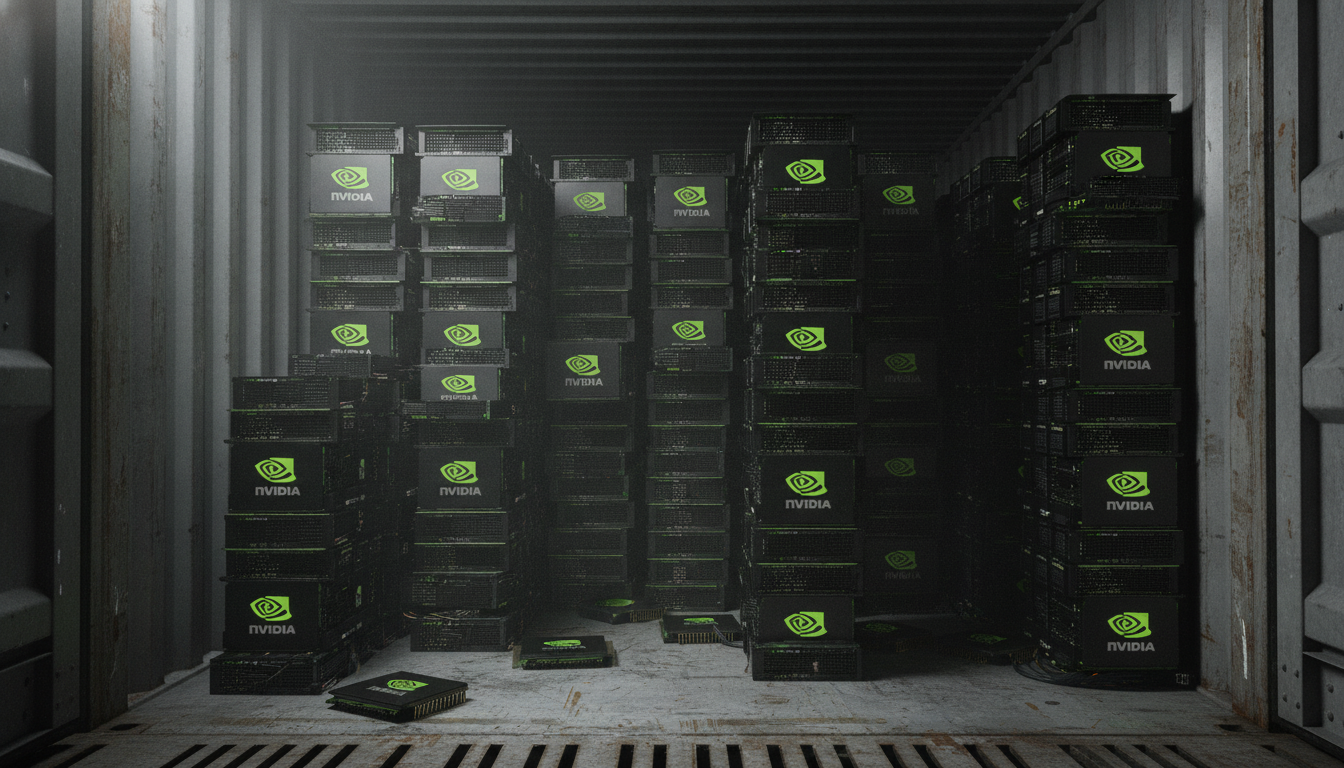
The Gray Market for AI's Golden Chips Turns Hot
The dragnet is widening. Taiwanese prosecutors have detained employees of the U.S. server maker Super Micro Computer. It's a major escalation in a probe targeting an alleged international smuggling ring that illegally funnels restricted Nvidia AI chips to China. The case throws a harsh spotlight on the frantic, global scramble to control the very semiconductors fueling the AI boom—chips that sit at the dead center of the U.S.-China tech rivalry.
Here are the facts. In late June, the Keelung District Prosecutors' Office questioned four Super Micro employees. Two were detained. Two were released on bail but can't leave Taiwan.
But this was just one piece of a much larger puzzle. The action was part of a sweeping June 29 operation hitting 12 different locations—including the offices of Super Micro, its Taiwanese distributor Albatron Technology, and data center operator Chief Telecom. An Albatron VP was detained, too.
And it's not the first time. Back in May, three others were arrested, suspected of already smuggling at least one batch of servers and trying to ship 50 more before getting caught. The price tag on that latest intercepted shipment? A cool $22 million, all packed with Nvidia's powerhouse GB300 chips.
So how did they do it? Simple fraud. The core accusation is the systematic falsification of export documents, all to hide where these high-end servers were really going. Investigators allege a classic shell game: ship the hardware from Taiwan to an intermediary like Japan, then reroute it to Hong Kong, and finally slip it into mainland China. The whole point was to sidestep tough export controls from the U.S. Bureau of Industry and Security—rules put in place specifically to keep advanced tech out of Beijing's hands, where Washington fears it could supercharge China's military and surveillance state.
A Company Under Scrutiny
Super Micro is in full damage-control mode. In an open letter to customers, the San Jose company declared it has “zero tolerance for anyone who violates the law or our internal policies.” They insist the company itself isn't a target. Not us, they say. Chief Revenue Officer Matt Thauberger added that they've been cooperating with Taiwanese authorities for months and put the four employees on administrative leave. And don't call it a 'raid.' The company prefers to frame the event as a 'collaboration' with law enforcement.
And this isn't some isolated incident for Super Micro. Far from it. Back in March, U.S. federal prosecutors indicted the company's own co-founder, Yih-Shyan “Wally” Liaw, along with two colleagues. That was a separate, much larger case—a staggering alleged $2.5 billion scheme to divert Nvidia-equipped servers to China. This constant drumbeat of legal trouble is hurting, too. Super Micro's stock slid hard after the latest news broke. What it all shows is just how ridiculously hard it is to police a tangled global supply chain, a mess that threatens to widen the global divide in AI development.
The Unquenchable Thirst for AI Compute
This whole investigation reveals one simple truth: China is desperate for top-tier AI hardware. Utterly desperate. Ever since the U.S. tightened export controls in 2022 and slammed the door on Nvidia’s most powerful GPUs, a sprawling, sophisticated gray market has exploded. Chinese AI labs and tech giants, frozen out of official channels, are now fueling a massive smuggling trade. They need the chips. They need them to train and run the advanced AI models that define the future. How massive? One 2024 estimate suggested over 100,000 smuggled Nvidia H100s were already operating inside the PRC.
The methods are brazen. Think shell companies, transshipment through third countries, and cargo mislabeled as something totally harmless. Taiwan itself doesn't actually criminalize exporting AI chips to China—at least, not yet. But these repeated, high-profile smuggling busts are piling on the pressure for the self-ruled island to get in line with Washington. It's just another flashpoint in the growing friction of frontier AI running into government buzzsaws.
These aren't just a corporate headache for Super Micro. The detentions in Taiwan are a loud, clear signal: enforcement is ramping up. The U.S. and its allies are dead set on choking off these illicit supply lines. This means the cat-and-mouse game between regulators and smugglers is about to get a lot more intense. The future of AI supremacy hangs in the balance.
Frequently asked questions
- Why were Super Micro employees detained in Taiwan?
- Taiwanese prosecutors detained two Super Micro employees, and released two on bail, as part of an investigation into the alleged smuggling of servers containing high-end Nvidia AI chips to China. They are accused of falsifying export documents to circumvent U.S. export controls designed to keep advanced technology from Beijing.
- What is Super Micro's connection to the Nvidia chip smuggling case?
- The investigation centers on Super Micro servers equipped with restricted Nvidia AI chips. While Super Micro insists it is not a target of the probe and is cooperating with authorities, its employees are accused of facilitating the illegal shipments. This follows a separate U.S. indictment of the company's co-founder for a similar scheme.
- How are Nvidia AI chips being smuggled to China?
- Smugglers are allegedly using sophisticated methods to bypass U.S. export controls. This includes falsifying documents to misrepresent the final destination of the hardware and using intermediary countries, such as Japan, to transship the goods to Hong Kong and then into mainland China.
- What are the US export controls on AI chips?
- The United States, through its Bureau of Industry and Security, has implemented strict export controls that restrict China's ability to obtain advanced semiconductors, including high-performance AI chips from companies like Nvidia. These rules are intended to slow China's technological and military advancement by limiting its access to critical hardware.
Sources & further reading
Sources
- Taiwan detains Super Micro workers in China smuggling probe — The Straits Times
- Taiwan detains Super Micro workers in chip smuggling case — ET Telecom
- Super Micro says two Taiwan staff detained in probe involving its AI servers — The Next Web
- seekingalpha.com — seekingalpha.com
- pcmag.com — pcmag.com
Further reading
- 01
 Technology
EU Hits Pause on AI Act, Pushing Back Key Deadlines
- 02
 Technology
Quantum Computing Explained Simply: What It Actually Promises
- 03
 Technology
The Browser Wars Are Back: Why How We Use the Internet Is Changing
- 04
 Technology
UN Report: Unchecked AI Risks 'Catastrophic Harm,' Deepening Global Divide
- 05
 Technology
Your Unseen Digital Footprint: The Secret Life of Your Data