How AI Image Generators Actually Work, Explained
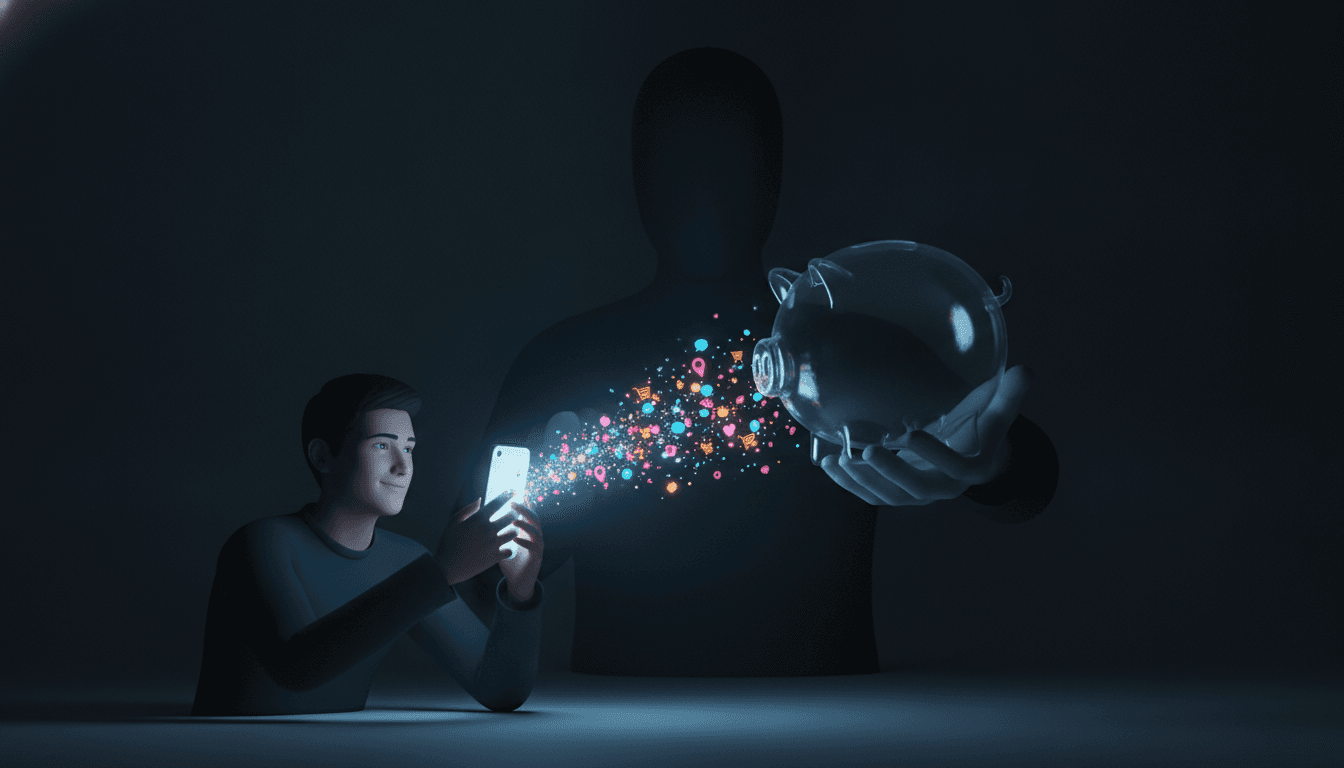
It looks like magic. You type a few words, and a stunning, original image appears. It’s not magic, though. It’s a wild process of noise, data, and guided chaos.

The Billion-Image Library: How AI Learns to See
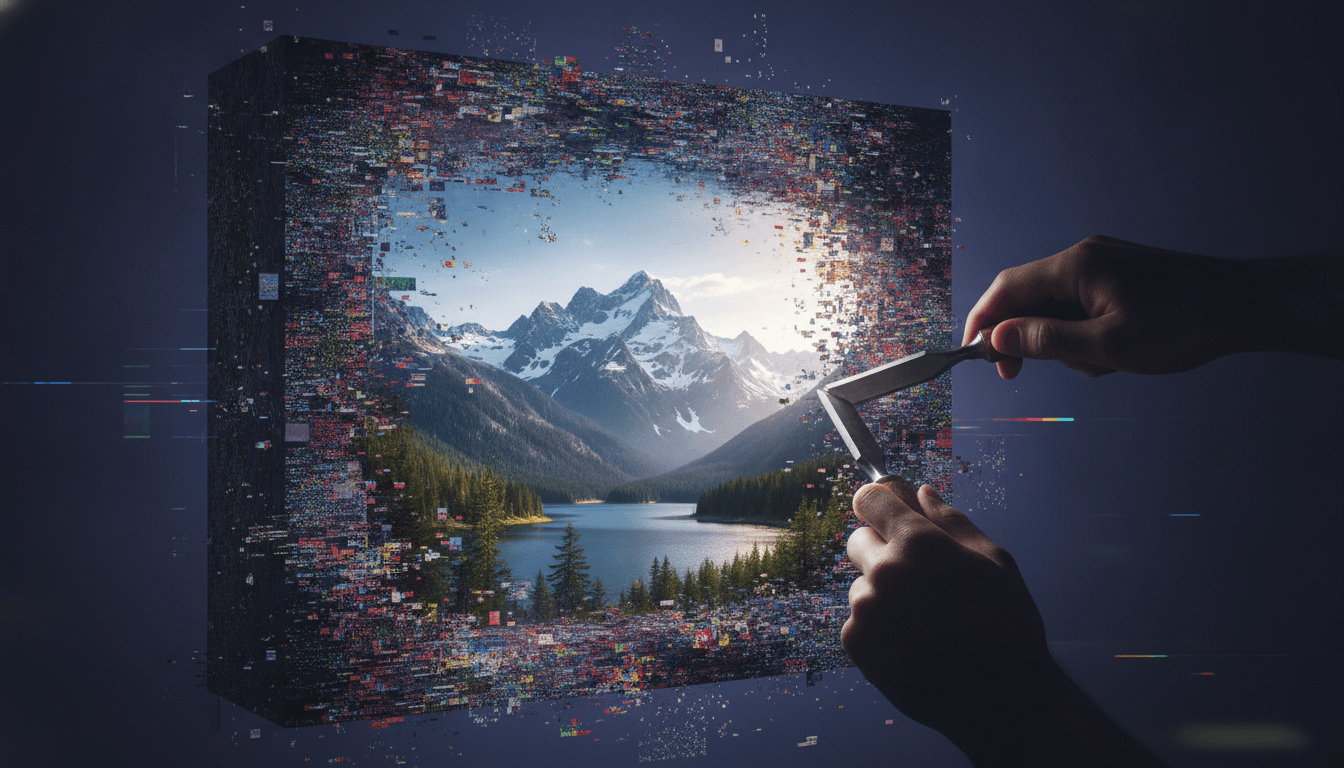
It all starts with data. An almost incomprehensible amount of it. Before an AI can dream up a single pixel, it has to learn what our world looks like. The whole process of how AI image generators work kicks off by training on gargantuan datasets. The most famous is LAION-5B, a publicly available archive with over 5.8 billion image-text pairs scraped directly from the web. This is no curated photo album. It’s a sprawling, messy, digital reflection of everything humanity has ever uploaded, from pro photography to your cousin's old blog posts.
The AI, using a tool like OpenAI's CLIP, then crunches these pairs for thousands of hours. It isn't memorizing photos. Not at all. It’s learning connections—the statistical relationships between words and visual concepts. The AI learns that the phrase “a fluffy golden retriever” usually goes with pixels that form a very specific furry, four-legged shape. It learns that tacking on “in the style of Van Gogh” means it should use certain swirling brushstrokes and intense color palettes. Through a monumental effort of matching correct pairs and rejecting wrong ones, the AI builds a deep, mathematical map of how our language describes our reality.
Diffusion Models: From Chaos to Creation
Once it's trained, most modern generators like Stable Diffusion, Midjourney, and DALL-E 3 use a powerhouse technique called a diffusion model. Here’s where the real alchemy begins. Forget painting on a blank canvas. Think of a sculptor finding a statue inside a block of marble. Except the marble is pure noise.
This is the absolute core of text to image AI explained. The system starts with a grid of random static. Total chaos, like an old TV tuned to a dead channel. Your text prompt acts as the guide, the blueprint for what the AI must carve out of that static.
Step 1: The Forward Process (Learning to Destroy)
To learn how to create, the model first learned how to destroy. Seriously. During its training, engineers took billions of clean images and systematically obliterated them. They added layers of digital noise, step by painstaking step, until the original picture was just gone, swallowed by a sea of static. By watching this happen over and over, the AI learned precisely how noise works. It became an expert at seeing the faint patterns that separate a real image from random garbage.
Step 2: The Reverse Process (Denoising with a Guide)
This is where your prompt comes in. The AI starts with a fresh canvas of pure noise and begins to undo the damage it learned to inflict, using your text as its guide. At each step, it looks at the noisy image and essentially asks itself, “Based on the prompt ‘a photorealistic astronaut riding a horse,’ what tiny bit of noise can I remove to get closer to that?”
It subtracts a little static. A faint structure appears. Then it does it again. And again—sometimes for 50 or 100 steps. With each pass, the image gets sharper as the model carves away the randomness, constantly checking its progress against the mathematical concept of your prompt. It’s a guided journey from absolute chaos to a completely original image that has never existed before.
Why AI Still Makes Weird Mistakes (Like Six-Fingered Hands)
If the process is so clever, why the nightmarish six-fingered hands and garbled text? The answer is simple: the AI doesn't actually “understand” anything.
It has no concept of what a “hand” is. It doesn't know words are made of specific letters. As computer scientist Peter Bentley explained to PetaPixel, “The image-generating AIs know nothing of our world, they do not understand 3D objects nor do they understand text when it appears in images.” To an AI, a hand is just a statistical pattern—a bundle of shapes and lines it has learned to associate with the word. In its training data, hands show up in a million different ways. Open. Closed. Holding things. Partially hidden. That massive variability makes it almost impossible for the AI to nail the strict anatomy of five fingers. It knows what's “hand-like,” but it doesn't know the rules.
The same logic applies to text. The AI gets that some prompts require letter-like shapes, but it treats them like any other visual texture, like a brick or a feather, not a rigid system of spelling. It’s just making patterns that look like text, with zero grasp of the meaning.
More Than a Magic Trick
So, is it magic? No. Understanding how AI art works replaces that mystery with an appreciation for the incredibly clever, data-driven process underneath. It's not consciousness. It’s a sophisticated system of pattern-matching and guided denoising. As these models get trained on even bigger datasets, their ability to render tricky things like hands and text will certainly get better. And the rapid progress we see in this field, with video models from companies in China and elsewhere, proves the technology isn't standing still. For now, though, those fascinating flaws are a great reminder of the vast difference between statistical association and genuine human understanding.
Related Articles
This article was produced with AI assistance under human direction, and reviewed and fact-checked by a named editor before publication. How we work.
Frequently asked questions
- How do AI image generators work in simple terms?
- AI image generators are first trained on billions of image-text pairs to learn associations between words and visuals. When you provide a text prompt, a 'diffusion model' starts with an image of pure random noise and, guided by your prompt, gradually removes the noise over many steps to reveal a coherent, original image that matches your description.
- What are diffusion models in AI art?
- Diffusion models are the core technology behind most modern AI art generators like Stable Diffusion and Midjourney. They work by reversing a 'diffusion' process. During training, they learn how to remove noise from a corrupted image. To generate a new image, they start with pure static and iteratively denoise it, using a text prompt as a guide, until a clean image emerges.
- Why is AI bad at drawing hands and spelling words?
- AI struggles with hands and text because it doesn't understand them conceptually. It learns from statistical patterns in images. Hands are complex, have high variability in their appearance, and are often partially obscured in photos, making it hard for the AI to learn a consistent model. Similarly, it sees text as just another pattern of shapes, not as a system of letters with fixed spelling rules.
- Where does the AI get its images for training?
- AI image generators are trained on massive public datasets scraped from the internet. A prominent example is LAION-5B, which contains over 5.8 billion pairs of images and their corresponding text descriptions. This data is collected from a wide variety of websites, including blogs, news sites, and image hosting platforms like Pinterest.
- Do AI image generators copy and paste existing images?
- No, AI image generators do not copy and paste from existing images. They create entirely new images from scratch by starting with random noise and shaping it based on the patterns learned from their training data. While the training data provides the knowledge of what things look like, the final output is a unique synthesis guided by the user's prompt.
Sources & further reading
Sources
- deeplearning.ai — deeplearning.ai
- wikipedia.org — en.wikipedia.org
- techpolicy.press — techpolicy.press
- knowingmachines.org — knowingmachines.org
- onyxgs.com — onyxgs.com
- kumba.ai — kumba.ai