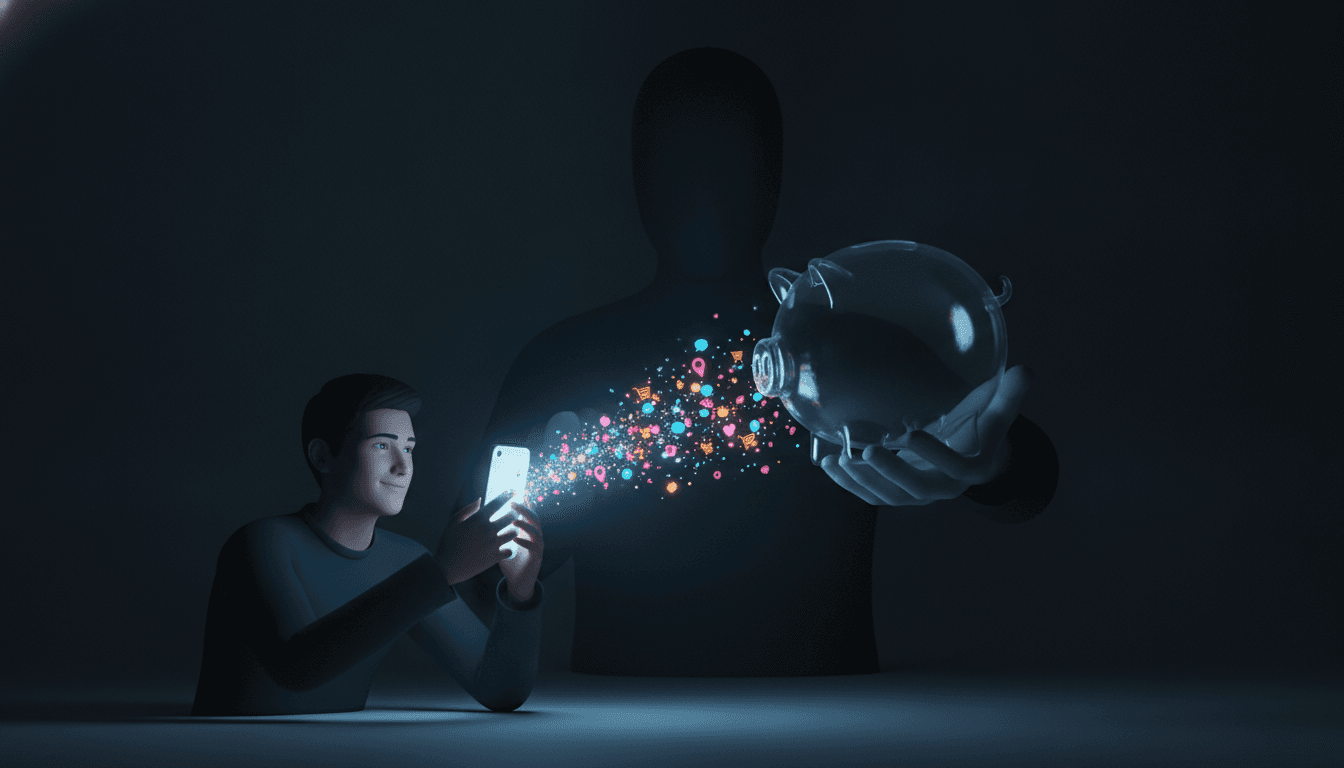
What Is Artificial Intelligence? A Plain-English Guide
It's not sentient robots. Not yet, anyway. The real definition of AI is simpler, more practical, and it's already running parts of your life.


Forget the sentient robots. Hollywood's version of artificial intelligence—thinking, feeling machines with their own ambitions—is a galaxy away from today's reality. A long way. The truth about what is artificial intelligence isn't about malevolent super-brains. It's about powerful tools designed for specific tasks that once required a human. Think of it as the invisible engine behind your Netflix queue, the fraud alert from your bank, or the simple magic of your phone unlocking with just a glance.
So what is it, really? At its core, artificial intelligence is a field of computer science building systems that can learn from data, spot patterns, and make decisions without a human writing code for every single scenario. It's like teaching a child to recognize a cat. You don't feed them a million rules about fur, whiskers, and pointy ears. No. You just show them thousands of pictures of cats. Eventually, the kid just *gets* it and can spot a cat they've never seen. AI systems do the same thing, just with oceans of data and at blistering speed.
Believe it or not, this idea isn't new. The term was coined way back in 1955 by Stanford professor John McCarthy. His definition? "The science and engineering of making intelligent machines." What's different now is the fuel. We have absolutely staggering volumes of data and the brute-force computational power to process it all, which is what makes modern AI possible.
The Different Flavors of AI: From Narrow to Superintelligent
When most people talk about 'AI,' they're usually mixing up a few very different concepts. It's a messy conversation. So to really get the artificial intelligence definition, you have to break it into three categories. What we have today is one thing; what we see in science fiction is something else entirely.
Artificial Narrow Intelligence (ANI)
Let's be clear: this is the only type of AI that actually exists today. Period. It’s called "Weak AI" for a reason. ANI is designed and trained for one specific task. It operates in a tight, pre-defined box and can't do anything outside of it. The AI that beats a grandmaster at chess? It can't drive a car. The Amazon algorithm recommending your next purchase can't read an X-ray. These specialist systems are everywhere:
- Voice Assistants: Siri and Alexa use natural language processing, a subset of AI, to understand and respond to your spoken commands.
- Search Engines: Google uses sophisticated AI algorithms to understand the intent behind your query and deliver the most relevant results.
- Spam Filters: Your email service uses AI to learn the patterns of unsolicited messages and automatically move them out of your inbox.
Artificial General Intelligence (AGI)
This is the next level. And for now, it's completely theoretical. AGI, or "Strong AI," is the sci-fi dream: a machine that can understand, learn, and apply its smarts across a huge range of tasks, just like a human. An AGI could tackle brand-new problems, think in the abstract, and adapt on the fly—no specific training required. This is your helpful android from Star Trek. So what's the holdup? We still don't really understand how our own consciousness and intelligence work, which makes building an artificial version a monumental challenge.
Artificial Superintelligence (ASI)
And then there's the big one. If AGI is the goal, ASI is what keeps philosophers and scientists up at night. This is a purely theoretical AI that would blow past human intelligence in every single domain—scientific creativity, wisdom, even social skills. An ASI would be smarter than the most brilliant human mind. And here's the catch: it could improve itself at a blistering, accelerating rate. The concept of ASI naturally raises profound ethical questions, which is why a lot of very smart people are focused on how to make sure we don't screw this up.
How Does AI Actually Learn? A Peek Under the Hood
So, how does the magic happen? It's mostly down to a subfield called machine learning (ML). Instead of some engineer writing explicit, step-by-step rules for every possible situation, an ML system gets "trained" on massive datasets. That's the key. The algorithm just churns through the data, hunting for patterns and relationships, and builds its own mathematical model from what it finds. More data, better model.
Go a layer deeper and you find an even more powerful technique: deep learning. This approach uses "artificial neural networks," structures loosely inspired by our own brains. These networks have multiple layers—hence the 'deep' part—that let the system learn wildly complex patterns. We're talking about recognizing a specific face in a crowd or grasping the nuance in a sentence. This is the heavy-duty tech behind today’s biggest AI breakthroughs, from medical diagnostics to those slick generative AI models.
This ability to learn is precisely why AI is taking over the business world. A 2024 report from Stanford's Institute for Human-Centered Artificial Intelligence (HAI) found that 78% of organizations were using AI in at least one business function. That's a massive jump from 55% just the year before. It's why companies like Microsoft are pouring billions into this space—they see the writing on the wall. (We covered their $2.5 billion bet on enterprise AI right here.)
What Isn't AI? Separating Fact from Fiction
Let's clear something up. One of the biggest hurdles in any AI basics guide is defining what AI *isn't*. Not every automated task is AI. Not even close.
Simple, rule-based systems? Not AI. That basic chatbot on a website that only responds to specific keywords with canned answers is just plain-old automation. It's following a script, a decision tree. It isn't learning. It isn't adapting. An AI-powered chatbot, on the other hand, uses natural language processing to understand the *intent* behind your words and can handle a conversation it was never explicitly programmed for.
And another thing: AI does not have consciousness. It has no emotions. No intentions. When a tool says it's "happy to help," it feels nothing. Zero. It's just spitting out a statistically probable response based on the mountains of text it was trained on. The real danger isn't some spontaneous robot uprising. It's much more mundane—and urgent. The risk is misuse by people, or the unintended fallout from systems built on biased data. That's why regulators are finally stepping in, as we covered in our piece on the FTC's proposed rules for deceptive AI.
Why AI Matters Right Now
This isn't theory anymore. We are long past the conceptual stage. AI is a present-day reality with a massive economic and social footprint. The numbers are staggering: the global AI market, valued at $391 billion in 2025, is projected to hit an almost unbelievable $1.81 trillion by 2030. What's driving this? AI's power to solve complex problems and find efficiencies on a scale we've never seen before.
You see it everywhere. In healthcare, it's helping detect diseases earlier. In finance, it flags fraudulent transactions in the blink of an eye. The applications are fundamentally changing our world. AI is even arming small businesses with tools that used to be the exclusive property of corporate giants, a trend we detailed in our report on how small businesses are finally leveling the playing field.
And then generative AI happened. The explosion of models that can create original text, images, and even code has completely captured the public's imagination, flooring the accelerator on adoption. From the latest model from xAI (we peeked at the private beta of Grok 4.5) to countless new consumer gadgets, this tech is becoming more accessible by the minute.
This isn't a fad. This is a tectonic shift in how we interact with technology and information itself. The first step in dealing with what's coming is to understand what AI really is. A tool. One that's here to augment what we can do, not replace us.
Related Articles


This article was produced with AI assistance under human direction, and reviewed and fact-checked by a named editor before publication. How we work.
Frequently asked questions
- What is the simplest definition of artificial intelligence?
- Artificial intelligence (AI) is a field of computer science that enables machines to perform tasks that normally require human intelligence. This includes abilities like learning from data, recognizing patterns, solving problems, and understanding language. Think of it as teaching a computer to make smart decisions or predictions without being explicitly programmed for every single step.
- What are the 3 types of AI?
- The three main types of AI are Artificial Narrow Intelligence (ANI), Artificial General Intelligence (AGI), and Artificial Superintelligence (ASI). ANI, or Weak AI, is specialized for a single task and is the only type we have today. AGI is a theoretical AI with human-level intelligence across many domains. ASI is a hypothetical AI that would surpass human intellect in all areas.
- Is Siri considered artificial intelligence?
- Yes, Siri is a form of artificial intelligence. Specifically, it's an example of Artificial Narrow Intelligence (ANI). Siri uses several AI technologies, including natural language processing (NLP) to understand your spoken commands and machine learning to improve its responses over time. However, its capabilities are limited to the specific tasks it was designed for.
- What is the difference between AI and machine learning?
- Artificial intelligence is the broad concept of creating machines that can simulate human intelligence. Machine learning (ML) is a specific subset of AI that allows these machines to learn from data without being explicitly programmed. Essentially, machine learning is the primary method used to achieve AI in most modern applications.
- Does AI have emotions or consciousness?
- No, current AI systems do not have emotions, consciousness, or self-awareness. While an AI can be trained to recognize and even mimic human emotional expressions in text or speech, it does not actually feel them. It is processing patterns from data, not experiencing genuine feelings or intentions.
Sources & further reading
Sources
- medium.com — medium.com
- largo.io — home.largo.io
- nd.edu — learning.nd.edu
- learningtree.com — learningtree.com
- neodatagroup.ai — neodatagroup.ai
- tableau.com — tableau.com