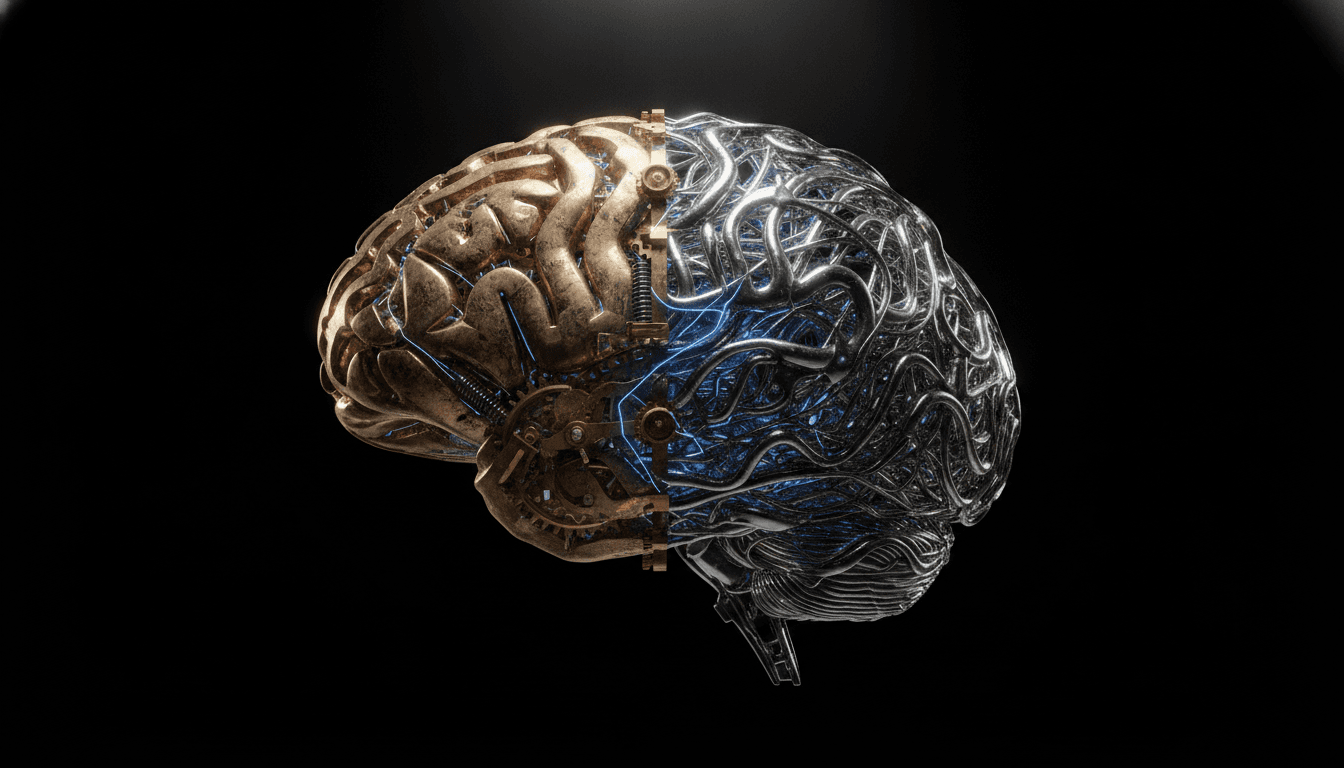
How Data Centers Work (And Why AI Needs So Many)
Our digital world runs on physical buildings. With artificial intelligence sparking a global construction frenzy, it's never been more critical to understand what a data center is, how it works, and why its appetite for energy is so enormous.
 Salman Oukati Sadegh6 min read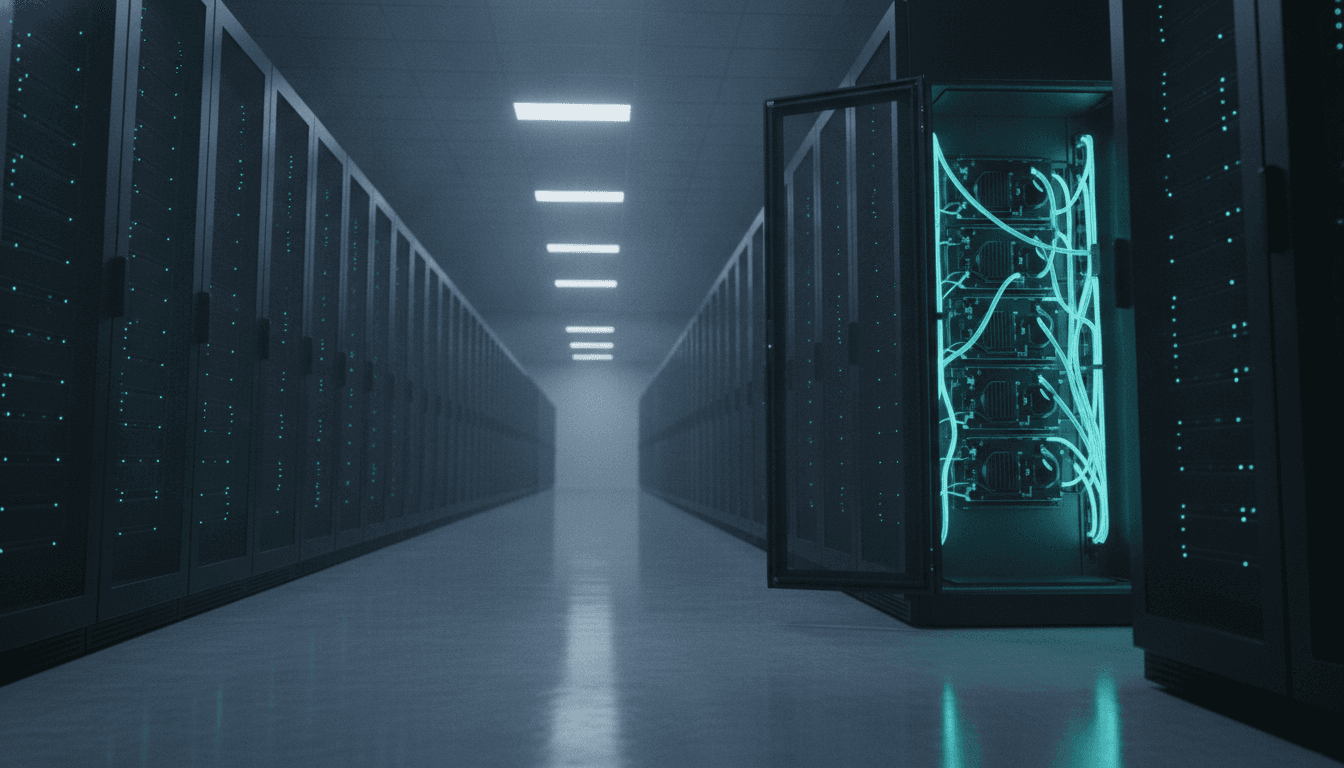
What Is a Data Center, Really?
Every email you send. Every video you stream. Every AI query you make. They all route through a physical building humming with activity. That's a data center—the real-world backbone of our digital lives, and it's anything but an ethereal 'cloud.' Think of it as a factory. But instead of goods, this factory stores, processes, and moves data. 24/7.
Conceptually, the core components are simple. The execution? Immensely complex. You have servers, which are just specialized, powerful computers doing the thinking. Then there are storage systems—solid-state drives (SSDs) and old-school hard drives—acting as the digital library. A web of networking gear like routers, switches, and fiber optic cables connects it all and links the building to the outside world. But the real engineering marvel—the true challenge—is the infrastructure keeping it all from crashing. We're talking massive electrical systems, complete with backup generators and uninterruptible power supplies (UPS) for when the grid fails. And, critically, sophisticated cooling systems to stop the servers from literally melting down.
The Symphony of Power and Cooling
An engineer sees a data center for what it is: a giant energy-conversion machine. Electricity goes in. Computing gets done. A whole lot of heat comes out. And the amount of energy involved is staggering. A single large hyperscale data center, the kind run by giants like Amazon Web Services, Google Cloud Platform, and Microsoft Azure, can guzzle as much electricity as tens of thousands of homes. The International Energy Agency (IEA) reported that data centers chewed up about 1.5% of all global electricity in 2024. That figure is growing 12% a year.
All that power creates immense heat. Managing this thermal load is the single most critical operational job. For years, data centers relied on what was basically super-powered air conditioning, using massive computer room air conditioning (CRAC) units to blast chilled air through server halls. But that's not cutting it anymore. As computers get more powerful and packed tighter, air-based cooling is hitting a wall. So, the industry is now in a rapid pivot to liquid cooling. These advanced systems are far more efficient, circulating fluids directly over the hottest parts of a computer chip. This isn't just a nice-to-have upgrade; it's a flat-out necessity, thanks to the unique physics of artificial intelligence.
Why AI Needs Data Centers—And a Whole Different Kind
Why the sudden, unprecedented scramble for data center capacity? One reason. AI. Generative AI workloads are a different beast entirely, far more demanding than traditional computing. Training a large language model, like the ones in OpenAI's GPT-5.6 family, means crunching colossal datasets through complex neural networks. It's a process that demands a mind-boggling number of mathematical calculations happening all at once.
This is where Graphics Processing Units (GPUs) come in. Originally built to render your favorite video games, GPUs are masters of parallel processing—doing thousands of calculations simultaneously. That architecture makes them perfect for the matrix math at the heart of AI. A modern AI data center isn't just a room full of servers. It's an AI supercomputer, crammed with tens of thousands of interconnected GPUs from companies like Nvidia. This is the hardware at the center of the AI chip war, and it consumes way more power and throws off far more heat than the CPUs running normal business software. A single AI-optimized server rack can pull 40 kilowatts (kW) or more. For comparison, a traditional rack sips just 5-15 kW.
The result? A completely new breed of data center. These facilities are built for extreme power density. They are engineered from day one with advanced liquid cooling. They aren't just bigger—they are a different class of machine, designed to sustain brutal, high-intensity workloads that redline the hardware around the clock.
A Global Scramble for Land and Power
This insatiable demand for AI-ready infrastructure has ignited a global gold rush for land and energy. The IEA projects electricity use from data centers will double by 2030. For AI-specific facilities? It's expected to triple. This has turned data center construction into a national infrastructure priority, where finding a site now boils down to one thing: power.
Developers are now buying up land by the hundreds of acres, anything located near a major electrical substation. It's a frenzy. According to a report from Avison Young, land deals for data centers exploded by 141% in the first quarter of 2026 alone, making up 30% of all development site purchases. In established hubs like Northern Virginia, prices have gone vertical. Amazon Web Services just paid $700 million for a campus. That's a 1,272% markup from what the seller paid to assemble the land just a few years before. This kind of competition is pushing builders into new territories, from San Antonio, Texas, to Tulsa, Oklahoma—anywhere with cheap land and available power.
The implications are profound. Goldman Sachs calls it the biggest infrastructure investment cycle in modern history. It is a flat-out race to pour the physical foundation for our AI-powered future. But this race strains everything: electricity grids, water supplies, and the supply chains for critical gear like transformers. The biggest question is whether the energy industry can possibly build out fast enough to feed AI's voracious appetite. For more on that challenge, see our deep dive on the environmental cost of AI.
Drafted with AI assistance. How we work.
Frequently asked questions
- What is a data center and what does it do?
- A data center is a physical facility that houses an organization's computing infrastructure, including servers, storage drives, and networking equipment. It serves as the backbone of the internet, storing, processing, and distributing the data for everything from websites and emails to cloud applications and AI services. Its primary job is to ensure this digital information is always available and secure.
- Why does AI need so many powerful data centers?
- AI, especially training large models like GPT, requires performing a massive number of mathematical calculations simultaneously. This is best handled by thousands of specialized chips called GPUs working in parallel, which consume immense power and generate extreme heat. Consequently, AI needs a new class of data centers built for higher power density and equipped with advanced liquid cooling systems to handle these demanding, non-stop workloads.
- How much energy do AI data centers use?
- Data center energy use is surging due to AI. Globally, data centers consumed about 1.5% of all electricity in 2024, but the International Energy Agency projects this demand will double by 2030, largely driven by AI. An AI-focused server rack can use 40kW or more, compared to 5-15kW for a traditional one. A single large AI data center can consume as much power as 100,000 homes.
- What is the difference between a CPU and a GPU for AI?
- A CPU (Central Processing Unit) is a general-purpose processor excellent at handling tasks sequentially, one after the other. A GPU (Graphics Processing Unit), however, is designed for parallel processing, with thousands of cores to handle many tasks simultaneously. This parallel architecture makes GPUs ideal for the massive, repetitive calculations required to train and run complex AI neural networks, dramatically accelerating the process.
- Why are data centers moving to liquid cooling?
- The extreme heat generated by densely packed AI servers, particularly GPUs, is overwhelming traditional air cooling systems. Liquid cooling, which circulates fluid directly over hot components, is far more efficient at heat removal. This allows data centers to support higher power densities, improve energy efficiency, and reliably run the high-performance hardware required for modern AI workloads without overheating.
Sources & further reading
Sources
- databank.com — databank.com
- cisco.com — cisco.com
- atlassystems.com — atlassystems.com
- itbroker.com — itbroker.com