How Robots Learn to Walk, Grip, and Balance
It looks effortless for humans, but teaching a robot to walk or pick up an object is a monumental task. Here’s how modern robotics AI uses digital trial-and-error to master the physical world.

The Unspoken Complexity of Simple Actions
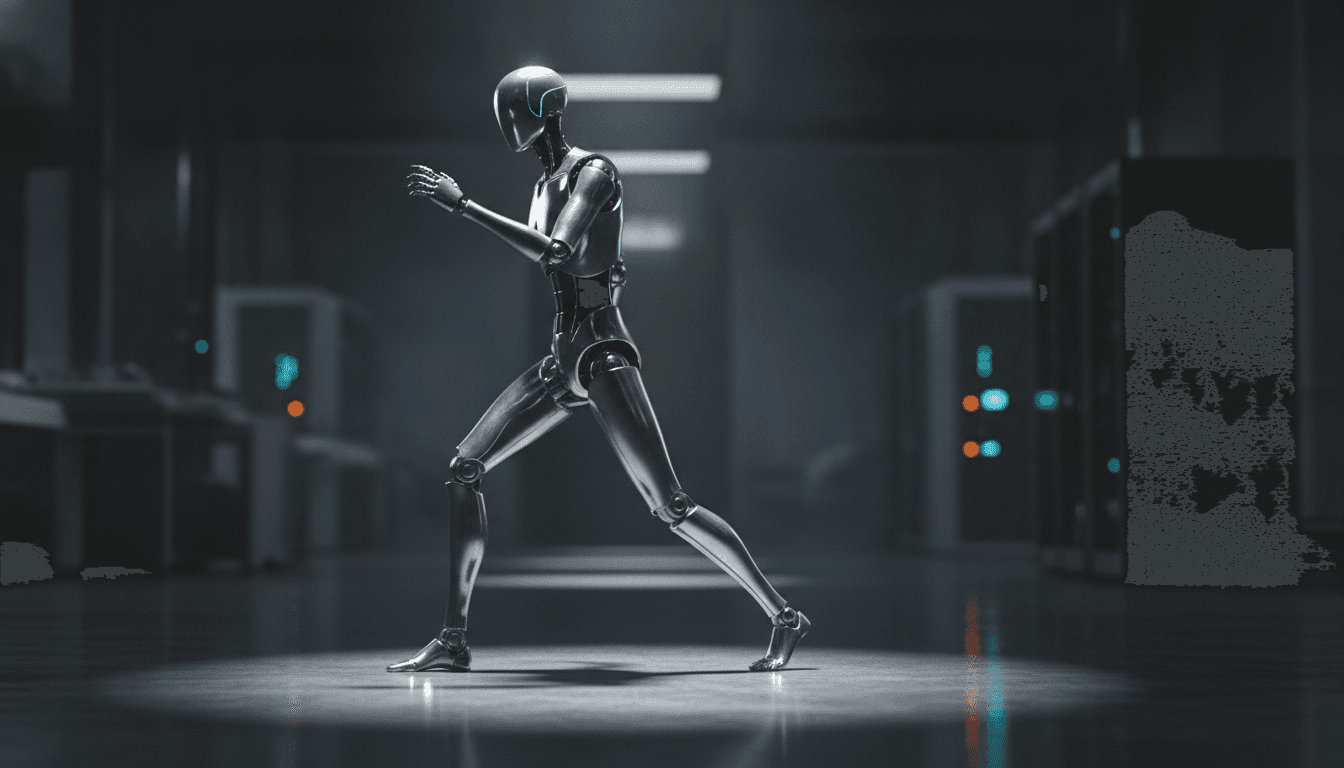
Picking up a coffee mug. Walking across a room. For us, it’s child’s play. But for a robot, these simple actions represent a dizzying computational challenge. So, how do robots learn to walk, balance, and grip objects in a world that is messy, unpredictable, and constantly changing? Not from a textbook. They learn by doing—or, more accurately, by doing, failing, and doing it again, millions of times over, in a process powered by artificial intelligence.
The secret sauce is a technique called reinforcement learning (RL). Think of it like training a dog: you reward good behavior (sitting) with a treat and ignore bad behavior (chewing the furniture). Reinforcement learning applies that same logic to a robot. The robot, or "agent," is given a goal—like walking forward—and it simply tries different combinations of movements. When its actions move it closer to the goal, it gets a digital "reward." Actions that lead to failure, like falling over, mean no reward, or even a penalty. After countless attempts, the AI starts to connect which sequences of motor commands lead to the highest reward.
This is a radical shift from traditional programming, where engineers would have to explicitly code every possible scenario. That old approach? Brittle. A slight change in terrain could render a robot useless. With RL, the robot develops its own strategies for movement and interaction.
A Digital Playground: The Power of Simulation
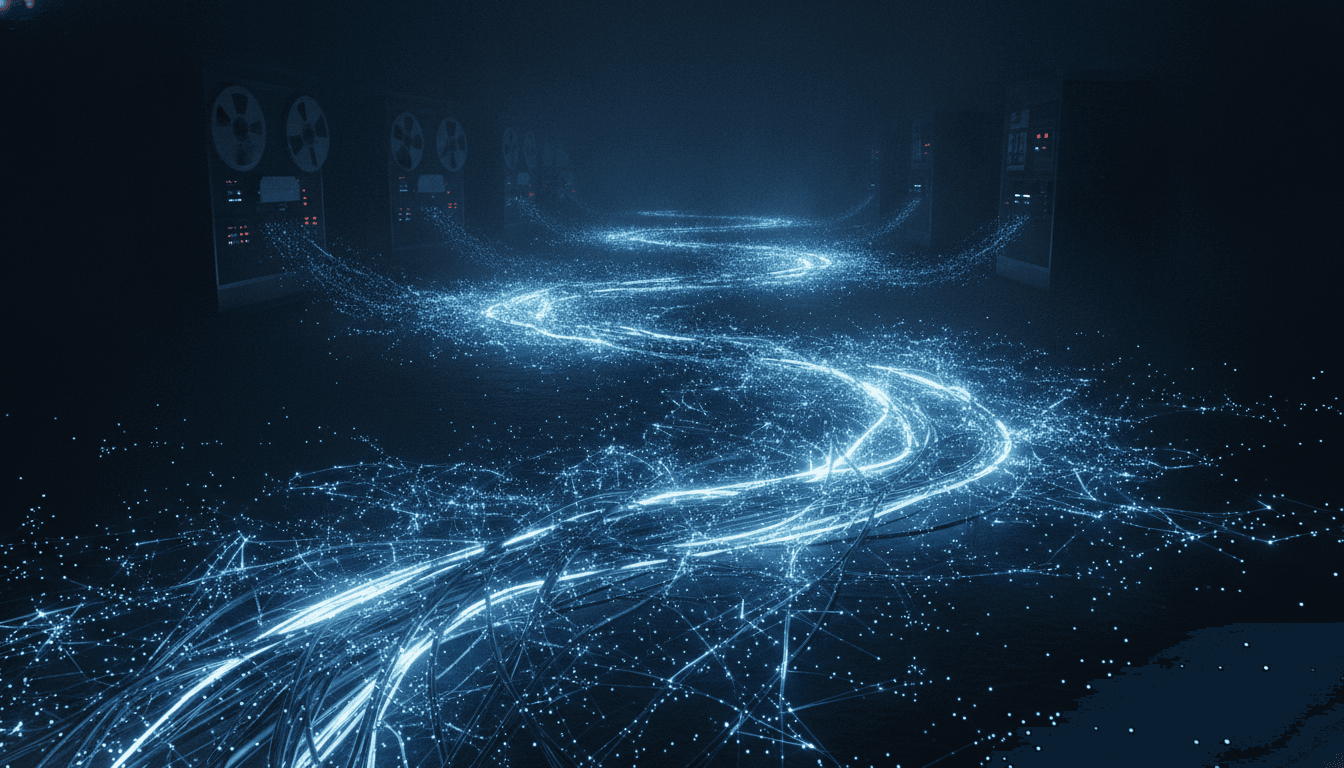
Of course, letting a multi-million-dollar humanoid robot fall over repeatedly isn't exactly a practical training method. It’s expensive, time-consuming, and a great way to wreck your hardware. This is why the vast majority of a robot's initial learning happens in a hyper-realistic virtual world. A digital playground. Developers create sophisticated physics simulators where thousands of digital versions of the robot can practice a task in parallel, experiencing the equivalent of years of trial-and-error in just a few hours. They can fall down millions of times without a single scratch.
Bridging the 'Reality Gap'
But training in a perfect digital world creates its own headache: the "sim-to-real gap." A policy that works flawlessly in simulation might fail, and fail spectacularly, on a physical robot because of subtle differences in friction, motor response, or sensor noise. To overcome this, engineers use a technique called domain randomization. They intentionally introduce chaos into the simulation—changing the lighting, altering the floor's friction, or tweaking the robot's own physics. This forces the AI to develop a more robust and adaptable strategy that isn't over-optimized for one specific set of conditions. It learns to transfer its skills to the real world, often with no additional tuning.
This is precisely how companies like Boston Dynamics have taught their Atlas humanoid robot complex maneuvers like running and lifting heavy objects. The robot’s fluid, almost natural movements are the result of policies honed over millions of hours in simulation before ever being deployed on the all-electric hardware.
Robot Balance Explained: A Symphony of Sensors
To walk, or even just stand still, a robot needs data. A constant stream of it. The most crucial sensor for balance is the Inertial Measurement Unit (IMU). It's essentially the robot's inner ear. The IMU combines accelerometers and gyroscopes to measure the robot's orientation, angular velocity, and linear acceleration, providing the core data needed for dynamic balance control.
The IMU isn't working alone, though. This data is supplemented by other sensors:
- Force/Torque Sensors: Located in the robot's feet and joints, these measure the forces and pressures exerted as the robot touches the ground. This feedback is vital for adjusting posture on uneven surfaces.
- Encoders: These are placed in the robot's joints to measure the precise angle of each limb, giving the AI an understanding of its own body configuration—a concept known as proprioception.
- Vision Systems: Cameras and depth sensors like LiDAR allow the robot to see the world, identify obstacles, and map its surroundings using a process called SLAM (Simultaneous Localization and Mapping). This helps the robot plan its path and anticipate terrain changes.
An AI control system, like the one developed by Figure AI for its humanoid robot, processes this torrent of sensor data at incredibly high frequencies. Complex algorithms then translate the data into tiny, continuous adjustments to the robot's motors to maintain its center of gravity. Sense, compute, act. This entire loop happens hundreds of times per second.
How Robots Learn to Grip: From Brute Force to a Softer Touch
Grasping an object is another one of those tasks that seems trivial but is brutally complex for a machine. How much force is needed to pick up an egg without crushing it? How should a robot hold a power drill versus a delicate piece of fabric? The answer, again, lies in a combination of AI and advanced sensors. Modern robotic grippers are often equipped with their own force/torque and tactile sensors that provide rich feedback on pressure distribution.
Machine learning models, often trained on vast datasets of 3D object models, help the robot determine the best place to grip an unfamiliar object. By analyzing an object’s shape from its camera feed, it can predict a stable grasp. And the physical design of grippers is evolving. Instead of rigid, two-fingered claws, many modern robots use soft, compliant grippers made of materials like silicone. These soft grippers can conform to the shape of an object, distributing pressure more evenly and allowing a secure grip on irregular items without precise calculations. Some innovative designs even use principles like granular jamming or electroadhesion for handling delicate materials.
It's not all reinforcement learning, however. Another AI technique called imitation learning (or learning from demonstration) is proving highly effective. Here, a robot learns by observing a human perform a task, either through video or a teleoperated control rig. The AI then works to replicate those actions. This approach is powerful for teaching complex, multi-step tasks that are easier to show than to define with a reward function. To learn more about how AI has developed over the decades, see our guide on the history of AI.
The journey of how robots learn is a fascinating intersection of software and hardware. It's a story of digital trial and error, of learning from millions of virtual failures to achieve physical success. As AI algorithms become more sophisticated and sensor technology more acute, we are moving closer to a future where robots can navigate our world with the same effortless grace that we do. For a deeper dive into how AI is being applied in the real world, explore how companies are creating value with our article on building an AI strategy.
Related Articles


This article was produced with AI assistance under human direction, and reviewed and fact-checked by a named editor before publication. How we work.
Frequently asked questions
- How do robots learn to walk?
- Robots primarily learn to walk through a process called reinforcement learning. They practice millions of times in a computer simulation, receiving digital 'rewards' for successful steps and 'penalties' for falling. This trial-and-error process allows the AI to discover the most stable and efficient walking patterns, which are then transferred from the simulation to the physical robot.
- What is reinforcement learning in robotics?
- Reinforcement learning is a type of machine learning where a robot, or 'agent,' learns to achieve a goal by interacting with its environment. The robot tries different actions and receives feedback in the form of rewards or penalties. By maximizing its cumulative reward over time, the robot learns the optimal sequence of actions to complete a task, such as walking or grasping an object, without being explicitly programmed.
- How do robots balance themselves?
- Robots maintain balance using a combination of sensors and fast-acting control algorithms. An Inertial Measurement Unit (IMU) acts like an inner ear, detecting changes in orientation and motion. Force sensors in the feet measure pressure distribution, while joint encoders track limb positions. An AI processes this data hundreds of times per second to make constant, tiny adjustments to the robot's motors, keeping its center of gravity stable.
- What is the 'sim-to-real' gap in robotics?
- The 'sim-to-real' gap refers to the performance difference when a robot's control policy, trained in a virtual simulation, is deployed on a physical robot. Discrepancies between the simulation's physics and real-world conditions like friction, sensor noise, and motor delays can cause a perfectly functional simulated robot to fail in reality. Engineers use techniques like domain randomization to bridge this gap by making the simulation more varied and unpredictable.
- How do robots know how to grip different objects?
- Robots learn to grip objects using a mix of AI, sensors, and advanced gripper designs. Computer vision and machine learning algorithms analyze an object's shape to predict the best grip points. Force and tactile sensors in the gripper provide real-time feedback to apply the right amount of pressure. Modern soft grippers, made from flexible materials, can also physically conform to an object's shape, simplifying the process for irregular or delicate items.
Sources & further reading
Sources
- scu.edu — onlinedegrees.scu.edu
- makerforge.tech — makerforge.tech
- medium.com — medium.com
- cmu.edu — publications.ri.cmu.edu
- mathworks.com — blogs.mathworks.com
- thinkrobotics.com — thinkrobotics.com