What's an Algorithm? A No-Code Explanation for How They Run Your Life
You hear 'the algorithm' blamed for everything. But the word's been stripped of its simple, powerful meaning. Here's what it actually is, how it works—and why a 9th-century Persian scholar is responsible for your Netflix queue.


A strangely specific T-shirt ad pops up on Instagram, seconds after you mentioned the obscure TV show it's from. Weird. Netflix serves up a movie you’d never choose but end up loving. Your best friend’s celebratory post vanishes from your Facebook feed, while a distant acquaintance’s complaint is suddenly front and center. What's going on? The algorithm. It's the all-purpose answer, the ghost in the machine curating our digital lives. But for a word that holds so much power, few of us can explain what it really is. So, what is an algorithm, and how the heck did it come to run the world?
At its core, an algorithm is shockingly simple: it’s just a set of step-by-step instructions for getting a job done. That’s it. A recipe. Think about making a cup of tea. You follow a sequence: boil water, put a tea bag in a mug, pour hot water over the bag, wait three minutes, maybe add milk. That's an algorithm. Your morning routine, from hitting the snooze button to grabbing your keys? It's an algorithm. Following the cryptic diagrams to assemble IKEA furniture is—for better or worse—following an algorithm.
The word itself has a wild history, winding back more than a thousand years to a brilliant Persian polymath, Muḥammad ibn Mūsā al-Khwārizmī. He was a powerhouse. Working in Baghdad's legendary House of Wisdom around the 9th century, al-Khwārizmī wrote revolutionary books on mathematics. When his work on the Hindu-Arabic numeral system was translated into Latin, his name got a new spelling: “Algoritmi.” At first, the term just meant the new rules for doing arithmetic with decimals. Only over centuries did it evolve to describe any formal, step-by-step procedure for calculation.
How Algorithms Work: From Simple Rules to Complex Systems
So how do we get from a tea recipe to the beastly systems that route global internet traffic? The principle is identical. The difference is speed and scale. A computer is just a machine that can follow a list of instructions with blinding speed and perfect accuracy. It never gets bored. It never improvises. It just executes—performing billions of steps per second. This turns a simple concept into a tool that can reshape society.
Every piece of software on your phone or laptop is built from algorithms. Some are dead simple. A sorting algorithm, for instance, has one job: take a jumbled list and arrange it in a specific order, like alphabetizing your contacts. A search algorithm’s purpose is to find one specific thing in a sea of data, like locating a single file on your hard drive.
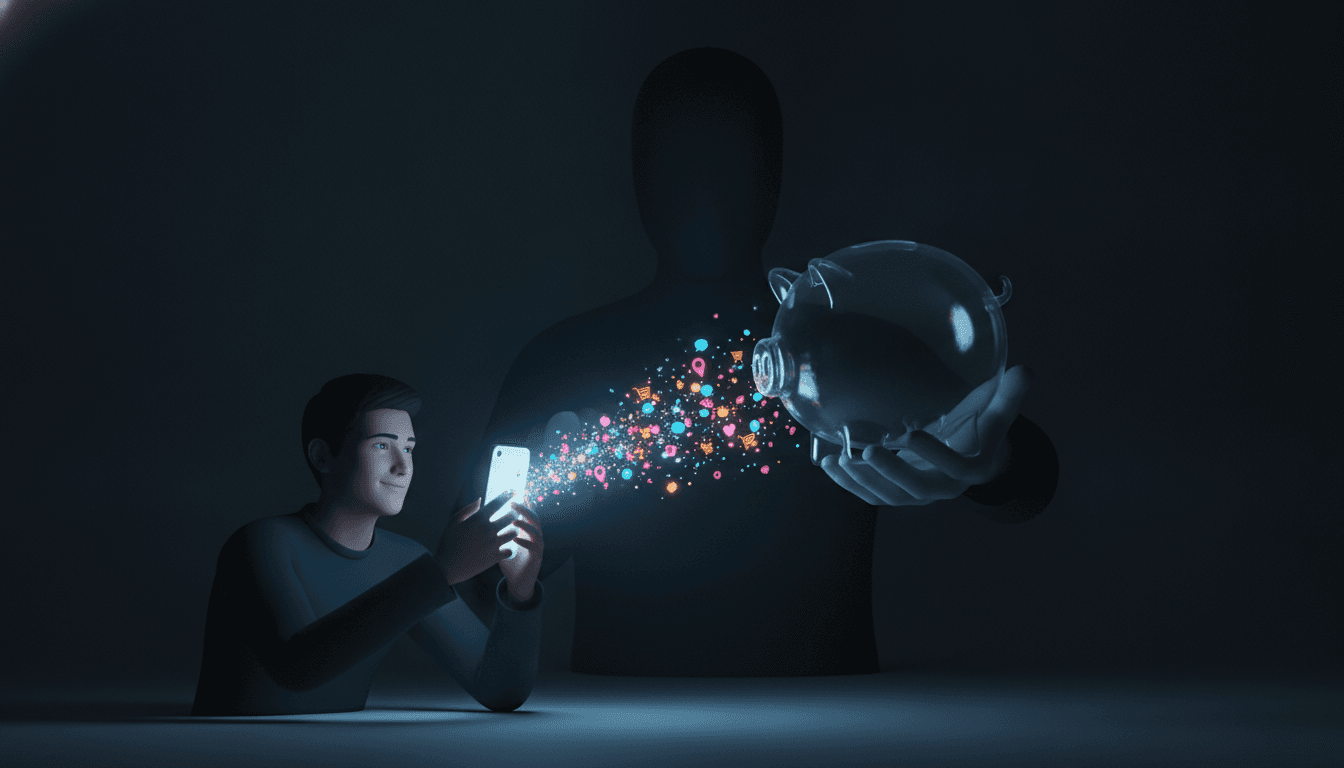
But the algorithms that have become cultural forces are another thing entirely. They don't just follow a fixed script; they're designed to adapt. This is where the question of how algorithms work gets really interesting. They use inputs—data—to make decisions and spit out an output. And for the algorithms shaping your digital life, *you* are the input. Your clicks, your likes, your shares, your search history, how long your gaze lingers on a video—it's all data, feeding the system.
The Curators of Your Digital World
Let's look at a few of these powerful digital butlers. These systems aren't just following instructions; they’re deep in the business of prediction and personalization.
- Social Media Feeds: When you open Facebook, Instagram, or TikTok, you are not seeing a chronological timeline. Not even close. Instead, a potent feed algorithm instantly weighs thousands of possible posts to predict what you're most likely to engage with. It studies your past behavior. Do you watch more videos than you look at photos? Do you interact more with your actual friends or with brands? The algorithm analyzes the content itself, its topic, and its current popularity. It then builds a custom feed just for you, one designed to keep you scrolling.
- Recommendation Engines: Services like Netflix and Spotify have one main goal: keep you on their app. Their recommendation algorithms are the key. They analyze your viewing history, what you rate highly, what you ditch halfway through, and then compare your tastes to millions of other users. From there, the system makes an educated guess, pointing you to content that people with similar taste profiles also loved. This is how you get those eerily on-point “Because you watched...” suggestions.
- Navigation and Search: Ever wonder how Google Maps finds the fastest way to the airport? Its algorithms are crunching an insane amount of real-time data. They see current traffic jams, road closures, speed limits, and historical traffic patterns to calculate the best route right now. A Google search works in a similar way. It doesn't just scan for your keywords. It uses a vast suite of algorithms, famously descending from one called PageRank, to judge a page's authority and relevance, pushing the most useful results to the top.
When Algorithms Start to Learn
The most advanced algorithms today don't just follow the rules they were given. They learn. This is the world of artificial intelligence and machine learning. Instead of a programmer writing explicit rules for every possible situation, developers build an algorithm that can teach itself by chewing on enormous piles of data.
Here's an analogy. You could try to write a traditional algorithm to identify a cat in a photo by programming rules like “if it has pointy ears, and whiskers, and fur, then it’s a cat.” Good luck. What about a cat with folded ears? Or a hairless Sphynx? You’d be writing rules forever. Machine learning flips the script. You just show the algorithm millions of pictures labeled “cat” and millions labeled “not a cat.” It figures out the patterns on its own, building a far more flexible and accurate system. This is the tech behind your phone's facial recognition and even cutting-edge medical diagnostics. For a closer look, our article on What Is Machine Learning? gets into the nitty-gritty.
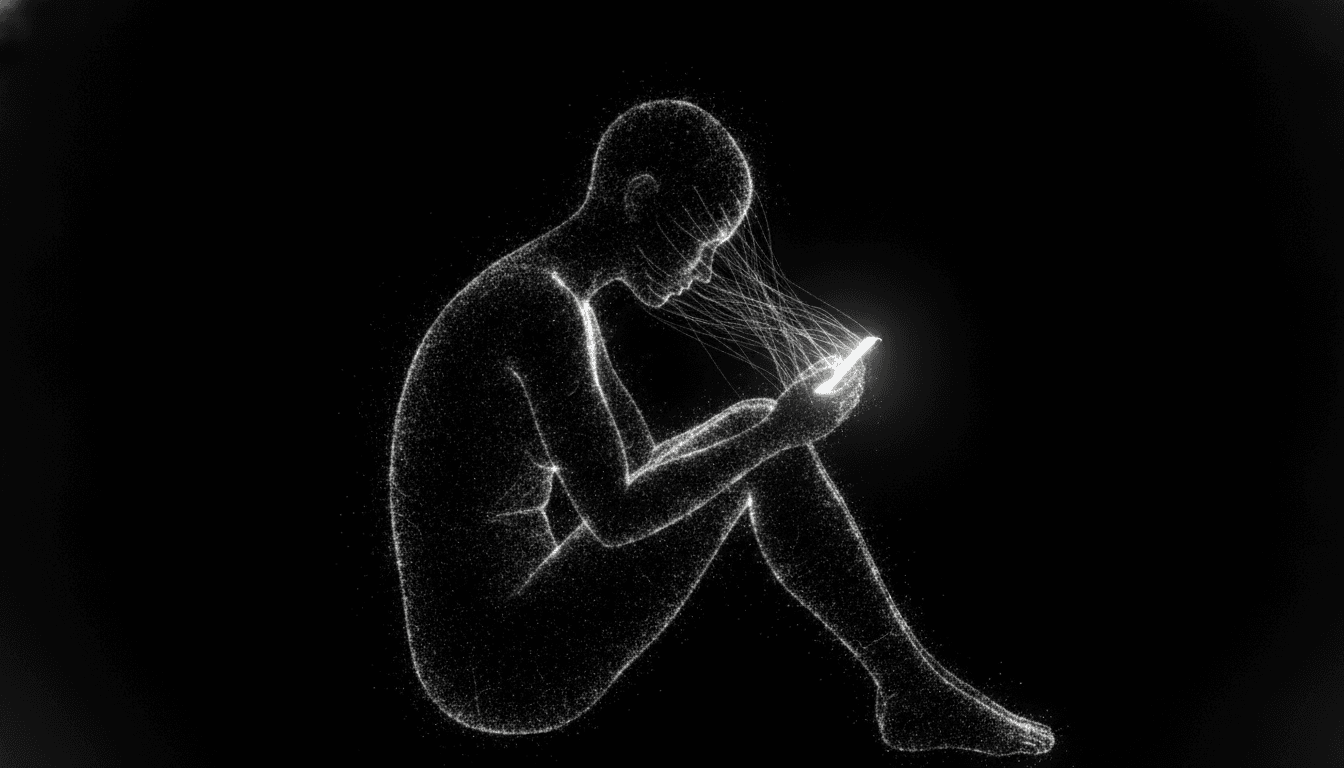
This ability to learn is what makes modern algorithms so powerful—and so opaque. A TikTok algorithm can spot and create new micro-trends faster than any team of humans ever could. It’s always running experiments, showing a video to a tiny test audience, measuring the reaction, and then deciding whether to blast it out to millions. This self-optimizing loop is why the platform can feel so addictive and personalized. But it’s also the source of major headaches, from algorithmic bias and echo chambers to the spread of viral misinformation, a world where telling fact from fiction is getting harder, a problem we cover in Why You Can't Trust Your Eyes Online Anymore.
These complex systems are a long way from a simple recipe. They are dynamic, adaptive engines constantly being fed new data, subtly changing their own rules and, in the process, shaping our behavior. To understand what does algorithm mean today, you have to look past the old definition. You have to see them as the basic architecture of our digital society—a system of rules that, like it or not, we are all living by.
Related Articles



This article was produced with AI assistance under human direction, and reviewed and fact-checked by a named editor before publication. How we work.
Frequently asked questions
- What is the simplest definition of an algorithm?
- The simplest definition of an algorithm is a set of step-by-step instructions designed to perform a specific task or solve a problem. Think of it like a cooking recipe or the instructions for assembling furniture. It's a finite sequence of well-defined actions that, when followed, leads to a predictable outcome.
- Where does the word 'algorithm' come from?
- The word 'algorithm' originates from the name of the 9th-century Persian mathematician, Muḥammad ibn Mūsā al-Khwārizmī. He was a scholar at Baghdad's House of Wisdom whose writings on arithmetic were translated into Latin. His last name was Latinized as 'Algoritmi,' which eventually evolved into the word we use today.
- What are three examples of algorithms in daily life?
- Three common examples of algorithms in daily life are social media feeds, GPS navigation, and online shopping recommendations. Social media platforms use algorithms to decide what content to show you. GPS apps like Google Maps use algorithms to calculate the fastest route based on traffic. E-commerce sites like Amazon use algorithms to suggest products based on your browsing and purchase history.
- How do social media algorithms decide what I see?
- Social media algorithms analyze thousands of data points to personalize your feed. Key factors include your past interactions (likes, comments, shares, watch time), who you interact with most, the type of content you prefer (e.g., videos vs. photos), and the overall popularity of a post. The goal is to predict what you will find most engaging to keep you on the platform longer.
Sources & further reading
Sources
- tekkieuni.com — tekkieuni.com
- medium.com — medium.com
- geeksforgeeks.org — geeksforgeeks.org
- learning.com — learning.com
- nasa.gov — science.nasa.gov
- unimelb.edu.au — findanexpert.unimelb.edu.au