IBM Buys HRL Labs, Placing a Massive Bet on Silicon Quantum
The tech giant just bought the legendary research lab from Boeing and GM. It’s a huge pivot, signaling that silicon—not just superconductors—may be the fastest path to a real quantum computer.
 AI Tech Dialogue Editorial Team6 min read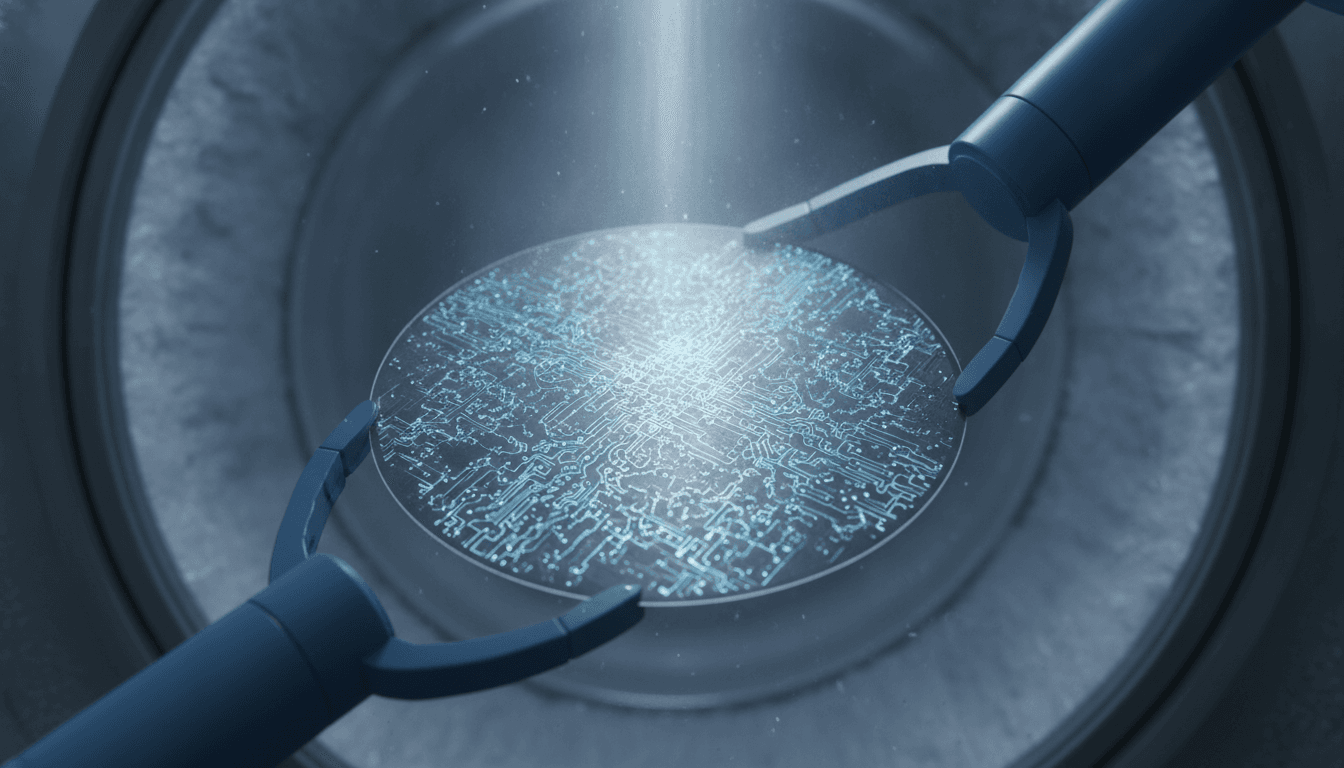
A New Front in the Quantum Wars
IBM just bought a legend. Seriously. In a move that redraws the quantum computing map, the tech giant announced Thursday it's acquiring HRL Laboratories. Yes, that HRL. The storied research institute founded by Howard Hughes, currently owned by The Boeing Company and General Motors. This is a massive pivot for IBM's quantum strategy, bolting a deep portfolio of silicon-based technology onto its already world-class superconducting program.
No one's talking numbers. The financial terms weren't disclosed. But the strategic value is immense.
The deal, set to close by Q3 2026, brings HRL's formidable expertise in 'silicon-spin qubits' right into IBM's research division. This is a completely different way to build a quantum processor. It's a clear diversification of IBM's bets, a signal that the company believes silicon—the material that built our entire digital world—might just be the key to building quantum computers that can actually scale.
Dr. Darío Gil, the Director of IBM Research, didn't mince words. "HRL’s leadership in silicon-spin qubits and their proven manufacturing expertise will be a game-changing addition to our quantum portfolio," he said in a statement. "This acquisition will not only complement and extend our mission to scale powerful quantum computers but also accelerate innovation across the entire quantum stack."
From the 'Spruce Goose' to Silicon Qubits
To really get the weight of this deal, you need to know HRL's history. It isn't just some startup. Howard Hughes himself founded it in 1948 as the research arm for Hughes Aircraft. This Malibu lab is a true giant of 20th-century innovation. It's where Theodore Maiman demoed the world's first working laser in 1960. Where the ion propulsion systems that guide satellites were pioneered. They were even developing early AI for self-driving cars way back in 1984.
GM bought Hughes Aircraft in 1985, and HRL was later spun out into a joint venture with Boeing. All the while, it kept pushing the envelope in microelectronics, materials science, and quantum. So no, this is not just another tech buyout. It's the absorption of an American research icon. Confronted with the classic build-versus-buy decision for a core capability, IBM's answer was loud and clear: Buy.
The Allure of Silicon
So what's the big deal? It's about a fundamental fork in the road. IBM's world-leading quantum computers currently use superconducting qubits. These things are big. And they have to be kept incredibly cold—around 15 millikelvin, which is colder than deep space. Silicon-spin qubits are a completely different animal.
Here's the basic idea. Instead of a bulky superconducting circuit, a spin qubit uses the spin ('up' or 'down') of a single electron trapped in a tiny silicon cage called a quantum dot. The potential payoff is huge.
- Scalability: They're tiny. Nanometers tiny. In theory, you could pack millions of them onto a single chip, achieving a density that superconducting designs can only dream of.
- Manufacturability: Here's the kicker—they can be made using the standard CMOS processes the semiconductor industry has perfected over the last 50 years. That means tapping into a mature, global manufacturing machine, which could slash costs and speed up everything.
- Coherence and Temperature: Silicon is a 'quiet' place for a qubit, so it can hold its fragile quantum state longer. They also run warmer. Okay, 'warmer' means 1 Kelvin, but that's a hundred times hotter than superconducting systems. A big difference that dramatically cuts down on the insane cryogenic plumbing needed.
Make no mistake, this is a clear signal. IBM isn't abandoning its superconducting roadmap. Not at all. It's just opened up a powerful, parallel path to getting these machines to scale. This two-track approach is a crucial piece of a much bigger strategy for wringing real business value out of deep tech.
The Broader Quantum Chessboard
This move doesn't happen in a vacuum. The race to build a truly fault-tolerant quantum computer is getting fiercer by the day. You have Google, Quantinuum, and a swarm of well-funded startups all betting on different hardware. By buying HRL, IBM gets more than just brilliant people and patents. It gets vertical integration. That means tighter feedback loops between designing, building, and testing—a massive advantage when progress comes one breakthrough at a time.
The deal should also give a serious boost to Anderon. That's the pure-play quantum wafer foundry IBM announced in May 2026 with support from the Commerce Department. HRL's know-how could be the key to perfecting spin qubit manufacturing there, a service for IBM and the wider quantum world. As we've noted before, IBM's bet on silicon is a defining moment for its quantum ambitions.
And it's not just about computing. HRL brings serious expertise in quantum sensing, which uses quantum effects to build hyper-precise sensors for navigation, medicine, you name it. This opens up entirely new markets and applications for IBM.
What about Boeing and GM? They're shifting from owners to partners. Both companies plan to keep working with the combined IBM-HRL team on quantum applications for their own worlds: aerospace, defense, and cars. It's a smart, pragmatic move. They get access to a much bigger quantum ecosystem without having to foot the bill for building the fantastically expensive hardware themselves.
The road to a truly useful, error-corrected quantum computer is still a long one. It's filled with daunting scientific challenges. But with this deal, IBM hasn't just hedged its technical bets. It has acquired a piece of history to help build the future.
Related Articles


Frequently asked questions
- Why did IBM acquire HRL Laboratories?
- IBM acquired HRL Laboratories to integrate its world-class expertise in silicon-spin qubits into its quantum computing program. This move diversifies IBM's hardware strategy beyond its leading superconducting qubit approach, aiming to accelerate the development of scalable, fault-tolerant quantum computers by leveraging silicon's manufacturing advantages.
- What is HRL Laboratories?
- HRL Laboratories is a renowned research and development facility in Malibu, California, originally founded by Howard Hughes in 1948. Before the acquisition by IBM, it was jointly owned by Boeing and General Motors. HRL has a long history of innovation, including demonstrating the world's first working laser in 1960.
- What are silicon-spin qubits?
- Silicon-spin qubits are a type of quantum bit that encodes information in the spin of a single electron trapped within a tiny silicon structure. Their main advantage is that they can be manufactured using existing semiconductor fabrication technology, which could make them easier and cheaper to scale to the millions of qubits needed for powerful quantum computers.
- How are silicon-spin qubits different from superconducting qubits?
- The main difference lies in the physical system. Superconducting qubits are tiny electrical circuits that become quantum at near-absolute zero temperatures. Silicon-spin qubits use the spin of an individual electron in a silicon chip. Spin qubits are much smaller, can operate at slightly warmer (though still cryogenic) temperatures, and leverage mature silicon manufacturing processes, offering a different path to massive scalability.
Sources & further reading
Sources
- IBM to Acquire HRL Laboratories to Power the Future of Quantum — IBM Newsroom
- IBM to Acquire HRL Laboratories | Business | Jul 2026 — Photonics Spectra
- wikipedia.org — en.wikipedia.org
- hrl.com — hrl.com
- quantumcomputingreport.com — quantumcomputingreport.com