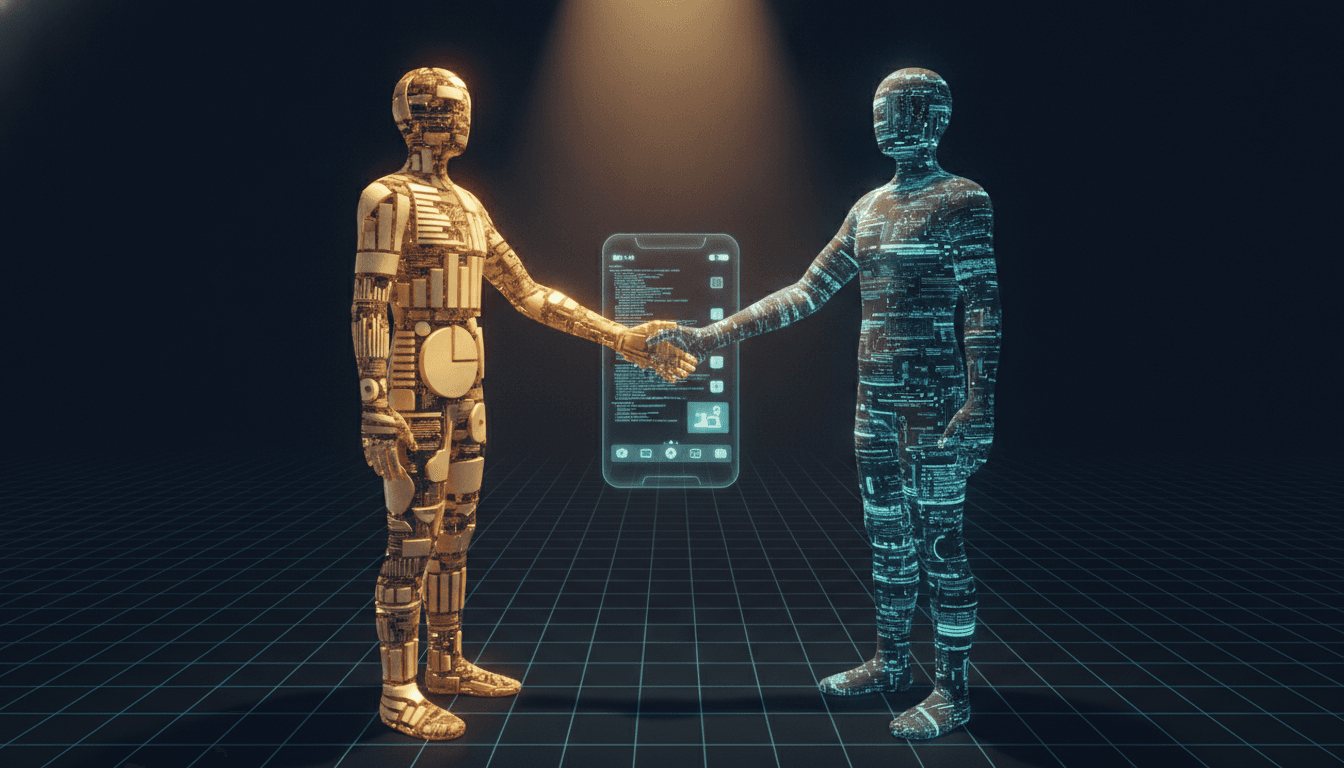
IBM Just Bought a Legend to Bet Its Quantum Future on Silicon
Big Blue is snapping up HRL Laboratories, adding the lab's deep expertise in silicon-spin qubits to its portfolio. It's a major diversification in the frantic race to build a real quantum computer.
 AI Tech Dialogue Editorial Team5 min read
International Business Machines Corp. is buying a legend. The company just announced a definitive agreement to acquire HRL Laboratories—the iconic research and development institution—from its joint owners, Boeing and General Motors. This blockbuster deal is all about fusing HRL's mastery of silicon-spin qubit engineering with IBM's own formidable quantum program, which has mostly focused on superconducting qubits until now. Financial terms weren't disclosed, but the deal should close by the end of Q3 2026, assuming regulators sign off.
Make no mistake: this is more than a corporate buyout. It's a massive strategic diversification. IBM is now betting big on a second, complementary path to computing's holy grail: a large-scale, fault-tolerant quantum machine. It's also a quiet admission that while superconducting qubits have led the pack, they might not be the only technology that can win the race. As for Boeing and GM, they'll keep partnering with IBM on quantum applications and advanced tech after the sale.
A Two-Pronged Attack on Quantum Scaling
For years, IBM has dominated the quantum race. Their weapon of choice? Superconducting circuits. That technology, which requires cooling things to temperatures colder than deep space, has powered their impressive fleet of more than 90 quantum computers. But there's a catch. These systems face enormous scaling challenges and are incredibly sensitive to environmental 'noise' that can corrupt calculations.
Enter HRL Laboratories. Their pioneering work is in a totally different area: silicon-spin qubits. Instead of complex circuits, this tech uses the intrinsic spin of a single electron, trapped inside a tiny semiconductor structure called a quantum dot, to represent a qubit. The payoff could be huge. Silicon, after all, is the bedrock of the entire modern electronics industry. Leveraging decades of established fabrication techniques could dramatically simplify manufacturing and crank up qubit density. Proponents think silicon-spin qubits offer longer coherence times—how long a qubit holds its state—and a more direct route to the massive number of interconnected qubits real fault-tolerant computing demands.
"The HRL team will help IBM push even farther forward toward the frontiers of quantum innovation," said Jay Gambetta, an IBM Fellow and Vice President of IBM Quantum, in a statement. He emphasized that HRL's technology strengthens IBM's long-term plans not just for computing, but across quantum sensing and networking, too.
What is HRL Laboratories?
So why is this such a big deal? You have to understand HRL's history. It's storied. Established way back in 1948 by the iconoclastic aviator and industrialist Howard Hughes as part of Hughes Aircraft, the Malibu, California-based lab has been cranking out innovations for over 75 years. Its single biggest claim to fame arrived in 1960, when physicist Theodore Maiman demonstrated the world's first working laser. For decades, it's been jointly owned by GM and Boeing, acting as a private R&D powerhouse tackling tough problems in materials science, microelectronics, and AI.
"Joining IBM is the natural next chapter for what we have built at HRL," said Rob Vasquez, President and CEO of HRL Laboratories. "We now look forward to leveraging IBM's industry leadership and working alongside their world-class talent on fundamental infrastructure to take this vision forward."
A New Chapter in the Quantum Race
Of course, IBM isn't making this move in a vacuum. The acquisition turns up the heat on the global race for 'quantum advantage'—that magic moment when a quantum computer can solve a real-world problem better than any classical supercomputer ever could. IBM hasn't been shy about its goals; CEO Arvind Krishna has said quantum will tackle problems classical machines can "never solve" in fields like materials discovery and financial risk modeling. And they're backing it up with cash. Big cash. In June 2026, the company pledged over $10 billion to its quantum program, all to fund its roadmap to a fault-tolerant system by 2029.
This new hybrid approach—chasing both superconducting and silicon-spin qubits—is IBM's way of hedging its bets. It's a sophisticated play for the long game, a nod to the monumental engineering challenges that still lie ahead. Scaling the hardware is only half the battle. They also have to build the incredibly complex software and error-correction codes to make these powerful machines useful. This is a core component of any serious effort to build an AI strategy that actually delivers business value, where next-generation hardware is a key dependency.
Bringing HRL's silicon gurus in-house could also supercharge another major IBM project: Anderon, the world's first pure-play quantum wafer foundry announced in May 2026. This move lets IBM tighten the feedback loop between research, design, and manufacturing, which should accelerate learning cycles dramatically. It's a focus on deep, foundational tech, not unlike the massive government spending we're seeing in programs like the $5 billion 'Genesis Mission' to fuel AI in science, highlighting just how critical leadership in this space has become.
The full promise of quantum computing is still a long way off. Nobody's denying that. But by acquiring a research legend like HRL, IBM has made it clear it intends to explore every viable path to the summit.
Related Articles



Frequently asked questions
- Why did IBM acquire HRL Laboratories?
- IBM acquired HRL Laboratories to integrate HRL's advanced expertise in silicon-spin qubit engineering into its quantum computing program. This move complements IBM's existing work with superconducting qubits, diversifying its technological approach to building powerful, scalable quantum computers and accelerating its long-term vision.
- What are silicon-spin qubits?
- Silicon-spin qubits are a type of quantum bit that uses the intrinsic spin of a single electron confined within a silicon-based structure, like a quantum dot. This approach is promising because it leverages the mature and highly scalable manufacturing processes of the existing semiconductor industry, potentially offering a path to creating denser and more stable quantum processors.
- How does this acquisition affect the quantum computing race?
- This acquisition strengthens IBM's position as a leader in the quantum computing race by giving it a second major technological pathway to a fault-tolerant quantum computer. By pursuing both superconducting and silicon-spin qubits, IBM hedges its bets against future roadblocks and can potentially combine the strengths of both approaches, putting pressure on competitors like Google and other quantum startups.
- Who owned HRL Laboratories before IBM?
- Before the acquisition by IBM, HRL Laboratories was a private research company jointly owned by The Boeing Company and General Motors Corporation. Both companies will continue to partner with IBM on quantum applications after the deal closes.
Sources & further reading
Sources
- IBM to Acquire HRL Laboratories to Power the Future of Quantum — IBM Newsroom
- ibm.com — newsroom.ibm.com
- morningstar.com — morningstar.com
- constellationr.com — constellationr.com
- seekingalpha.com — seekingalpha.com