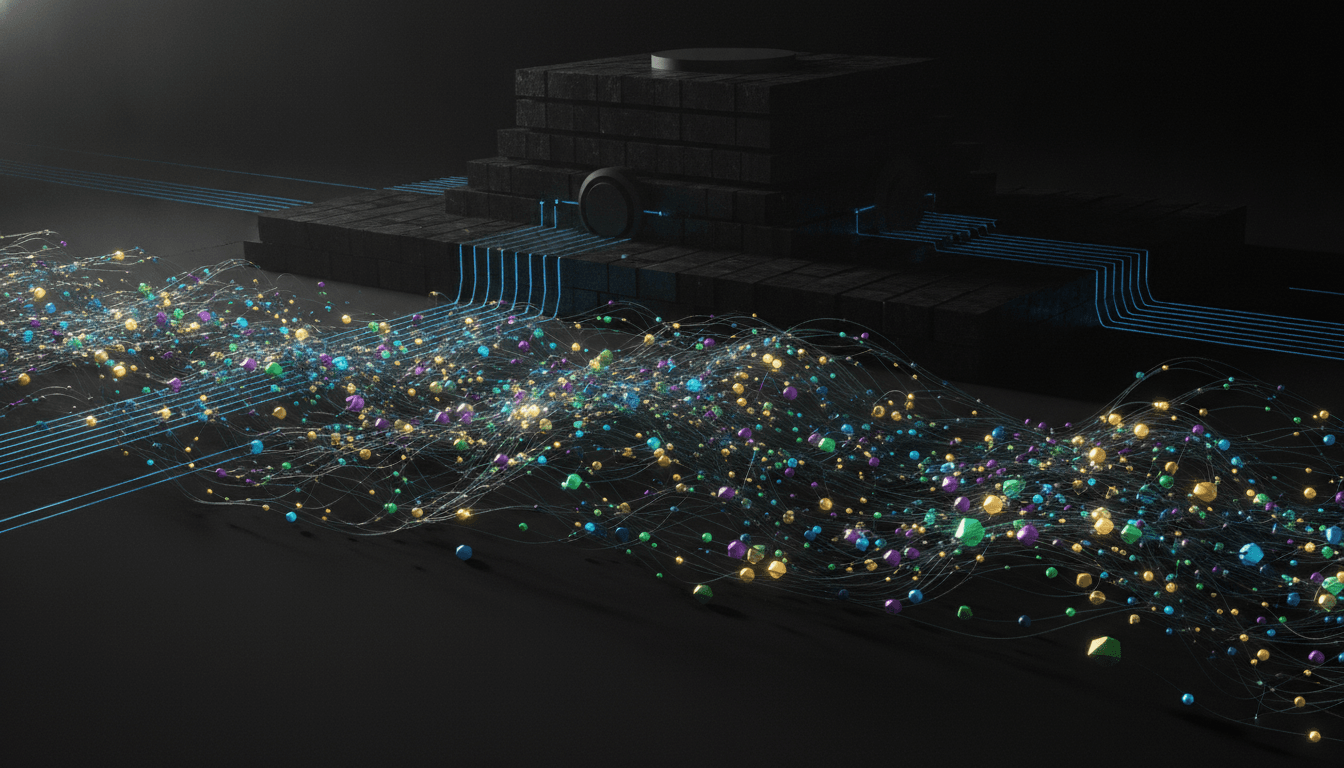
What Is 6G? A Low-Hype Guide to the Next Wireless Generation
5G isn't even fully here, but the tech world is already chasing the next big thing. So what is 6G, really? Here's a no-hype guide to what it is, when it's *actually* coming, and why you can safely ignore it for now.
 Salman Oukati Sadegh6 min read
So, Really, What Is 6G?
Let's get one thing straight before the hype train leaves the station. 6G doesn't exist yet. Not really. It's not a phone you can buy or a network you can join. Right now, what is 6G is just a grab-bag of ambitious research projects—a wishlist for whatever comes after 5G and its upgrade, 5G-Advanced. The official standards body, the International Telecommunication Union (ITU), only just started sketching out the basics in late 2023. They published a framework called “IMT-2030,” which basically fired the starting gun on a decade of R&D.
At its core, 6G wants to be an invisible, intelligent fabric connecting our physical and digital lives. This isn't just about faster Netflix on your phone. Not by a long shot. Researchers see it as the bedrock for a world humming with ambient AI, autonomous systems, and genuinely immersive extended reality (XR). The biggest shift from 5G is how it plans to use artificial intelligence: AI won't just run on the network; it will be baked into its very DNA, managing everything to make it smarter, faster, and more self-aware.
Forget a simple speed bump. Think of 6G as a sensory network. One key idea being kicked around is called Joint Communication and Sensing (JCAS). Here's the catch: the same network that zaps data to your devices could also sense the world around you. It could detect objects, track movement, maybe even check the air quality. That single change could unlock everything from hyper-advanced coordination for self-driving cars to cities that actually react to what people need, right now.
6G vs 5G: What Are the Promised Leaps?
The final specs are still years away, but the performance targets being thrown around are staggering. A monumental leap. If 5G was built to connect billions of things, 6G wants to connect them instantly, with huge bandwidth, while also sensing and understanding the world around them.
Here’s how the theoretical differences stack up:
- Speed: 5G tops out theoretically around 10-20 gigabits per second (Gbps). Researchers want 6G to hit 1 terabit per second (Tbps). That's a 50- to 100-fold jump.
- Latency: 5G promised a zippy 1 millisecond (ms) delay. 6G is aiming for the microsecond range—a thousand times faster. That's basically instantaneous, the kind of response time you'd need for delicate remote surgery or managing swarms of autonomous robots.
- Spectrum: To get that kind of speed, you need more radio runway. 6G research is looking way, way up the frequency ladder into the sub-terahertz (sub-THz) and terahertz (THz) bands, from 90 GHz up to 10 THz. The upside? Massive bandwidth. The downside? These signals are incredibly fragile, with short range and a nasty habit of being blocked by, well, almost anything.
- Intelligence: With 5G, AI feels like an app you install later. 6G is being designed as an “AI-native” system from the ground up. An AI brain will manage the whole complex beast—juggling spectrum, steering signals, predicting outages, and fending off attacks. It has to.
Get all that right, and you unlock the sci-fi stuff everyone talks about. Holographic calls. Digital twins of entire cities. A truly pervasive Internet of Things (IoT).
When Will 6G Launch? A Realistic Timeline
So when can you get it? Not anytime soon. Ignore the breathless headlines. Rolling out a new wireless generation is a slow, decade-long slog of research, bickering over standards, and then building the actual infrastructure. The big players—Nokia, Ericsson, and Qualcomm—are all pointing to one date for a commercial launch: 2030.
The industry consortium that develops the standards, the 3GPP, has a long road ahead. Here's how it's likely to play out:
- 2023-2026: The “dreaming phase.” Research and vision-setting. The ITU's IMT-2030 framework set the goals. Now the real work begins on defining the tech specs.
- 2027-2028: Let the standards wars begin. The 3GPP is expected to start its first formal work on 6G. Companies will start pitching their pet technologies.
- 2028-2029: The first specs get locked in. Initial 6G standards will probably be finalized, leading to the first lab tests and maybe a few pilot projects.
- 2030 and beyond: Showtime. The first public 6G networks will flicker to life, but only in tiny, select areas in early-adopter countries. Widespread coverage will take years longer. And just like with 5G, the first gadgets using it won't be phones; think industrial sensors and modems.
Of course, big money is already flowing. South Korea is pouring in funds, hoping to launch a pre-commercial service by 2026—a wildly ambitious goal. Here in the U.S., the Next G Alliance (a who's-who including AT&T, Microsoft, and Samsung) is corralling the research efforts. Not to be outdone, the EU is bankrolling its own project, the Nokia-led Hexa-X initiative.
Why You Don’t Need to Think About 6G for Years
Let's be honest. For you, the average person, 6G is basically science fiction. Your 5G phone is already more than fast enough for anything you do today, from streaming 4K video to online gaming. In fact, we're still waiting on most of 5G's biggest promises—like massive IoT networks and ultra-reliable factory automation—to even show up. They're still in their infancy. The next upgrade, 5G-Advanced, will keep us busy with improvements for the rest of the decade.
The push for 6G isn't about making your TikToks load faster. It’s a bet on future applications that don't even exist yet. Think of a world with a 'digital twin' for every piece of physical infrastructure, where AI is as common as electricity, and where we interact with computers in ways that don't involve a screen. But building that world is a monumental task. You have to solve the fundamental physics of getting terahertz waves to work, figure out who pays the astronomical infrastructure costs, and untangle a whole mess of new security and privacy problems. Today's data systems are already wildly complex (as our explainer on recommendation algorithms shows: The Algorithm Explained: How Your Feeds Decide What You See).
This is a long game. A very long game. While the smartest engineers on the planet wrestle with these huge challenges, the rest of us will just see 5G get better, slowly but surely. It's laying the foundation for what's next—a future that is genuinely transformative, but still a long way off.
Drafted with AI assistance. How we work.
Frequently asked questions
- What is 6G in simple terms?
- 6G is the sixth generation of wireless technology, currently in the early research phase. It aims to be significantly faster and more responsive than 5G, with a goal of seamlessly merging our physical and digital worlds. Think of it as a future network designed from the ground up to support advanced artificial intelligence, holographic communication, and a massive Internet of Things (IoT).
- When will 6G be available?
- Most industry experts and standards bodies project that the first commercial 6G networks will launch around 2030. The process involves years of research, followed by standardization (expected around 2028-2029) and then gradual infrastructure deployment. Widespread availability will take even longer, likely into the mid-2030s.
- How much faster will 6G be than 5G?
- While specifications are not final, researchers are targeting theoretical peak speeds for 6G of up to 1 terabit per second (Tbps). This would make it potentially 50 to 100 times faster than the theoretical maximum speed of 5G, which is around 10-20 gigabits per second (Gbps). This dramatic increase in speed will enable entirely new applications.
- What are the main differences between 6G and 5G?
- The key differences go beyond just speed. 6G aims for near-instantaneous communication with latency in the microsecond range, compared to 5G's millisecond latency. It will also use much higher frequencies, like terahertz waves, to achieve massive bandwidth. Most importantly, 6G is being designed to have artificial intelligence as a core component, enabling the network to manage itself intelligently.
- Do I need to prepare for 6G now?
- No, there is no need for consumers to prepare for 6G. The technology is still in the early research and development stage and is nearly a decade away from commercial reality. Current 5G and upcoming 5G-Advanced networks will provide more than enough performance for all consumer applications for the foreseeable future. The focus of 6G is on enabling future industrial and societal uses.
Sources & further reading
Sources
- wikipedia.org — en.wikipedia.org
- prysmian.com — prysmian.com
- itu.int — itu.int
- huawei.com — huawei.com
- telcomaglobal.com — telcomaglobal.com
- hbi.de — hbi.de