What Is RAG? The AI Technique That Fights Hallucinations
Large language models can invent facts. Retrieval-Augmented Generation connects them to a live database, grounding their answers in reality—here's how it actually works.

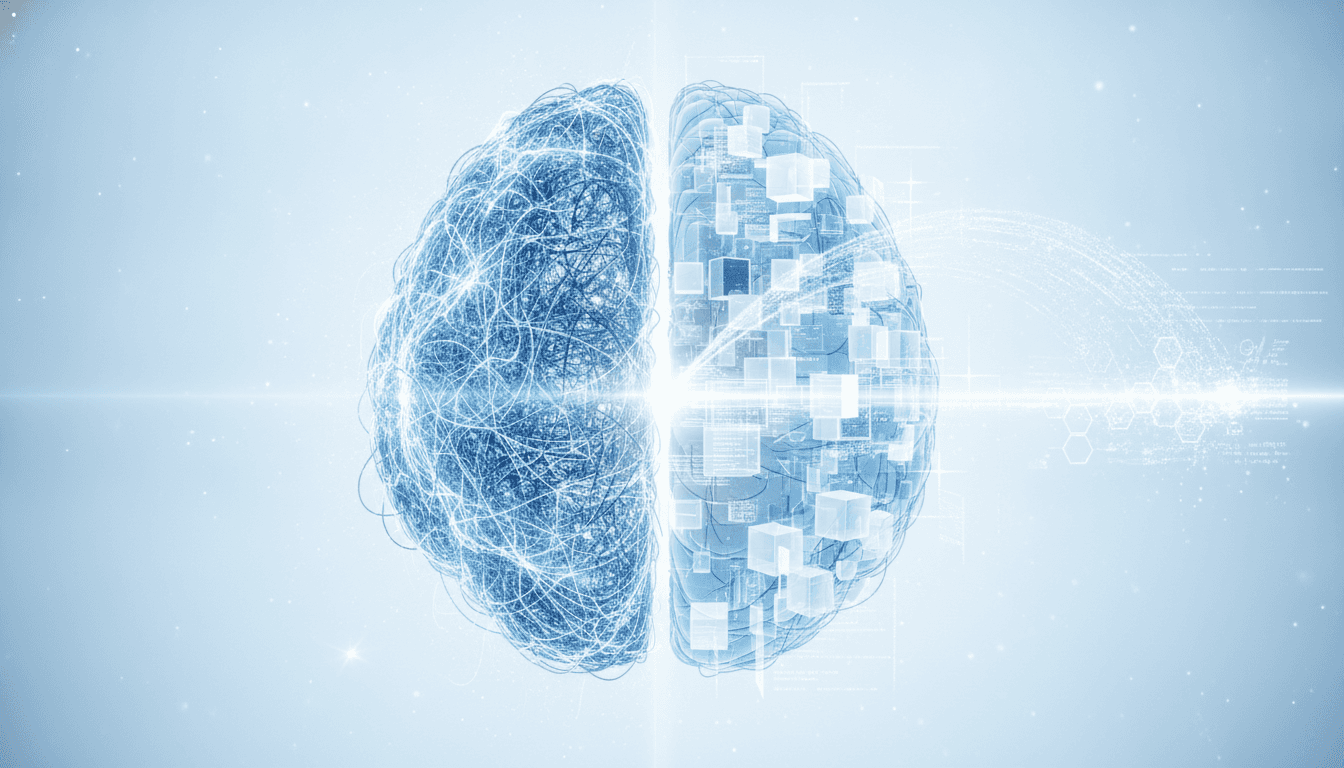
The Achilles' Heel of AI: Confident, Compelling, and Completely Wrong
An AI chatbot confidently cites legal cases that don’t exist. A corporate assistant just invents company policy. These aren't minor glitches. They're a fundamental problem with how many large language models (LLMs) operate—a phenomenon called “hallucination.”
LLMs are trained on vast, but static, datasets. A snapshot of the internet, frozen in time. This means they have no real-time information and can't access proprietary data. When you ask a question outside their training, they don't say "I don't know." They just generate a plausible-sounding answer based on patterns they've seen before. Which can be dangerously wrong.
This is where a powerful technique called what is RAG AI, or Retrieval-Augmented Generation, enters the picture. Think of it as giving generative AI an open book for its exams.
RAG is an AI framework that boosts an LLM's output by connecting it to an authoritative, external knowledge base. Instead of just relying on its frozen internal knowledge, the model queries a live database, internal company documents, or up-to-the-minute web sources before generating an answer. This grounds the AI's response in verifiable facts. It dramatically reduces hallucinations and lets the model provide current, accurate, domain-specific information. The term was coined in a 2020 paper by Patrick Lewis and a team from what was then Facebook AI Research (now Meta AI), University College London, and New York University. They called it a “general-purpose fine-tuning recipe.”
How RAG Works: A Two-Step Process to Factual Answers
Imagine a standard LLM as a brilliant student who has memorized every book in the library up to last year. Now they’re locked in an exam room. No notes allowed. Retrieval-Augmented Generation gives that student a live internet connection and tells them to use it for every single question.
The process is a straightforward, yet powerful, two-stage system: retrieval, then generation.
First, retrieval. When a user submits a prompt, the system doesn't immediately send it to the language model. Instead, an AI knowledge retrieval explained component kicks in. This part treats the user's query as a search term and pings an external knowledge source—a company's internal wiki, a database of support tickets, legal documents, you name it. To work fast, the knowledge base is usually indexed in a specialized vector database. Here, documents are converted into numerical representations (embeddings) that capture semantic meaning. The user's query gets converted too, letting the system perform a "semantic search" to find documents that are contextually similar, not just ones with matching keywords.
Second, generation. Once the most relevant information is retrieved, it’s bundled with the original user prompt. This new, augmented prompt now contains both the question and the facts needed to answer it. This whole package goes to the LLM. The model then uses this retrieved information as its source of truth, synthesizing a coherent, accurate answer that's aware of the context. This allows the AI not only to provide current information but also to cite its sources. That gives users a way to verify the response and, crucially, builds trust.
RAG vs. Fine-Tuning: Two Paths to a Smarter AI
If you're looking to adapt a general-purpose AI for your business, you often face a choice: RAG vs. fine-tuning. Both aim to improve model performance, but they operate in fundamentally different ways.
Fine-tuning is like sending a generalist doctor to medical school to become a surgeon. It's a process of further training a pre-trained model on a smaller, domain-specific dataset. Doing so adjusts the model's internal weights, altering its core behavior to specialize in something like medical terminology or a company's brand voice. The problem? Fine-tuning can be computationally expensive and seriously time-consuming. The resulting model is also still static; if the underlying information changes, the entire model must be retrained to stay current. And for massive models like GPT-4, there's even a risk of "catastrophic forgetting," where the model loses some of its general skills while learning the new specialty.
Retrieval-Augmented Generation, on the other hand, is like giving that same generalist doctor an expert medical database that’s updated in real-time. The core model remains untouched. Its strength is providing dynamic, up-to-the-minute knowledge without all that costly retraining. This makes RAG a great fit for applications that depend on rapidly changing information, like customer support bots needing the latest product details or financial assistants tracking market news. It's usually more cost-effective, gives you more control over information sources, and helps with data privacy by keeping proprietary data in your secure database instead of baking it into a third-party model. Some organizations are even exploring hybrid approaches—using fine-tuning to teach a model a specific style and RAG to give it current facts. This technique is sometimes called RAFT (retrieval-augmented fine-tuning).
The Practical Impact: Where RAG is Making a Difference
The business case for RAG is clear. By grounding AI in factual, verifiable data, it unlocks a new level of reliability for enterprise applications. According to a Gartner report referenced by K2view, this grounding is the absolute key to combating hallucinations. Companies are already deploying RAG-powered systems everywhere.
- Smarter Customer Support: Chatbots can access the latest product manuals and internal knowledge bases to give customers accurate, instant answers. This reduces the burden on human agents. A lot.
- Efficient Internal Knowledge Management: Employees can ask natural language questions and get precise answers from a sea of internal documents, reports, and databases. No more information silos. You can learn more about how AI systems process language in our guide to AI tokens and context windows.
- Verifiable Research and Analysis: Financial advisors, lawyers, and researchers can use RAG systems to quickly synthesize information from vast document collections, complete with direct citations to the source material. This is a massive step beyond the basic functions of artificial intelligence.
But RAG isn't a silver bullet. The quality of the AI's output depends entirely on the quality of the data in its knowledge base. If the source documents are inaccurate or biased, the AI's answers will be too. As a framework, however, it represents a crucial shift—from AI models that invent to models that inform. By giving language models a library card and a live connection to the world's (and your company's) knowledge, Retrieval-Augmented Generation is making AI a more trustworthy and practical tool for everyone.
Related Articles


This article was produced with AI assistance under human direction, and reviewed and fact-checked by a named editor before publication. How we work.
Frequently asked questions
- What is RAG AI in simple terms?
- RAG (Retrieval-Augmented Generation) is an AI technique that prevents a language model from making things up. Instead of just relying on its training data, it first searches a connected, up-to-date knowledge base (like a company's internal documents) for relevant facts. It then uses these facts to generate a more accurate and trustworthy answer.
- How does RAG reduce AI hallucinations?
- RAG reduces hallucinations by grounding the AI's response in verifiable facts. Before generating an answer, the system retrieves relevant information from a trusted external source. This retrieved data is given to the language model along with the user's question, forcing the model to base its answer on the provided evidence rather than inventing information based solely on patterns from its static training data.
- What is the main difference between RAG and fine-tuning?
- The main difference is how they add knowledge. RAG gives an AI model access to an external, up-to-date database to look things up in real-time, without changing the model itself. Fine-tuning, on the other hand, retrains the model on a specific dataset to change its core behavior and internalize specialized knowledge or a particular style. RAG is for dynamic knowledge, while fine-tuning is for learning a new skill.
- When should I use RAG instead of fine-tuning an AI model?
- You should use RAG when your application requires access to dynamic, frequently updated information or needs to answer questions based on a specific set of private documents. It is ideal for customer support bots, internal knowledge search, and any use case where factual accuracy and current data are critical. Fine-tuning is better when you need to change the model's fundamental behavior, style, or format, not just its knowledge base.
Sources & further reading
Sources
- wikipedia.org — en.wikipedia.org
- you.com — you.com
- databricks.com — databricks.com
- konghq.com — konghq.com
- amazon.com — aws.amazon.com
- matillion.com — matillion.com