Will AI Take My Job? A Realistic Look at Automation by Industry
The anxiety is real, but the reality is complicated. We cut through the panic to analyze which jobs are most at risk from AI, which are surprisingly safe, and why the real story is about augmenting tasks, not outright replacing people.
 Salman Oukati Sadegh8 min read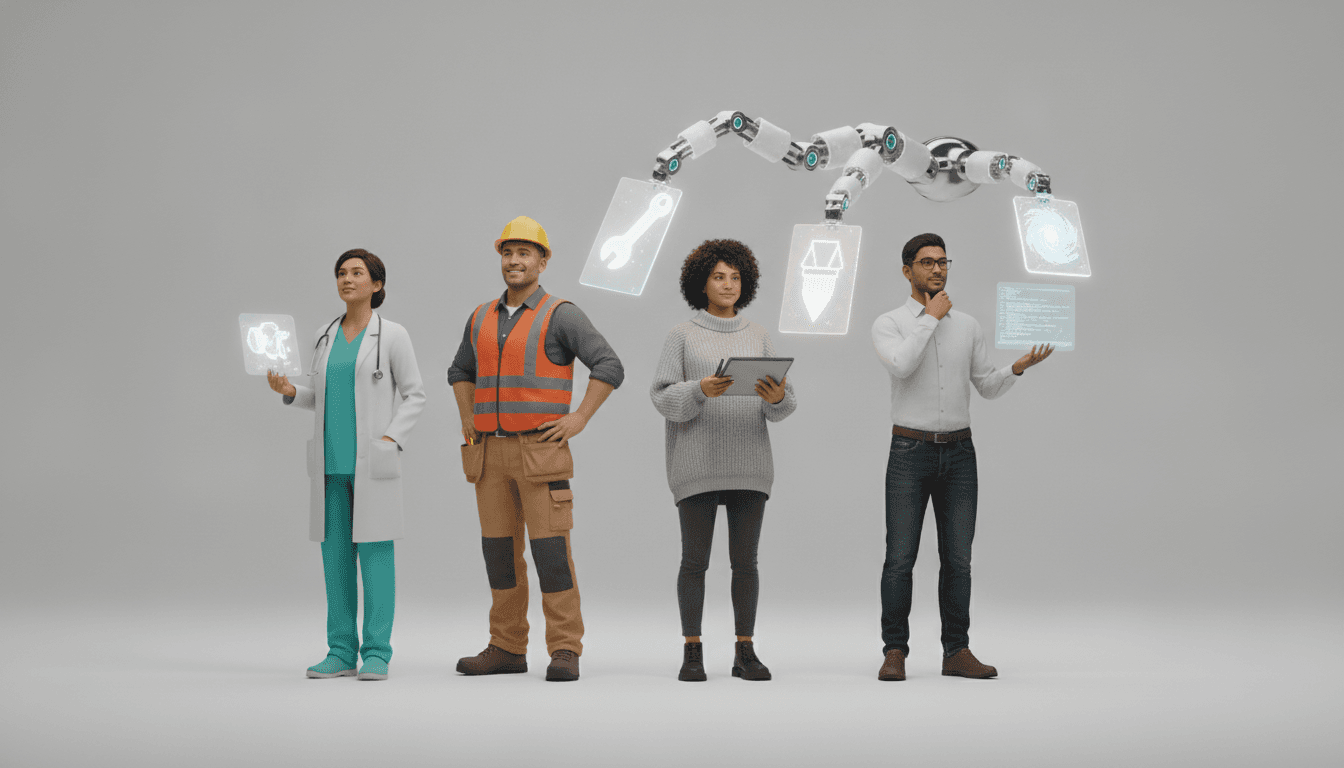
The Great Automation Anxiety: It's About Tasks, Not Titles
"Will AI take my job?" It's the defining career question of our time. And it's not a simple yes or no. The anxiety is everywhere, fed by headlines about AI that can code, write, and paint masterpieces from a single prompt. A now-famous Goldman Sachs report estimated that AI could wallop the equivalent of 300 million full-time jobs. [36, 40] But then the World Economic Forum’s Future of Jobs Report 2025 projects a net gain of 78 million jobs by 2030, with 170 million new roles created against 92 million lost. [32, 24] What gives?
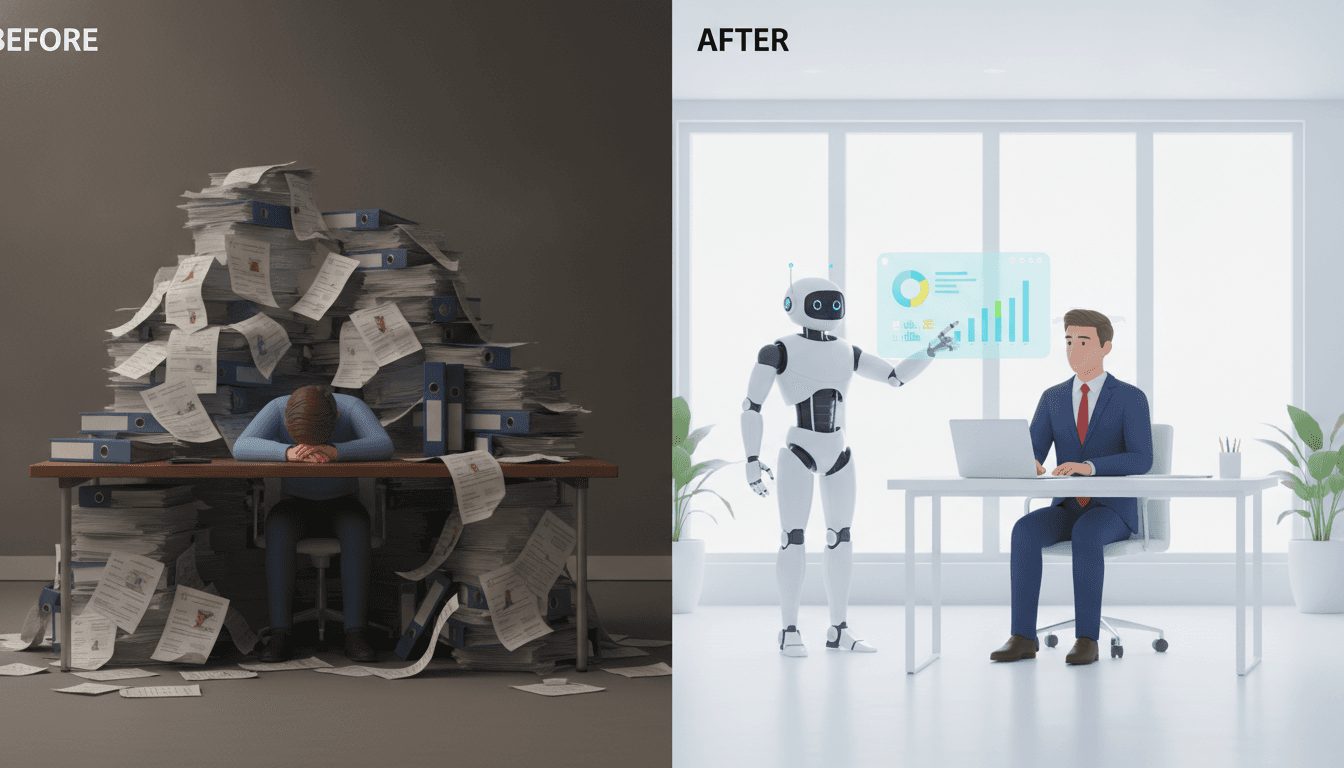
The truth is far less apocalyptic. Here's the real pattern: AI doesn't replace humans. Humans with AI replace humans without it. [16, 33] Artificial intelligence isn't coming for your job title; it’s coming for specific, repeatable tasks inside it. This distinction is critical. According to a 2026 analysis from Boston Consulting Group, AI will dramatically reshape up to 55% of U.S. jobs, but only a slim 10% to 15% are at risk of total elimination in the next five years. [33] Why? Because AI crushes routine cognitive tasks that follow predictable patterns, and the impact of AI and employment is anything but uniform across industries. [16]
AI Job Automation by Industry: A Closer Look
Forget your job title. Your real risk profile is about what you do all day. Exposure isn't a switch—it's a spectrum, with some fields feeling seismic shocks while others barely notice a tremor.
High Exposure: The Restructuring of Office, Administrative, and Legal Work
You're on the front lines if your job is about shuffling information. Period. Roles in admin support, data entry, and customer service feel the heat first. Research consistently pegs these jobs—along with telemarketers, translators, and insurance underwriters—as having the highest automation exposure because their core functions are a near-perfect match for what generative AI does best. [7, 9] They're repetitive and rule-based, from scheduling meetings to processing documents to handling the same support ticket for the hundredth time.
The legal field is a perfect example. Goldman Sachs figures AI could automate a staggering 44% of tasks done by legal pros. [36] But that doesn't mean lawyers are going extinct. Not even close. Instead, AI tools are taking over the grunt work: the painstaking document review, legal research, and contract analysis that form the bedrock of a paralegal's duties. [36, 37] In fact, an AI-assisted paralegal can blast through a document review 58% faster than an unaided one. [36] The result is a fundamental shift in focus—away from laborious research and toward strategy, client relationships, and complex judgment. The stuff machines can't touch. [39]
The Creative Crossroads: Augmentation in Art, Design, and Media
Creative work was supposed to be safe. The last bastion. Generative AI demolished that idea overnight. Now, AI can produce photorealistic images, write marketing copy, and compose music, sparking widespread fear of job losses. [6] And yes, some roles focused on high-volume, lower-complexity content are genuinely at risk. [16]
But the bigger story isn't replacement. It's augmentation. Creative fields have always absorbed new tech, and this is no different. [2] Major software providers are jamming AI features directly into their platforms; an Adobe report found a whopping 83% of creative professionals are already using generative AI. [2] For many, AI is becoming a ridiculously powerful assistant—a tool for brainstorming ideas, creating mockups, or just breaking through a creative block. It handles the technical side, freeing up human artists to focus on bigger strategic thinking. [10] As YouTube's CEO Neal Mohan said, the mantra is that AI should be a tool to enhance, not replace, human creativity. [18] This creates a brand-new demand for creatives who know how to collaborate with the machine. [10]
Reinventing Code: The New Reality for Software Developers
Nowhere is the dynamic clearer than in software development. AI coding assistants like GitHub Copilot are transforming how developers work by spitting out boilerplate code, writing unit tests, and fixing simple bugs. It's a massive productivity boost. But it’s also cleaving the labor market in two. A study from Stanford's Digital Economy Lab revealed a startling trend: since late 2022, employment for young coders (ages 22 to 25) in AI-exposed roles has plummeted. Meanwhile, it has grown for workers over 30 in the very same fields. [43]
The reason? One experienced engineer armed with an AI coding assistant can now match the output of a small team of juniors. [43] All those routine tasks once assigned to entry-level coders are being automated away. This is not the end of software engineering, but it completely redefines what makes a good one. Value is shifting fast from rote coding to high-level system architecture, complex problem-solving, and understanding business impact—skills that AI still fumbles. [17]
Augmentation in Action: Healthcare and Science
When lives are on the line, AI isn't the new boss. It's a crucial partner. Healthcare is the prime example. The technology is a pattern-recognition beast, analyzing medical scans like X-rays and MRIs to spot anomalies a human eye might miss. [5, 15] It’s also streamlining the soul-crushing administrative burden by automating medical coding, billing, and patient scheduling, which frees up clinicians for actual patient care. [3, 19] One report found AI tools can boost a nurse's productivity by 30-50%. [22]
Remember all that talk about AI replacing radiologists? Wrong. Employment in the field keeps growing. [47] The reality is that AI serves as a diagnostic aid. The final judgment, the communication with the patient, the ethical weight of a treatment decision—that all remains firmly in human hands. [14, 15] It's even creating new roles that never existed before, like Clinical AI Implementation Specialists and Health AI Ethicists. [14, 19]
So, Which Jobs Are Safe From AI?
If AI is automating routine tasks, the safest careers are the ones that demand skills machines just don't have. The common thread among the jobs most safe from AI is a uniquely human touch. They fall into a few key categories:
- Hands-On Work in the Real World: AI and robotics have made huge leaps, but they're still clumsy in unpredictable, real-world environments. That's why skilled trades like electricians, plumbers, carpenters, and mechanics are so resistant to automation. [15, 16, 35] A chatbot can tell you how to fix a roof. It can't climb the ladder in the rain and do the work. [35]
- Serious People Skills: You can't automate trust. Or empathy. Jobs that require deep interpersonal connection are incredibly difficult for an algorithm to replicate. Think mental health counselors, social workers, teachers, and nurses. [1, 8, 11]
- Big-Picture Strategy & True Originality: AI remixes existing patterns; it can't devise a novel business strategy, lead a company through a crisis, or conduct truly groundbreaking research. Roles like senior managers, choreographers, and research scientists still depend on a level of originality that remains a human domain. [1, 12, 20]
- Grace Under Fire: Some jobs require split-second decisions when everything's going wrong. They're secure. We're talking airline pilots, nurse anesthetists, and nuclear power reactor operators. [4] Automation can handle the routine flight, but you want a human making the call when an engine fails.
From Fear to Adaptation: How to Future-Proof Your Career
The panic is subsiding. Now, the real conversation about AI and employment is about adaptation. The solution isn't fighting the technology; it's learning to leverage it. As companies grapple with integration, managers have to make the tough calls about what to automate and where human expertise is non-negotiable—a whole new playbook for AI automation vs. human jobs.
For you, future-proofing your career is simple. Be more human. Double down on the skills AI can't fake: critical thinking, complex problem-solving, real communication, and creativity. [12, 29] At the same time, you have to get AI-literate. Fast. Learning to use the new wave of AI tools is becoming a core competency in nearly every industry. This doesn't mean you need to become a machine learning engineer. It just means learning the art of the 'prompt'—how to ask the right questions to get great results—and knowing how to weave these tools into your workflow to become more valuable. [31]
The World Economic Forum sees entirely new roles appearing, like "AI work architects" who design human-machine workflows and "AI stewards" who oversee ethics and outcomes. [21] The future of work isn't a world without human jobs. It's a world where human work moves to a higher plane of responsibility, focused on the judgment, strategy, and empathy that technology can augment but never, ever own.
Drafted with AI assistance. How we work.
Frequently asked questions
- What jobs are most likely to be replaced by AI?
- Jobs most at risk from AI involve routine, predictable, and data-heavy tasks. This includes roles like data entry clerks, customer service representatives, telemarketers, translators, and some administrative or clerical positions. [7, 16] According to research from firms like Goldman Sachs, tasks within the legal support field, such as document review done by paralegals, also show high potential for automation. [36] The key factor is whether the core duties of the job can be broken down into repeatable cognitive processes.
- Which jobs are safe from AI?
- Jobs that are safest from AI require skills that machines cannot easily replicate. These include roles needing complex physical dexterity like skilled trades (plumbers, electricians), high emotional intelligence (therapists, social workers), creative strategy (senior managers), and critical decision-making in unpredictable environments (airline pilots, surgeons). [1, 4, 15] The common thread is a demand for human judgment, empathy, and hands-on interaction with the physical world.
- Will AI create more jobs than it destroys?
- Many economic analyses project a net positive job growth despite significant displacement. The World Economic Forum, for instance, estimates that by 2030 AI will help create 170 million new roles while displacing 92 million, resulting in a net gain of 78 million jobs. [24, 32] These new jobs will likely be in areas that don't yet exist, such as AI ethics, AI system training, and roles that require managing and collaborating with AI systems.
- How can I future-proof my career against AI?
- To future-proof your career, focus on developing skills in areas where humans outperform machines. Cultivate creativity, critical thinking, complex problem-solving, and emotional intelligence. [20, 29] Equally important is developing AI literacy: learn how to use AI tools to augment your work, making you more efficient and valuable. The emerging paradigm is not humans versus AI, but rather humans who can effectively leverage AI replacing those who cannot. [16, 33]
Sources & further reading
Sources
- aiweekly.co — aiweekly.co
- careerminds.com — careerminds.com
- donaldbillings.com — donaldbillings.com