Robot Workers Are Here: Physical AI and Automation Join the Workforce
AGIBOT just built its 15,000th unit. BMW is deploying Figure's new humanoid on its factory floor. This isn't science fiction anymore. The robotic workforce has arrived.
 AI Tech Dialogue Editorial Team5 min read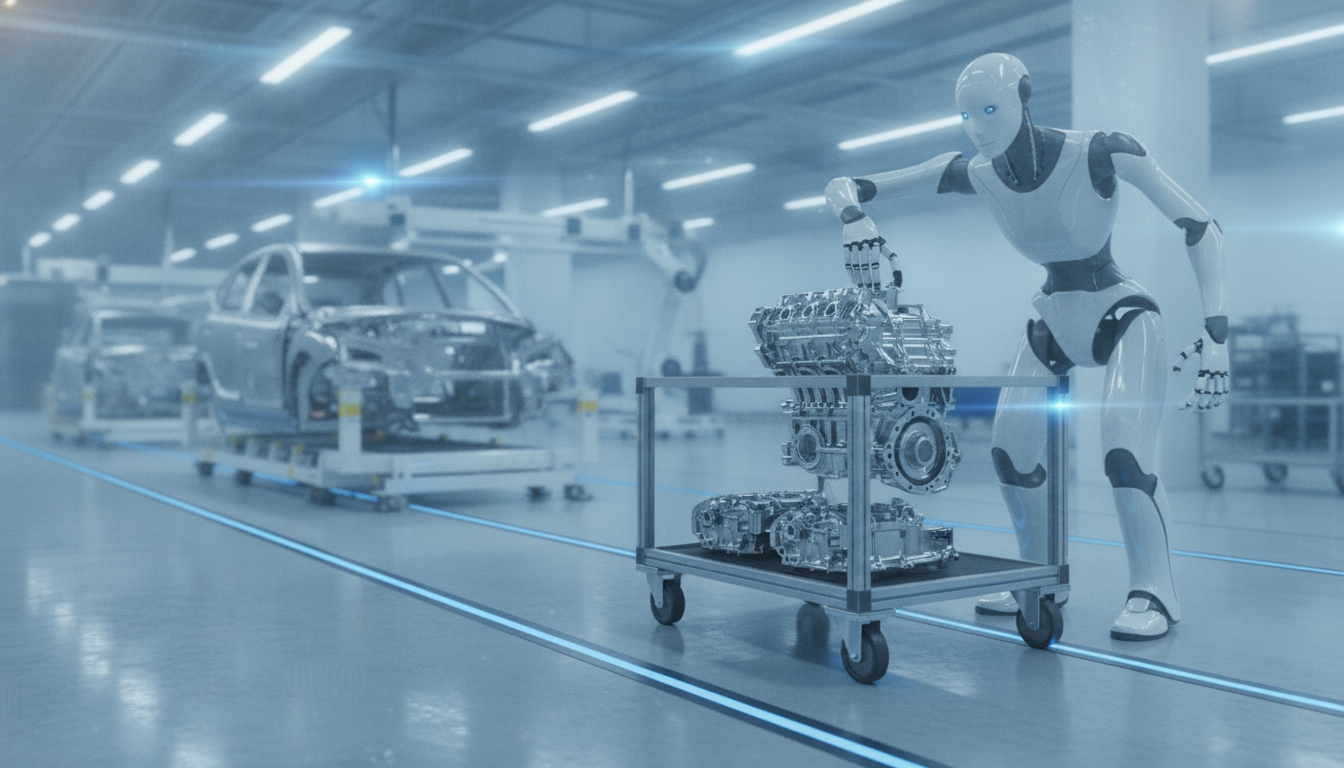
The Factory Floor Is Shifting
The future of robotics just landed. Hard. On June 28, Shanghai's AGIBOT announced its 15,000th robot rolled off the assembly line. That's not a typo. Fifteen thousand. This isn't some flashy demo; it's mass production, dragging embodied AI out of theory and onto the factory floor for good.
And they're speeding up. Getting from 1,000 to 5,000 units took a full year. The next 5,000 took just three months. This new model, the AGIBOT G2, is a wheeled semi-humanoid built for the daily grind, signaling a market that’s finally in motion. As Dr. Yao Maoqing, who runs the embodied AI unit at AGIBOT, put it: “The rollout of our 15,000th robot is not only an important milestone in AGIBOT’s mass production and engineering delivery capabilities, but also a reflection of the broader industry’s move toward scaled deployment in real-world settings.”
That production cadence changes everything. Founded only in 2023, AGIBOT is already dominating. The numbers are stark. Market research firm Omdia reports AGIBOT snagged a 39% global market share in humanoid robot shipments in 2025 with 5,168 units. The race is no longer about building the slickest prototype. It's about who can deliver at scale.
BMW Doubles Down on Humanoids
Meanwhile, something just as big is unfolding in South Carolina. At BMW's sprawling Plant Spartanburg, theory is meeting reality. For real. The German automaker just put the new Figure 03 humanoid from California's Figure AI to work. This was no blind bet. It follows a tough, nearly year-long pilot of the older Figure 02, which proved its mettle in the brutal body shop. That first robot helped make over 30,000 BMW X3s by slotting sheet metal for welding. A mind-numbing, back-breaking job for any person.
Brett Adcock, Figure AI's Founder and CEO, confirmed the success: “Our 11-month deployment of Figure 02 proved that humanoids are no longer lab experiments—they can be a valuable asset in establishing a flexible, reliable manufacturing workforce.” But the new Figure 03 isn't doing that same old job. Not even close. BMW gave it a much tougher logistics puzzle. Sequencing. The robot now has to pick jumbled components from huge containers and carefully arrange them on trolleys bound for the assembly line—a critical 'just-in-sequence' process that’s a notorious headache in car manufacturing and a perfect target for automation.
What Makes Figure 03 Different?
So what's new with the Figure 03? Plenty. It's 5'8", carries a 20kg payload, and runs for about five hours per charge. The real upgrades, though, are about how it works—and how it works with people.
- Safer to Work With: It's built with soft components, making it safer for the humans on the line.
- Smarter Hands: The new hands are packed with tactile sensors and palm cameras, giving it the dexterity to grab all sorts of parts.
- Less Downtime: Wireless charging. Simple. Efficient.
- It Talks: And now it has audio functions. That means it can actually communicate with its human coworkers, a huge step for teamwork.
This is just the start for BMW. Ulrich Wieland, a Vice President at BMW Manufacturing, even called the Spartanburg plant “the birthplace of humanoid robotics in BMW Manufacturing’s operational day-to-day activities.” The move into complex logistics proves one thing: BMW believes these machines are ready for tasks far more complicated than anything they've handled before.
A Broader Industrial Transformation
Don't think of AGIBOT's production numbers and BMW's factory deployment as two separate stories. They're not. They are two fronts in the same quiet revolution: the rise of what insiders call Physical AI. Why the auto industry first? Because the tasks are structured, the factories are controlled environments, and the payoff is gigantic. The perfect laboratory. Tesla, of course, is building its Optimus robot, and you can be sure giants like Hyundai and Mercedes-Benz have their own humanoid programs well underway.
So no, AGIBOT's scale and BMW's growing trust in Figure AI aren't just interesting news items. They are proof. The era of the robotic workforce is finally here. The question is no longer 'if.' It's 'how fast?' Forget building one cool prototype. The real challenge—the one happening right now—is cranking these robots out by the thousands and integrating them into the high-stakes ballet of a modern factory.
This shift is bigger than just a few splashy launches. Across the board, AI agents and autonomous systems are embedding themselves into real workplaces. Think of Amazon’s fulfillment centers, which have long used thousands of Kiva-style robots to haul shelves and speed up orders. Look at what Figure AI is doing inside BMW. Or consider Norway's 1X Technologies, which is developing its NEO humanoid to fill labor gaps across different sectors. These aren't novelties anymore; they're becoming integral to global business impact and operations, a fundamental workforce change.
FAQ: The Reality of Robot Workers
Q: Are robots actually replacing human workers?
A: In certain jobs, yes. Roles in warehousing, manufacturing, and logistics are definitely seeing automation displace some human tasks. But it's also creating new jobs in robot maintenance and management. The final tally really depends on the industry, the context, and how fast companies adopt the tech. This is the reality of workforce changes and their business impact.
Q: What is physical AI?
A: It's AI that can touch the world. Physical AI refers to AI systems put inside robots and other hardware, letting them see, move, and manipulate physical objects. It's totally different from AI that only exists as software.
Q: Which jobs are most at risk from robotics?
A: Any job that's repetitive and physical is on the front line. Think manufacturing, picking items in a warehouse, some food service, and last-mile delivery. These are the roles most likely to be affected by automation soon, driving a huge workforce change.
Sources & further reading
Sources
- Top 10 robotics developments of June 2026 — The Robot Report
- agibot.com — agibot.com
- eweek.com — eweek.com
- humanoid.guide — humanoid.guide
- bmwgroup.com — press.bmwgroup.com
Further reading
- 01
 Technology
Intel's 'Nova Lake' CPU to Pack 52 Cores, Challenge AMD in 2026
- 02
 Technology
How AI Image Generators Actually Work, Explained
- 03
 Technology
What Is AGI? Artificial General Intelligence Explained
- 04
 Technology
What Is Artificial Intelligence? A Plain-English Guide
- 05
 Technology
Waymo Signals Major Europe Expansion with New EU Entities