AI in the Classroom: A Teacher's New Assistant?
It's saving teachers hours and tutoring students one-on-one. The catch? A quiet but growing unease about cheating and whether we're outsourcing thinking itself.
 Salman Oukati Sadegh6 min read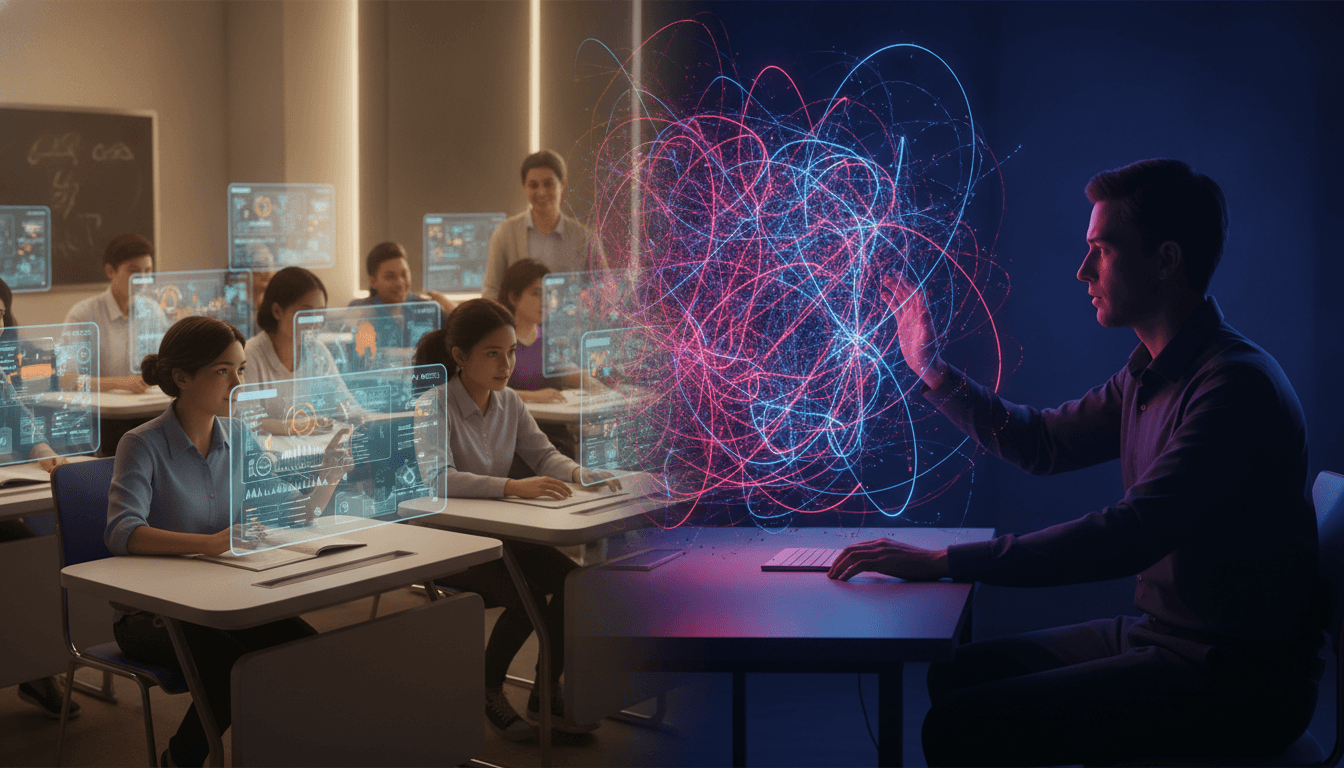
The New Reality: AI Is Already Here
Forget the debate over AI in schools. It’s over. The tech is already here. A stunning report from the Center for Democracy and Technology found that 85% of teachers and 86% of students used AI in some form during the 2024-2025 school year. And this wasn't some top-down mandate. It’s a grassroots push from teachers themselves, grabbing tools they hope can finally solve some of education's oldest headaches. This is AI in education explained not as some sci-fi concept, but as a toolkit getting tested on the fly, right now, in real classrooms.
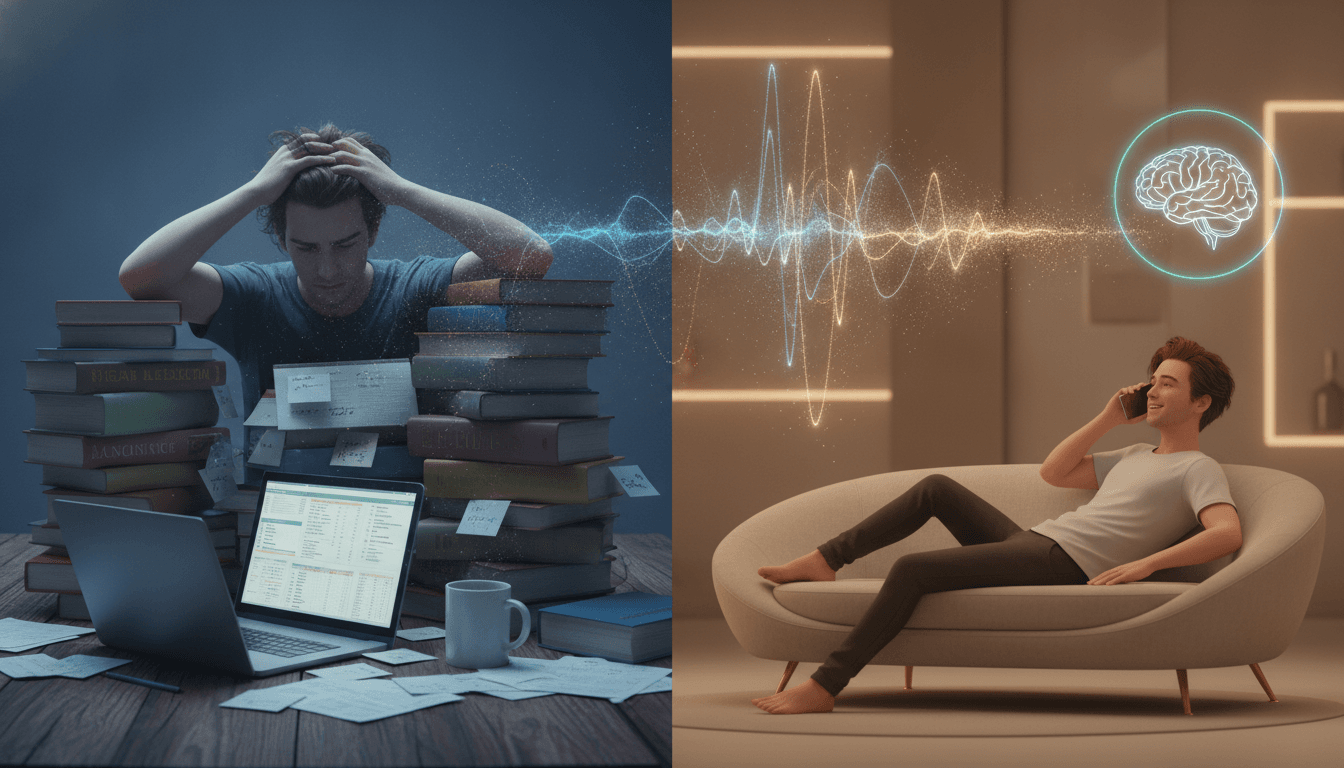
What's the biggest draw for teachers? Time. A Gallup-Walton Family Foundation survey found educators using AI weekly are clawing back an average of 5.9 hours. Do the math: that's six full work weeks over a school year. They're trading tedious admin for actual face-time with kids. Tools like Gradescope and CoGrader now do the heavy lifting, using AI to group similar answers and apply rubrics on the fly, turning hours of grading into minutes of review. It's exactly what Khan Academy founder Sal Khan envisioned: free teachers from the drudgery, and they can finally focus on what matters.
How Teachers Use AI for Personalized Support
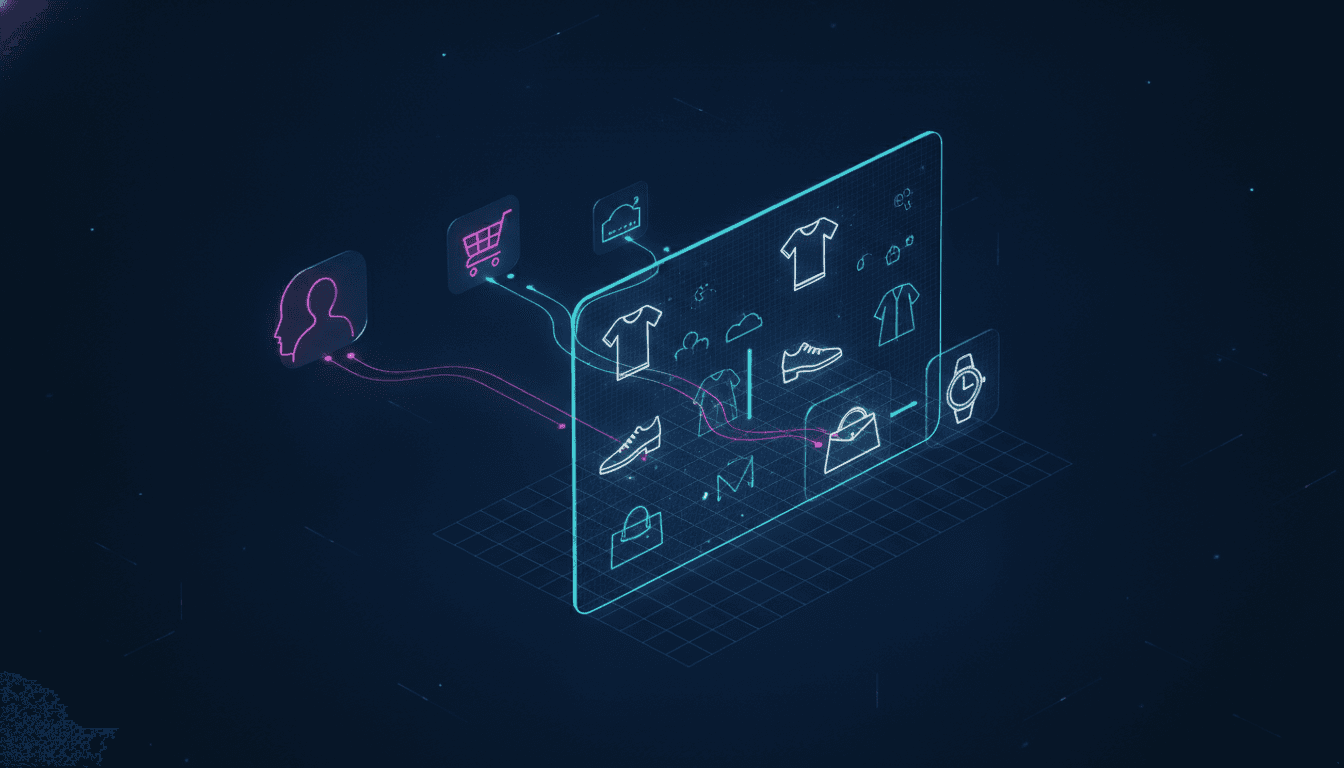
This isn't just about killing paperwork. AI is rewriting the rules of instruction itself. That old, lofty goal of personalized learning, where education actually adapts to each kid's unique pace? It’s suddenly within reach. Think of platforms that can crank up the difficulty for a math whiz while gently nudging a struggling student with a hint. One student put it simply to a researcher: “It keeps me from getting stuck too long.” For their teacher, it was a superpower—freeing them to work with small groups without leaving anyone behind.
And this is where AI tutoring tools come in.
Just look at Khanmigo. Khan Academy's AI tutor is built on a simple philosophy: don't just hand out answers. It acts like a real tutor. It uses Socratic questions to guide a student to their own solution. A kid stuck on fractions won't get the correct number; they'll get a question like, "When we add fractions, what do the denominators need to be?" The whole point is building critical thinking, not offering a cheap fix. The AI becomes what Khan calls a thoughtful mentor, prodding students to solve it themselves. And teachers? They're leaning on AI to spin up differentiated materials in seconds—creating five versions of a text for five different reading levels, a task that once ate up entire afternoons. For a deeper dive into how AI can help with specific learning goals, see our guide on how to use AI to learn a language.
The Unsettling Questions: AI and Academic Integrity
Not everyone is celebrating. A deep unease about academic honesty is spreading. After all, the same tool that drafts a lesson plan can write a student's entire essay. A February 2026 research brief from the College Board paints a grim picture: 92% of college faculty now worry about AI-driven plagiarism, and nearly three-quarters say their students are *already* using it to write papers. So what does learning even mean anymore? Jessica Howell, the College Board's VP of Research, laid it out plainly: “Faculty have serious concerns about AI's impact on critical thinking, original writing, and academic integrity.”
The first instinct was to fight fire with fire. Use AI detection tools. Problem is, they don't work. One major study of 14 detectors found they were wrong up to half the time, often falsely flagging work by non-native English speakers. It's an arms race teachers can't possibly win. So the focus is shifting. It's less about policing the tech and more about rethinking the assignments themselves. As one Forbes analysis bluntly stated, AI is forcing schools to stop rewarding simple regurgitation. The new playbook? Assessments that are harder to fake. Think in-class essays, oral exams, and projects demanding personal reflection or hands-on community work. Things a machine simply can't do. This echoes the advice in our article on how to spot AI-generated content, which emphasizes process and critical evaluation.
The Risk of Over-Reliance
Cheating is the obvious fear. But there's a quieter, more insidious one. What if we're outsourcing thinking itself? A March 2026 RAND report revealed a bizarre paradox: while 62% of students admitted using AI for homework in late 2025, a full 67% of those same students believed that using it would harm their critical thinking skills in the long run. They know it's a problem.
The experts call it 'cognitive off-loading'—letting a tool do the hard mental work. And the data is starting to back up the worry. One startling study found that while students using AI got 48% more problems right, they scored 17% *lower* on a test of conceptual understanding than their peers. They got the answers. They didn't get the *concept*. That gets to the heart of what worries cognitive scientists like Tina Grotzer at Harvard's Graduate School of Education. “Kids don't even realize that they need to learn to do it,” she noted. “They don't reflect on the amazing learning that their minds are doing day after day.” The real trick is figuring out how to make AI a scaffold, not a crutch. For those looking to use AI in their own professional development, our guide on how to use AI to write a resume shows how these tools can be a starting point, not the final word.
So, no, dropping AI in the classroom isn't like getting new smartboards. It's a seismic shift. This demands new rules, new kinds of assignments, and a total rethink of what teachers—and students—are even supposed to be doing. The power is undeniable. The time savings are real. But so are the worries. Maybe Sal Khan has the right take: AI won't replace teachers, but it will enhance them, freeing them for the uniquely human work of mentoring and inspiring. Moving forward requires what one expert called “educated bravery”—a willingness to dive in, but with a firm grip on what truly matters. Critical thought. Real growth.
Drafted with AI assistance. How we work.
Frequently asked questions
- What are the main uses of AI in the classroom?
- AI in the classroom is primarily used for three things: personalizing learning, assisting with administrative tasks, and providing tutoring support. Adaptive learning platforms adjust content to each student's pace, while AI tools help teachers by automating grading and generating lesson plans, saving them several hours per week. AI tutoring tools like Khanmigo offer students step-by-step guidance on problems.
- How do teachers feel about using AI in education?
- Teachers have mixed feelings. Many embrace AI for its ability to save time on administrative tasks and help create personalized learning experiences for students. A Gallup survey found teachers save nearly six hours a week using AI. However, there are significant concerns, with over 90% of faculty worried about AI's impact on academic integrity and its potential to undermine students' critical thinking skills.
- Can AI tools really help with grading?
- Yes, AI grading assistants are one of the most practical applications of AI in education. Tools like Gradescope and Turnitin can automatically grade multiple-choice questions and use machine learning to group similar written answers, allowing teachers to apply feedback consistently and quickly. This significantly reduces the time teachers spend on grading, freeing them up for more direct student interaction.
- What is the biggest concern about AI and academic integrity?
- The biggest concern is that students will use generative AI tools like ChatGPT to write essays and complete assignments for them, bypassing the learning process entirely. Research from the College Board shows 92% of faculty are worried about AI-driven plagiarism. This has led many educators to rethink assignment design, focusing more on in-class activities, oral presentations, and tasks that require personal reflection to ensure authentic student work.
- Will AI replace human teachers?
- Most experts believe AI will augment, not replace, human teachers. The consensus is that AI can handle repetitive, data-driven tasks like grading and content differentiation, freeing up educators to focus on uniquely human skills such as mentoring, inspiring students, and facilitating complex discussions. As Khan Academy founder Sal Khan stated, the goal is to make teachers 'more valuable, not less.'
Sources & further reading
Sources
- theoptimisminstitute.com — theoptimisminstitute.com
- aasa.org — aasa.org
- computerhistory.org — computerhistory.org
- nih.gov — pmc.ncbi.nlm.nih.gov
- edutopia.org — edutopia.org