How to Use AI to Learn a Language (Realistically)
AI promises fluency in your pajamas. These tools are powerful, sure, but they won't replace a real conversation. Here's what works, what's hype, and how to build a language-learning strategy that doesn't fall apart.
 Salman Oukati Sadegh6 min read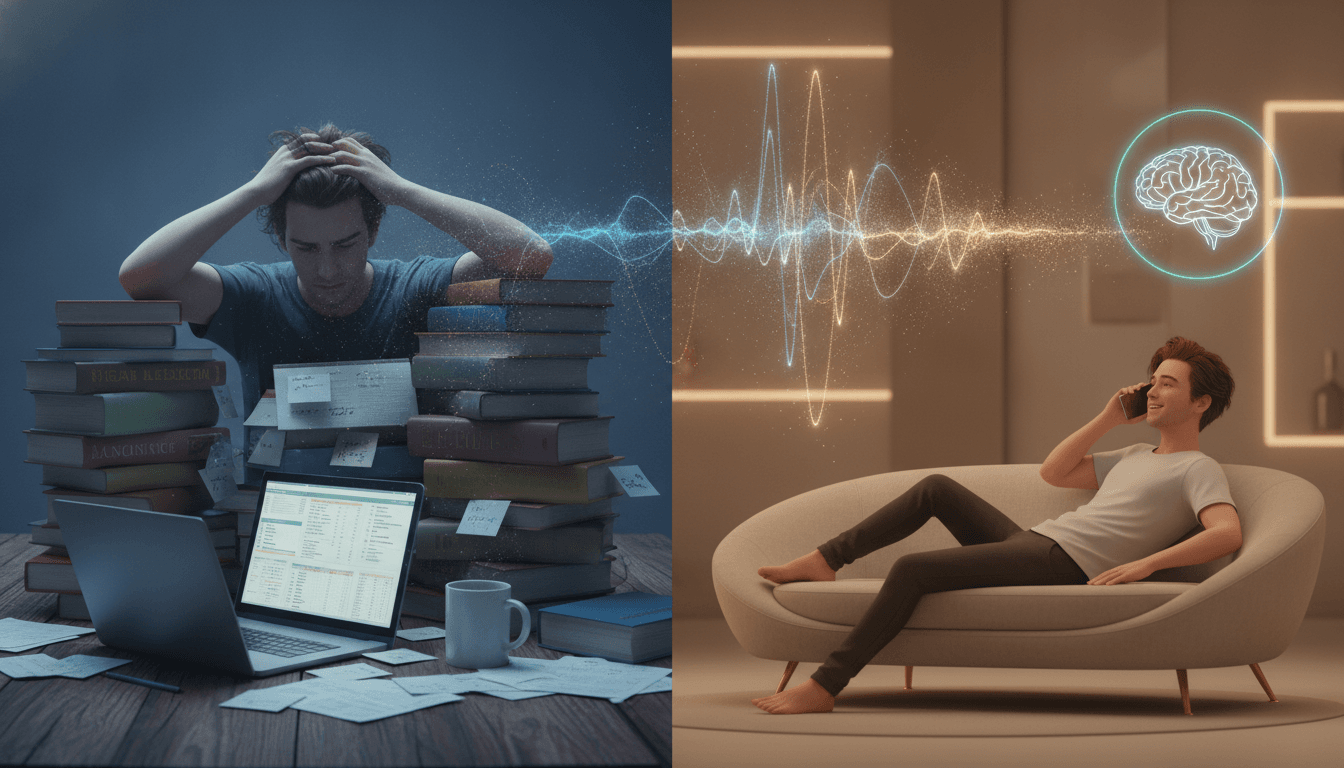
The AI Language Tutor Has Arrived. Is It Any Good?
Learning a language used to mean two things. A classroom or a box of expensive Rosetta Stone CDs. Then came the app revolution—led by giants like Duolingo—which turned vocab drills into a daily habit for millions. Now? Now there's something promising a much bigger leap: a personal, artificially intelligent tutor ready to converse with you 24/7. This guide breaks down how to use AI to learn a language, separating the genuine breakthroughs from the marketing hype.
This isn't just about glorified flashcards. The new AI tools, running on the same engines as ChatGPT, can actually *talk*. They listen to your pronunciation. They correct your grammar in real-time and adapt lessons to your specific weaknesses. A human tutor might cost you $30-60 an hour, but an AI is endlessly patient. It never gets tired. It will never, ever judge you for mixing up your verb conjugations for the tenth time. And that solves what has always been the biggest bottleneck in language acquisition: getting consistent, low-stakes speaking practice.
The market has exploded with options. You have specialized apps like Speak and Langua offering polished conversation practice with AI voices cloned from native speakers. Then there are hyper-focused tools like ELSA Speak, which analyzes your speech down to the phoneme to help you nail your accent. Even the mainstream players are scrambling to integrate these features—Duolingo Max now includes AI-powered roleplay and grammar explanations.
The pace is staggering. By early 2025, Duolingo was able to ship 148 new AI-driven course configurations. That's a volume of work that previously took them 12 years.
Where AI Excels: Your Personal Conversation Partner
So where does AI really shine? Conversation. Limitless, on-demand conversation. This is the one place where these tools completely blow traditional apps out of the water, and it's what makes them an incredible supplement to classroom work. You can simulate ordering coffee, checking into a hotel, or—why not?—debating philosophy whenever you have a spare moment.
This creates a safe space. No judgment. The fear of sounding stupid is a huge hurdle for most of us, but an AI partner couldn't care less if you stumble. It simply corrects you and moves on, letting you build that crucial muscle memory for spoken language. It’s no surprise studies show learners often talk *longer* with AI than with human peers, likely because that social pressure is just gone. This gets right to the heart of a core linguistic concept known as the Output Hypothesis, which basically says you develop fluency by actively *producing* language (speaking), not just passively absorbing it.
Personalization is the other superpower. AI can tailor quizzes and lessons to your proficiency level, your learning style, and even your interests. If you're stuck on a tricky grammar point, you can ask an AI like ChatGPT or Claude to explain it five different ways—a luxury a busy teacher in a class of 30 can't afford. And it works. Some platforms report engagement increases of nearly 30% after implementing this kind of AI-driven personalization. For a deeper dive into the business side of this technology, it's worth understanding the real cost of implementing AI.
Key Strengths of AI Language Tools:
- Unlimited Speaking Practice: AI chatbots are always on, offering the kind of consistency that once required total immersion or a very expensive tutor.
- Instant, Personalized Feedback: Get immediate corrections on your pronunciation and grammar, stopping bad habits before they stick.
- Low-Pressure Environment: Practicing with an AI kills the fear of making mistakes, a major barrier that holds people back from speaking confidently.
- Hyper-Personalization: The AI adapts to *you*—your vocabulary gaps, your grammar struggles, your interests—making the whole process more efficient and a lot less boring.
What AI Can't Replace: Immersion, Accountability, and Nuance
But AI isn't a silver bullet for fluency. Not even close. Its limitations are just as important to understand as its strengths. The biggest gap is its inability to replicate genuine human interaction and cultural immersion. Language is more than a set of rules; it's deeply tied to culture, non-verbal cues, and shared history. An AI can't share a joke that relies on cultural subtext or react to your body language. As Sofia Tavares, chief brand officer at Preply, noted, AI cannot replicate the emotional and motivational support a human provides. Tutors can "read between the lines, detect frustration, provide accountability and encourage a learner who is losing confidence."
This brings us to the second major limitation: accountability. A subscription to the best AI for learning languages is incredibly easy to ignore. A scheduled class with a human teacher, on the other hand, or a conversation partner who is counting on you? That provides external motivation that AI just can't match. The social contract of a human relationship remains a more powerful motivator for many than streaks and points. The market reflects this. Even as AI tools proliferate, the tutor-led online instruction business continues to grow rapidly, signaling that learners still put a high premium on human guidance.
Finally, AI can be flat-out wrong. Large language models are known to "hallucinate," providing plausible but incorrect information, inventing grammar rules, or misunderstanding nuances, especially in less common languages. They don't have the true comprehension of a human expert. This is precisely why AI must be seen as a powerful supplement, not a complete substitute. (Understanding how AI processes information through techniques like Retrieval-Augmented Generation can offer insight into these limitations; you can read more in our explainer, What Is RAG? The AI Technique That Fights Hallucinations.)
Building a Hybrid Strategy: How to Use AI to Actually Learn a Language
The smartest approach isn't choosing between AI and traditional methods. It's blending them. A hybrid model leverages the strengths of each, creating a learning plan that actually sticks.
If you're an absolute beginner, a structured app like Duolingo or Babbel is an excellent starting point for building your first vocabulary words and grammar rules. They provide a curriculum that a free-form AI chat lacks. Once you have a basic grasp of a few hundred words—typically after a few months—it's time to integrate an AI conversation practice app.
A balanced weekly routine could look like this:
- Daily (15-20 minutes): Use a gamified app for vocabulary drills and then use an AI conversation practice app to simulate a short, real-world interaction. Consistency matters more than cramming.
- Twice a week (30-45 minutes): Go deeper with an AI tutor. Try discussing topics you're passionate about to keep it engaging. Use its features to get detailed feedback on grammar and pronunciation.
- Once a week (1 hour): Talk to a person. Have a session with a human tutor or a language exchange partner. Use this time for nuanced questions, spontaneous conversation, and cultural context that an AI can't provide. This is your accountability check.
This strategy uses AI for what it does best—providing high-volume, low-stakes practice—while relying on human interaction for nuance, motivation, and real-world application. For students looking for more ways to integrate technology into their studies, our guide to the best AI tools for students offers a broader perspective.
AI has democratized the most difficult part of learning a new language: getting enough speaking practice. It's an incredibly powerful tool, but it is still just a tool. Fluency requires your own curiosity, your consistency, and a willingness to step out of your comfort zone to connect with real people. As the philosopher Ludwig Wittgenstein once said, "The limits of my language mean the limits of my world." AI can expand that world, but you still have to be the one to walk through the door.
Drafted with AI assistance. How we work.
Frequently asked questions
- What are the best AI for learning languages?
- The best AI tools often specialize. For conversation practice, apps like Langua, Speak, and Talkio AI are highly rated for their realistic dialogues and feedback. For pronunciation, ELSA Speak is a leader, especially for English. For a gamified, structured start, Duolingo's AI-powered 'Max' tier is a popular choice. Many learners also use general-purpose AI like ChatGPT or Claude as versatile, free-form practice partners.
- Can AI replace a human language teacher?
- No, AI is best seen as a powerful supplement, not a replacement. AI excels at providing unlimited, low-stakes conversation practice and instant feedback. However, human teachers provide crucial motivation, accountability, and nuanced cultural context that AI cannot replicate. They can detect a student's frustration and adapt their teaching style in ways algorithms currently cannot. A hybrid approach is most effective.
- How does an AI conversation practice app work?
- AI conversation apps use advanced speech recognition to listen to what you say and natural language processing to understand it and respond. They simulate real-life dialogues, allowing you to practice speaking and listening. The AI can correct your grammar, provide feedback on your pronunciation, and adapt the difficulty of the conversation to your skill level, offering a safe environment to build confidence.
- Is using AI for language learning effective?
- Yes, it can be highly effective, particularly for improving speaking skills. AI solves the problem of getting consistent, on-demand practice, which is often a major barrier to fluency. Studies and user reports indicate that AI tools can significantly improve pronunciation, vocabulary, and conversational confidence. However, its effectiveness depends on the learner using it consistently and as part of a balanced learning strategy that also includes other forms of study and human interaction.
- What are the limitations of AI language learning tools?
- The main limitations include a lack of true cultural and social context, as AI cannot understand non-verbal cues or deep cultural nuances. It cannot provide the same level of accountability and motivation as a human teacher. Additionally, AI models can sometimes be inaccurate, especially for less common languages, and may provide incorrect grammar or translations.
Sources & further reading
Sources
- microsoft.com — microsoft.com
- apus.edu — apu.apus.edu
- busuu.com — business.busuu.com
- langotalk.org — langotalk.org
- vertechacademy.com — vertechacademy.com
- migaku.com — migaku.com