The AI Predictions Experts Actually Agree On
Forget the sci-fi fantasies. We cut through the noise to find the handful of near-term AI predictions where the experts—for once—actually agree.

The Rise of the AI Co-pilot
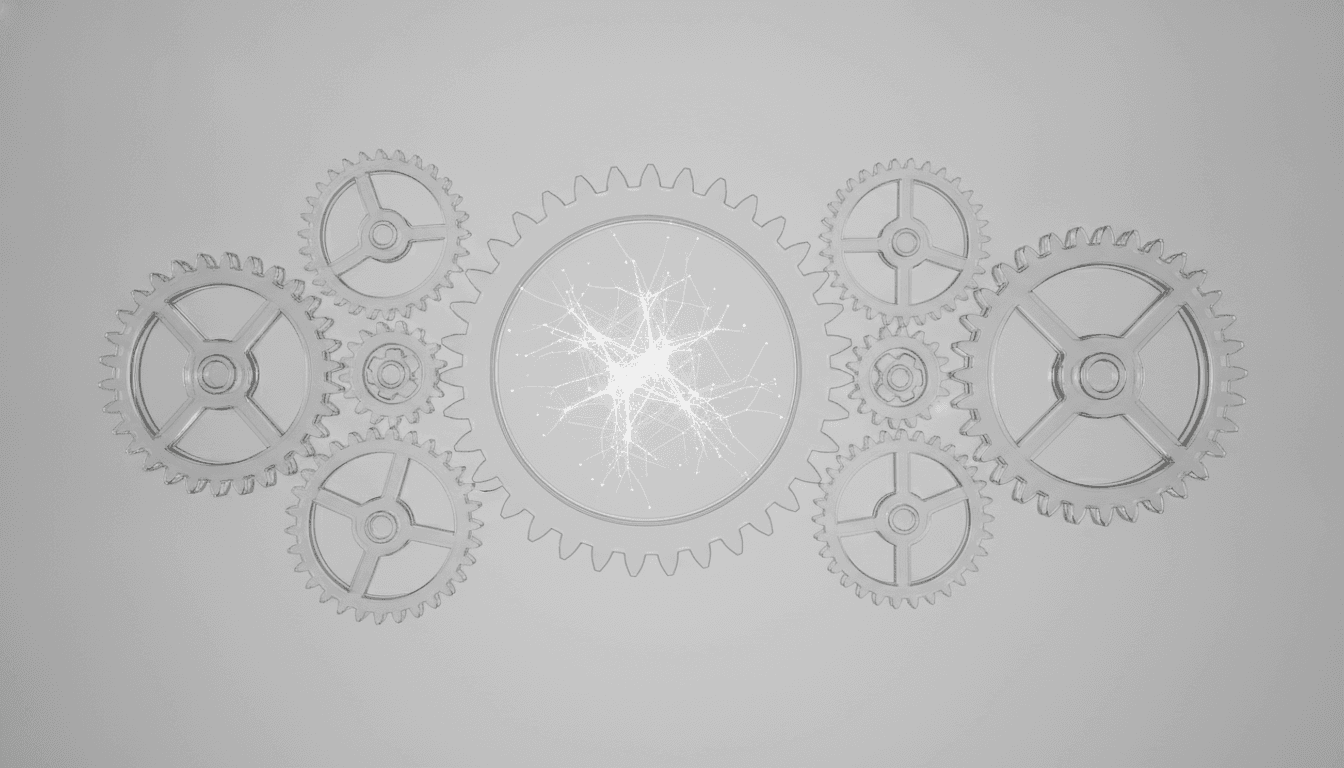
Forget the breathless headlines about job automation. A quiet consensus has formed among the people who actually know: economists, technologists, and business leaders. For the foreseeable future, AI's primary role in the workplace will be augmentation, not replacement. This is one of the core AI predictions experts agree on. The dominant model is what they're calling the AI "co-pilot"—an intelligent assistant baked into the tools you already use, designed to handle the boring stuff and free you up for more strategic work.
This isn't about machines taking over. It's a new division of labor. Peter McCrory, head of economics at the AI firm Anthropic, says AI so far seems "both skill-biased and labor augmenting." In plain English? It helps experts the most, and it helps people do their existing jobs better. That’s the recurring theme. AI handles the first draft, summarizes the dense report, or writes the first block of code. But a human still has to provide the context, the nuance, and the final call. As tech billionaire Mark Cuban put it, AI models lack one critical human skill: they "don't know the consequences of their actions. People know what will get them fired." This human-in-the-loop setup is where businesses are finding real, immediate value—a critical insight for anyone trying to build an AI strategy that actually works.
This redefines what productivity even means. It’s not about replacing a manager. It’s about what Rob Thomas, an SVP at IBM, famously said: "managers who use AI will replace the managers who do not." The point is amplifying human capability. Not making it obsolete.
Beyond Text: The Multimodal Reality
Here's another point of strong agreement: AI's future isn't just about text. Not even close. The next wave is multimodal. That means systems that can understand, interpret, and generate a mix of text, images, audio, and video all at once, moving us away from clunky, single-input models toward something that perceives the world in a richer, more human way.
Imagine a diagnostic system that cross-references a patient's spoken symptoms with their X-rays and clinical notes, spotting patterns a human doctor might miss. Or a self-driving car processing road signs (vision), engine sounds (audio), and GPS data (text) simultaneously. This is the future experts see—so-called "any-to-any" models where you could, say, give a spoken command and get a 3D model back. And it's not a distant dream. Market research firm Gartner projects that by the end of 2026, a stunning 40% of enterprise applications will embed conversational AI agents. That’s up from less than 5% in 2025. This isn't an incremental change; it’s a total rewiring of how we interact with technology.
AI in the Lab: Accelerating Scientific Breakthroughs
But perhaps the most profound consensus is AI's power to turbocharge scientific discovery. Researchers everywhere see AI as a new kind of microscope or telescope, a tool that opens up "entirely new vistas" of inquiry. A theme that came up again and again at a 2026 conference hosted by the Stanford Institute for Human-Centered AI (HAI) was this: AI helps scientists figure out which problems *can* be solved. But humans are still needed to decide which problems actually *matter*.
The impact is already here. In climate science, AI-powered weather models now run over 1,000 times faster than traditional simulations with similar accuracy. In biomedical research, AI generates hypotheses, sifts through massive genomic datasets, and helps prioritize compounds for drug discovery. Dajiang Liu, a professor at Penn State College of Medicine, calls them "research accelerators" that drastically narrow the search for cures. But—and this is a big but—he and others caution that AI isn't a substitute for rigorous science. Every single prediction needs experimental validation. It needs sound human judgment. This vision of a human-AI lab partnership is getting serious backing, like the U.S. government's $5 billion 'Genesis Mission' to fuel AI in science.
Where Experts *Don't* Agree: The Great AGI Debate
For all this consensus on the near-term stuff, there's a glaring, massive hole when it comes to the ultimate question: Artificial General Intelligence (AGI). Is an AI that's smarter than humans coming? The debate is a total mess. Why? Because almost no one can agree on what AGI even means. The definitions are all over the map, from automating complex software engineering to achieving novel scientific breakthroughs to just being "smarter than the smartest human."
This definitional chaos means the timelines are, frankly, wild. Prediction markets give AGI a 50% chance by 2041. Some prominent figures have hinted it could show up as early as 2026—a forecast most academics find laughable. Stanford HAI Co-Director James Landay was blunt in his 2026 predictions. His biggest one? "My biggest prediction? There will be no AGI this year." That chasm says it all. Experts have a pretty clear view of the next few years, but the long-term path remains one of the biggest open questions in science.
The Unavoidable Hurdles
There's one final, sobering point of agreement. The road ahead for AI is littered with serious challenges. The 2026 Stanford AI Index report put it plainly: progress on responsible AI is not keeping up with the technology's blistering pace. The report documented a sharp rise in AI incidents. From 233 in 2024 to 362 in 2025. These aren't just technical glitches; they involve real-world harm.
A recent poll of 272 AI experts laid out the urgent risks. The spread of false information, centralization of power, and AI-accelerated cyberattacks topped their list. The public shares these fears. Research from the Pew Research Center shows that both experts and everyday people are deeply worried about AI-driven misinformation and hidden bias in decision-making. Suddenly, understanding what a deepfake is and how to spot one has become a critical life skill. The upshot is clear: AI's future will be shaped just as much by regulation and ethical guardrails as it will be by any new algorithm.
Related Articles



This article was produced with AI assistance under human direction, and reviewed and fact-checked by a named editor before publication. How we work.
Frequently asked questions
- What is the main point of agreement among experts about AI's future in the workplace?
- The strongest consensus is that AI will primarily serve to augment human capabilities, not replace workers wholesale. Experts see the rise of the AI 'co-pilot,' an assistant that handles routine tasks, allowing humans to focus on strategic thinking, creativity, and complex problem-solving. The focus is on a human-AI collaborative workforce where productivity is amplified.
- What is multimodal AI and why do experts agree it's the future?
- Multimodal AI refers to systems that can process and understand multiple types of data at once, such as text, images, audio, and video. Experts agree this is the next major step because it allows AI to perceive the world more like a human, leading to richer context and more accurate insights. This is critical for applications like advanced medical diagnostics and autonomous systems.
- Do experts agree on when we will achieve Artificial General Intelligence (AGI)?
- No, there is no consensus on an AGI timeline. In fact, experts don't even agree on a single definition of what AGI is. Forecasts for its arrival range wildly from the next few years to many decades from now, or potentially never. This remains one of the most significant open debates in the field of artificial intelligence.
- What are the biggest risks or challenges of AI that experts agree on?
- Experts widely agree on several key challenges. These include the rapid spread of AI-generated misinformation and deepfakes, the potential for bias in AI decision-making, and significant data privacy concerns. There is also a consensus that progress in AI safety and ethics is lagging behind the technology's powerful capabilities, creating an urgent need for better governance and regulation.
Sources & further reading
Sources
- wrench.ai — resources.wrench.ai
- salesforce.com — salesforce.com
- businessinsider.com — businessinsider.com
- aiifi.ai — aiifi.ai
- stallions.solutions — stallions.solutions
- tiledb.com — tiledb.com