The AI Skills Employers Actually Want (It’s Not What You Think)
Forget coding. The real AI skills employers want are about judgment, sharp communication, and knowing how to make a machine do your bidding. Here's your playbook for staying relevant.
 Salman Oukati Sadegh7 min read
The Great Skill Redefinition Is Already Here
For years, one question dominated the conversation about artificial intelligence: Will a machine take my job? The data, however, is finally telling a different story. A more interesting one. It’s not about replacement. It’s about redefinition. The most valuable AI skills employers want have surprisingly little to do with building algorithms and almost everything to do with using them wisely. A report from Indeed’s Hiring Lab found that jobs with “AI” in the title have more than tripled since 2022. [16, 28] And get this—a whopping 63% of those roles in the U.S. are now outside the traditional tech sector. [28]
This isn't some distant, slow-moving trend. It's a seismic shift, happening right now, in what it takes to be a competent professional in marketing, management—you name it. Companies are desperately seeking people who can bridge the gap between human strategy and machine execution. This is not about becoming a data scientist overnight. It’s about developing a new kind of professional agility, a practical fluency with intelligent tools. A landmark 2026 analysis of over a billion job ads by PwC found that skills for AI-exposed jobs are changing more than twice as fast as for everyone else. [1, 3] The report paints a picture of a “two-track” labor market where AI is either “democratising” complex tasks for some or “professionalising” roles for others by automating grunt work, making deep human expertise indispensable. [1, 3, 11] Those professionalised jobs are on fire—growing twice as fast and pulling in 42% more pay. [1, 11] This is the new career fast track. And it’s paved with three core, non-technical skills: prompt literacy, tool fluency, and data judgment.
Prompt Literacy: The New Microsoft Excel
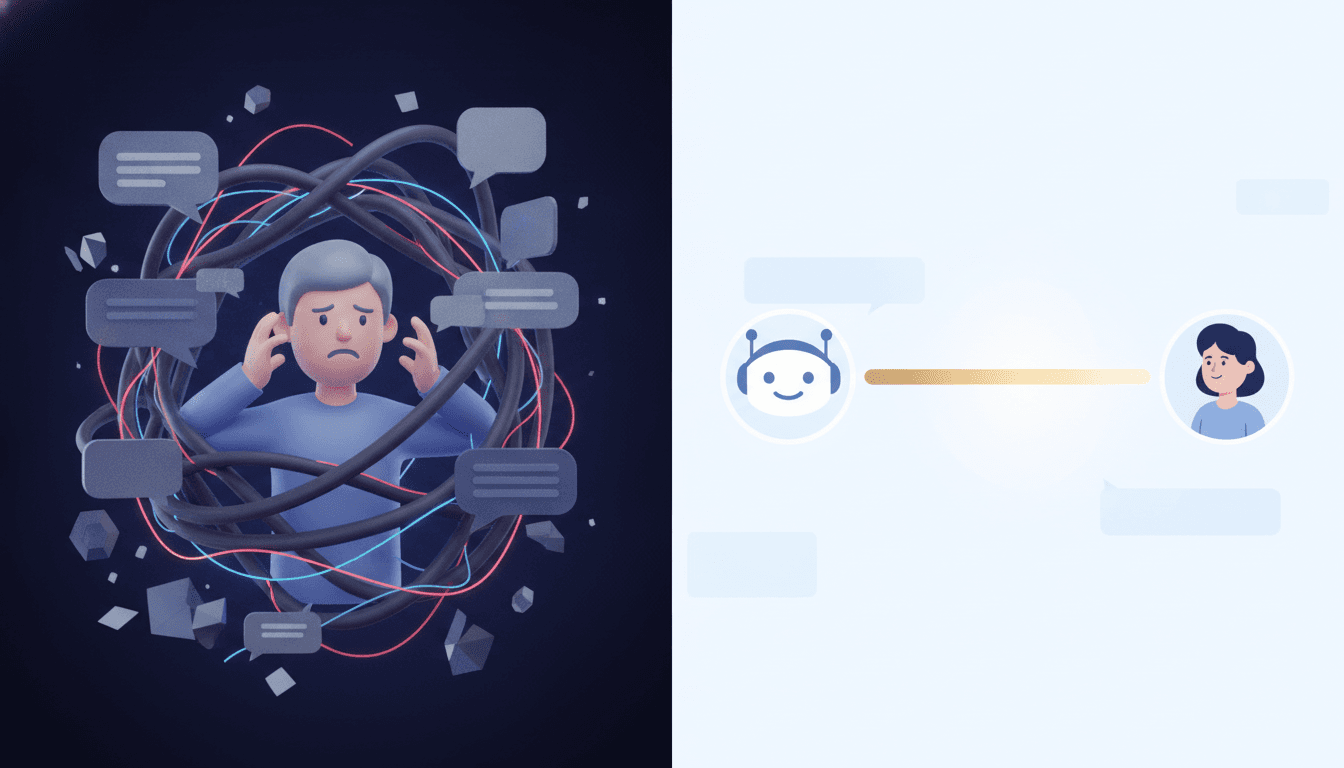
Remember twenty years ago? Knowing how to build a pivot table in Excel made you a wizard. A superpower. Today’s equivalent is prompt literacy. Put simply, it’s the skill of talking to generative AI so it gives you something useful, not just garbage. [10, 32] Shovel in a vague request like, “Write a marketing email,” and you’ll get unusable mush back. Every time. The machine just fills in the blanks, and it does it badly. True AI literacy for the workplace means you stop treating the AI like an oracle and start treating it like a brilliant—but frustratingly literal—intern who needs incredibly specific instructions. [10, 13]
This isn't just about being polite; it’s a structured communication skill. Experts often point to a simple framework. Give the AI a role. Provide context. State the task clearly. And specify the format. [10, 13] The difference is night and day. Amateurs ask: “Summarize this report.” Professionals command: “Act as a senior marketing analyst. I am preparing a presentation for the VP of Sales. Based on the attached quarterly performance report, write five bullet points that highlight the most significant customer acquisition trends. The tone should be concise and data-driven.” See the change? It’s a leap from a vague question to a strategic command. That’s prompt literacy. It’s what turns a passive user into an active director, and it’s what determines whether a company's massive AI investment—which, as we've covered in The Real Cost of Implementing AI Is Not the Subscription Fee, is no small thing—actually pays off.
Tool Fluency: Building Your AI Collaboration Playbook
Mastering one chatbot is just the start. The next layer? Tool fluency. This is about knowing which AI to use for which job—and how to stitch them together into a whole new workflow. [8, 12] The ecosystem of specialized AI apps is absolutely exploding. Think about a marketing manager's day: they might use ChatGPT for campaign slogans, spin up concept art in Midjourney, create a social clip using one of The Best AI Video Generators of 2026, and then use Salesforce’s Einstein AI to see what customers are saying about it all. That’s tool fluency. You become a systems integrator for your own job. [8]
Forget deep technical chops. This is all about a problem-solving mindset. Research from Workday shows the best companies are nurturing a “teammate-style” relationship with their AI. [22] Employees are encouraged to experiment, to offload the soul-crushing rote tasks to a machine so they can focus on strategy—the stuff humans are actually good at. [22] Of course, this demands a new playbook from managers, one that prioritizes outcomes over processes, a messy challenge we get into in AI Automation vs. Human Jobs: A Manager's Guide to Smart Decisions. Employers are desperate for candidates who show this kind of adaptability. The ones who don't just know one tool but hunt for the *right combination* of tools to nail a business problem. So how do you prove it? Show, don't tell. A portfolio of projects where you used a mix of AI tools to get something real done is fast becoming the ultimate career differentiator.
Data Judgment: The Irreplaceable Human in the Loop
AI is throwing open the doors to data analysis for everyone. The machine is a beast at calculation. It can spot correlations in a million customer records in the blink of an eye. But it can’t tell you *why*. It doesn't know if a trend matters, if the data is junk, or what your next brilliant strategic move should be. That takes data judgment. It’s a purely human skill, a blend of sharp critical thinking and knowing how a business actually works. [33, 39]
As members of the Forbes tech council put it, human judgment is non-negotiable for handling context, navigating ambiguity, and making sure an insight actually means something for the business. [33] An AI can flag a sales dip in Ohio. Sure. But can it tell you a new competitor just opened up shop in Cleveland or that a local supply-chain rule just changed? Not a chance. That’s why this is one of the most critical in-demand AI skills—it’s the one that’s hardest to automate. Sir Andrew Likierman of London Business School cuts to the heart of it: AI has no consciousness, no ethics. [39] It can fake empathy, but it can't grasp meaning. Employers need a human firewall. Someone to question the output, catch the inevitable hallucinations, and apply a layer of strategic—and ethical—reasoning before anyone signs a check. [7, 36] Learning to critically vet and contextualize what the machine spits out isn’t just a good idea; it’s the core of making yourself indispensable.
The message from the job market couldn't be clearer. Yes, deep technical AI talent is still in a gold rush. But a much bigger wave is building for regular professionals—in every single industry—who can wield, question, and direct these new tools. Mastering prompt literacy, tool fluency, and data judgment isn't just about padding your resume. It’s a fundamental rewrite of your value as a professional. A new baseline for success. The best way to future-proof your career with AI is simple. Don't fear the machine. Become the one person it can't work without.
Drafted with AI assistance. How we work.
Frequently asked questions
- What AI skills are in high demand for non-technical jobs?
- Employers are prioritizing practical AI literacy skills over coding. The most in-demand skills include prompt literacy (communicating effectively with AI), tool fluency (knowing which AI tools to use for different business tasks), and data judgment (critically evaluating and contextualizing AI-generated insights). These skills are sought after in fields like marketing, HR, finance, and management.
- Do I need to learn to code to get a job using AI?
- No, for the vast majority of professional roles, coding is not a prerequisite for using AI. The primary demand is for professionals who can leverage existing AI tools to improve their workflows and decision-making. According to recent data from Indeed, over 60% of jobs with 'AI' in the title are now outside of the core tech industry, focusing on application rather than creation.
- What is prompt literacy and why is it important?
- Prompt literacy, or prompt engineering, is the skill of crafting clear, specific, and contextual instructions for generative AI tools to get the best possible results. It's important because the quality of an AI's output is directly tied to the quality of the input. It's becoming a fundamental workplace skill, similar to using a search engine or spreadsheet effectively, for tasks ranging from content creation to data analysis.
- How can I future-proof my career with AI?
- You can future-proof your career by focusing on skills that complement AI rather than compete with it. This involves developing AI literacy to automate routine tasks and then focusing on uniquely human skills. Reports from firms like PwC show that creativity, leadership, empathy, and strategic judgment are becoming more valuable as AI handles routine cognitive work. Combining these human skills with practical AI tool fluency is the key.