Tech's Graveyard: What the Biggest Flops in History Teach Us
The tech graveyard is littered with cautionary tales, from the absurd Juicero to the awkward Google Glass. These epic fails offer brutal, essential lessons about innovation, timing, and what happens when you solve a problem nobody has.

The Allure of an Unready Future
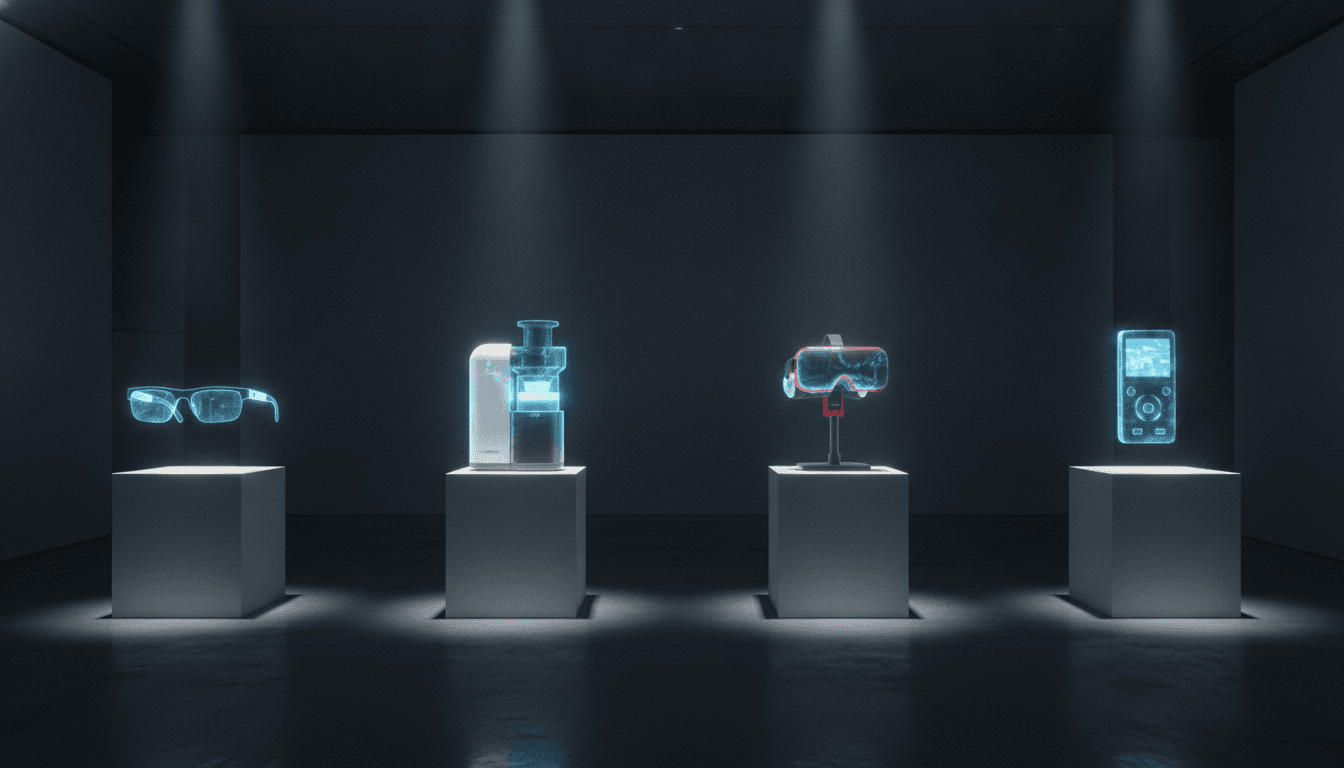
It’s easy to laugh at the Juicero. And why not? The Silicon Valley startup raised a staggering $120 million from investors, only to implode spectacularly in 2017. Its big idea was a $699 Wi-Fi-connected juicer (later dropped to $399) that squeezed proprietary, subscription-only packets of chopped fruit. The dream died when a Bloomberg report revealed a shocking truth. You could just squeeze the packets by hand. And get the same amount of juice, faster. The company instantly became a punchline—a perfect symbol of an absurdly over-engineered solution for a problem that never existed.
But not all of the biggest tech flops in history are so comical. Some were just too early to the party, offering a tantalizing glimpse of a future that wasn't quite ready. Take the Apple Newton. Visionary. Launched in 1993, this Personal Digital Assistant (PDA) was a forerunner to the iPhone, a handheld for your notes, contacts, and calendar. Its signature feature—handwriting recognition—was notoriously awful. The technology just wasn't there yet. While the Newton was a commercial failure, the hard lessons Apple learned from its ambitious failure laid the groundwork for the mobile revolution that followed.
Then there’s Google Glass. When it landed with a select group of “Explorers” in 2013 for a cool $1,500, it felt like science fiction made real. A computer on your face. But it stumbled. Badly. The public balked at the privacy nightmare of a face-mounted, always-on camera, coining the perfect term for its users: “Glasshole.” Beyond the social awkwardness, the device was a mess of poor battery life, limited use, and that high price tag. Google failed to answer the most fundamental question: what problem does this actually solve for a normal person? It was a fascinating piece of engineering in search of a purpose—a sharp lesson that user acceptance is just as critical as technological skill. That's a challenge that developers of even wilder tech, like those working on brain-computer interfaces, still face today.
When You Build It, They Won't Necessarily Come
Sometimes a product isn't too early. It's just wrong. A profound misreading of the room. Few cases illustrate this better than the Microsoft Zune. Launched in 2006 to challenge the iPod's dominance, the Zune was, by most accounts, a decent gadget with features the iPod lacked, like an FM radio and wireless song sharing. Too little, too late. By the time the Zune showed up, Apple's iPod had built an unassailable fortress. The iTunes store, the iconic white earbuds, the whole experience—it was a cultural and technological juggernaut. The numbers from the NPD Group tell the story: by July 2009, the iPod held 73% of the MP3 player market. The Zune? A pathetic 2%. A slightly better product, it turns out, is no match for a deeply entrenched ecosystem.
Amazon, a company known for its operational genius, learned a similar lesson with the Amazon Fire Phone in 2014. What a disaster. Hailed as the company's grand entrance into the smartphone world, the device was a commercial catastrophe that led to a $170 million write-down on unsold phones. Its marquee feature, “Dynamic Perspective,” used four cameras to create a 3D effect on the screen. It was clever, sure, but users and reviewers called it what it was: a gimmick. Worse, the phone was locked to AT&T and lacked access to the Google Play Store, crippling its app selection. Amazon fundamentally misunderstood that the smartphone market was a two-horse race where apps were everything. It remains one of the most famous tech failures of the decade.
But for sheer speed and expense, no failure tops Quibi. The mobile-only, short-form streaming service raised a mind-boggling $1.75 billion before its April 2020 launch. The premise, from Hollywood giant Jeffrey Katzenberg and tech vet Meg Whitman, was to deliver slick “quick bites” of content for people on the go. The timing couldn't have been worse. It launched just as a global pandemic forced its target audience to stay home, where they wanted to watch stuff on their TVs—something Quibi initially didn't support. The pandemic, however, only exposed deeper flaws. The concept itself was a solution in search of a problem. YouTube and TikTok already owned short-form video. And they were free. Quibi shut down just six months after launch, a colossal miscalculation of what people actually want.
The Ghosts in the Machine: Enduring Lessons from Failed Tech Products
So what do these ghosts in the machine teach us? They aren't just stories of bad ideas. They are autopsies of complex failures in strategy, timing, and simply understanding human behavior. For every successful product, there’s a graveyard of gadgets that serve as cautionary tales.
One of the most physically painful failures was the Nintendo Virtual Boy. A literal headache. Released in 1995, this attempt at a 3D gaming console required users to hunch over a stand and stare into a bizarre monochrome red-and-black display. It was notorious for causing eye strain and nausea. Nintendo even had to issue warnings about potential seizures. The console was rushed to market so the company could focus on its next big thing, the Nintendo 64. It sold a paltry 770,000 units and was discontinued in under a year. The Virtual Boy is a stark reminder: if your product physically hurts your customers, it doesn't matter how clever it is.
These stories of tech products that failed are more than just amusing anecdotes. They are essential case studies. Required reading for anyone building new things. They teach us that innovation isn’t a straight line. It’s a messy process of trial and error, a journey filled with spectacular flameouts. The entire history of technology is filled with these moments, and each one is a lesson baked into the DNA of the devices we use today.
The core lesson is surprisingly simple: technology must serve a human need. The Juicero failed because hands were better. Google Glass failed because it was creepy. The Zune failed because the iPod's ecosystem was more compelling. These products weren't undone by a single bug or a marketing misstep. They were killed by a fundamental disconnect from the people they were meant for. As today’s innovators race to build the next big thing, from AI agents to quantum computers, they would do well to remember the ghosts of tech's past. Because understanding why products fail is the first step toward building one that succeeds. And for business leaders, knowing this history is key to building an AI strategy that actually delivers business value.
Related Articles



This article was produced with AI assistance under human direction, and reviewed and fact-checked by a named editor before publication. How we work.
Frequently asked questions
- What is considered one of the biggest tech flops in history?
- Google Glass is often cited as one of the biggest tech flops. Despite its futuristic vision, it failed due to a high price of $1,500, significant privacy concerns over its camera, poor battery life, and a lack of a clear purpose for consumers. The public's negative reaction, including coining the term 'Glasshole,' highlighted the social unacceptability of the device at the time.
- Why did the Juicero juicer fail so spectacularly?
- Juicero failed because its core product, a $400+ Wi-Fi-connected juicer, was completely unnecessary. In 2017, a Bloomberg report revealed that its proprietary juice packets could be squeezed by hand with nearly identical results. This exposed the company as a symbol of Silicon Valley excess, offering an over-engineered solution to a non-existent problem, which led to widespread ridicule and its eventual shutdown.
- What lessons can be learned from famous tech failures?
- Famous tech failures teach several key lessons. First, timing is critical; a product can be too far ahead of the available technology, like the Apple Newton. Second, a product must solve a real user problem, unlike the Juicero. Finally, a strong ecosystem can be more important than individual features, as Microsoft learned when its Zune player failed to compete with the iPod's dominant iTunes ecosystem.
- Why did the Amazon Fire Phone fail?
- The Amazon Fire Phone, launched in 2014, failed for several reasons. Its signature 'Dynamic Perspective' 3D feature was seen as a gimmick. The phone was also expensive, locked to AT&T, and crucially, lacked access to the Google Play Store, limiting its app library. This combination of misjudged features and a weak ecosystem led to a commercial disaster, with Amazon reporting a $170 million loss on the device.
Sources & further reading
Sources
- theguardian.com — theguardian.com
- wikipedia.org — en.wikipedia.org
- jamasoftware.com — jamasoftware.com
- codemotion.com — codemotion.com
- cognitivemarketresearch.com — cognitivemarketresearch.com