Brain-Computer Interfaces: This Isn't Sci-Fi Anymore
For decades, they were pure fiction. Now, a wave of clinical breakthroughs is finally showing what neurotechnology can—and can’t—do for paralyzed patients. Here's where the tech really stands.

Mind Over Matter: A New Reality for Paralysis
Noland Arbaugh is playing chess. And Civilization VI. He’s scrolling X. None of this sounds special, but it is. Arbaugh, paralyzed from the shoulders down in a 2016 diving accident, controls the cursor entirely with his thoughts. In January 2024, he became the first person to receive a brain-computer interface (BCI) from Elon Musk’s high-profile company, Neuralink. His experience? Like “using the Force,” he says. It’s the most public demonstration yet of a technology that has been slowly, painstakingly moving from the lab into the real world. This isn't about a telepathic future for all. It's about a tangible, life-altering tool for people who have lost the ability to move or speak.
The field has been drowning in hype for years, with promises of thought-controlled everything. But behind the headlines, a quiet revolution has been building. Companies like Neuralink, Synchron, and the veteran Blackrock Neurotech are making genuine, documented progress in clinical trials. They’re offering profound new hope for patients with paralysis from spinal cord injuries, strokes, or diseases like ALS. The tech is real. It works. And it’s forcing a very necessary conversation about the blurry line between human and machine.
How Brain-Computer Interfaces Work: The Invasive and the Ingenious
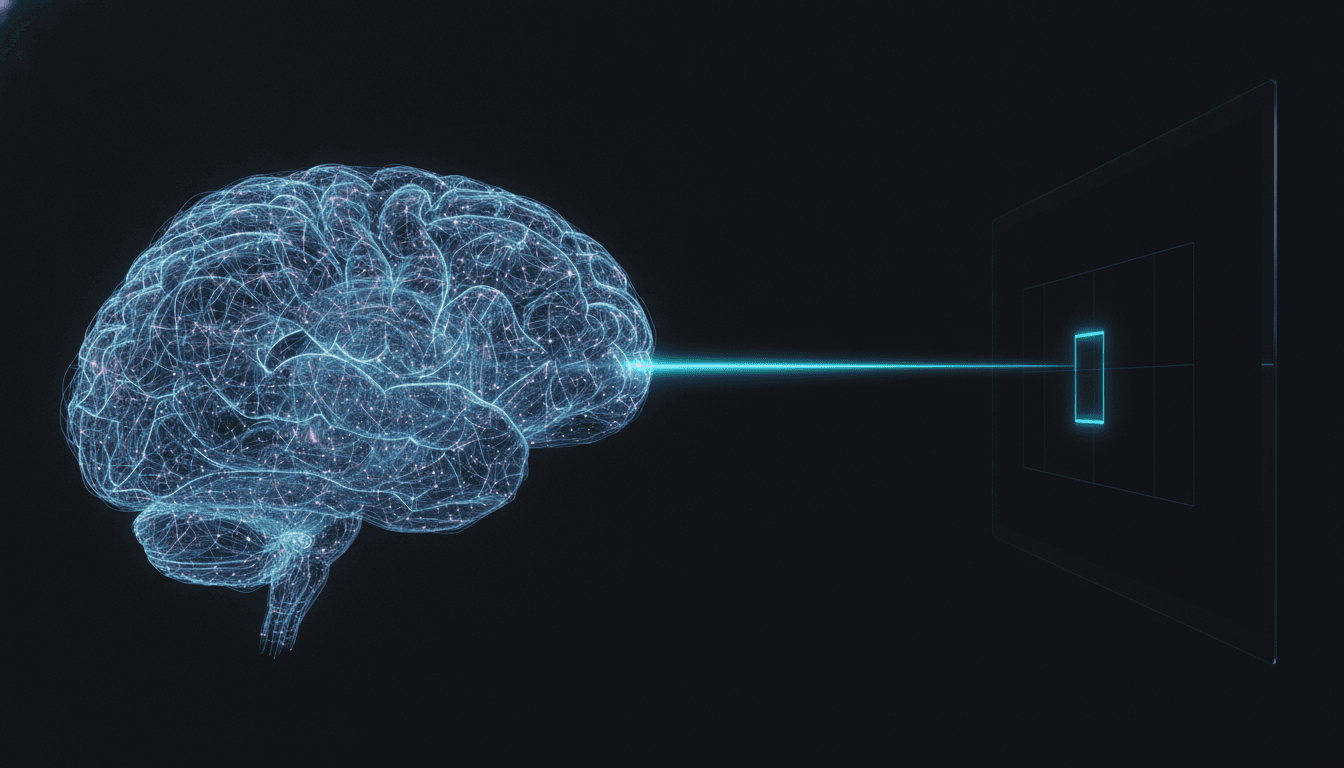
A BCI is, at its heart, a bridge. It forges a direct communication path between the brain's electrical buzz and an external device. The whole process depends on sensors 'listening' to the faint chatter of firing neurons and smart software—often AI-powered—that decodes these signals into commands. But how you listen makes all the difference. The field is split into two major camps: non-invasive and invasive.
Non-invasive BCIs, like caps studded with electroencephalography (EEG) sensors, read brainwaves from outside the skull. They’re safer. They’re cheaper. They’re easier to use. The catch? The signals are messy and imprecise. It’s like trying to overhear one specific conversation from outside a packed stadium. These systems are getting better, though. Recent work from UCLA shows that an AI co-pilot can dramatically boost a wearable BCI’s performance in controlling a robotic arm. Still, for the delicate control needed to guide a cursor or type a sentence, researchers have to get closer to the source.
The Direct Approach: Inside the Brain
Invasive BCIs require surgery. Electrodes are placed directly on or in the brain, capturing crystal-clear signals right from the neurons themselves. This is where the biggest players are making their mark, and each has a different strategy.
- Neuralink’s N1 Implant: The device inside Noland Arbaugh’s head features 1,024 ultra-thin electrodes on 64 threads. A surgical robot inserts them into the motor cortex, the brain’s movement command center. This dense array can record individual neurons, giving it the high-fidelity data needed to control a computer cursor with incredible precision.
- Synchron’s Stentrode: A rival approach from New York-based Synchron avoids open-brain surgery completely. Their device, the Stentrode, is a stent-like mesh of electrodes delivered through the jugular vein. It’s then positioned inside a major blood vessel right next to the motor cortex. The procedure is much less invasive—more like getting a pacemaker—which could open up the tech to far more patients. A major milestone: recent 12-month data from its COMMAND trial showed zero serious adverse events from the device.
- Blackrock Neurotech’s Arrays: Blackrock is a veteran in this space. Its technology has been used in dozens of study participants over many years. Their MoveAgain system, which earned an FDA Breakthrough Device designation, also uses implanted microelectrode arrays to let patients control prosthetic limbs, wheelchairs, and computers.
A third, semi-invasive category is also emerging. Precision Neuroscience's Layer 7 device, for instance, is a thin, flexible electrode film that sits on the surface of the brain without actually penetrating it. It’s aiming for a sweet spot between signal quality and surgical risk. This design has even allowed for temporary implantation in patients already undergoing brain surgery for other issues, speeding up the data collection process.
BCI Medical Applications: Restoring Voice and Movement
The most profound impact of BCIs is restoring function. Simple as that. For people locked inside their own bodies by paralysis, these devices aren't just gadgets. They’re lifelines. The progress is stunning.
Restoring speech has seen some of the most dramatic gains. Researchers at UCSF and Stanford University are leading groundbreaking work decoding the brain signals for speech. In one UCSF-led study, a system translated a patient’s intended speech into text with up to 97% accuracy. Incredible. Another study, published in Nature Medicine, highlighted Casey Harrell, a 47-year-old man with ALS. He uses a BCI from UC Davis at home to communicate on his own, hitting over 99% word accuracy with a large vocabulary. “It is a life that is more full of dynamic action and with friends and family,” Harrell communicated through the system. These setups tap into the brain's speech motor cortex, intercepting the commands the brain sends to the tongue, jaw, and larynx—even when those muscles are long past moving. The results are getting startlingly close to the speed of natural conversation.
Controlling a computer is just as transformative. Noland Arbaugh’s progress with the Neuralink implant has been steady. After 100 days, he said the device had given him “a new way to live.” People in Synchron’s trials have used the Stentrode to text, email, and shop online. This kind of digital independence is central to what BCIs can offer, restoring a level of autonomy that was once pure fantasy.
The Hard Realities and Ethical Minefields
For all the justified wonder, the road ahead is rough. Let’s not forget the obvious: brain surgery is risky. Invasive procedures carry the threat of infection, hemorrhaging, or damage to brain tissue. Then there's the question of longevity. The body's immune system can build up scar tissue around electrodes, which degrades signal quality over time. Even Neuralink admitted that some of Arbaugh’s implant threads had pulled back slightly from his brain, though they were able to compensate for the data loss with software tweaks.
And then you get to the ethical minefields. As this technology spreads, what happens to mental privacy and cognitive liberty? What happens when a device can access and interpret our thoughts? UNESCO has already sounded the alarm, warning that without real safeguards, neural data could be weaponized for marketing, surveillance, or worse. Chile actually became the first country to grant constitutional protection to “neuro-rights,” a sign of just how seriously the world is taking this. The huge investment pouring into the sector—some analysts see a market over $1.6 billion by 2045—demands an equal investment in serious governance.
There's also the danger of creating a new form of social inequality. What if these life-changing devices are only for the rich? It could create a profound, biological divide in society. That’s a challenge that has to be met as the tech moves from experimental trials to commercial treatments—a transition that is still, for most of these systems, years away. The reliance on AI to decode neural signals also ties BCI’s future to broader scientific priorities, like the US Launches $5B 'Genesis Mission' to Fuel AI in Science, an initiative to accelerate AI in complex research.
The Next Chapter: Less Wires, More Data
So where is this all headed? The future of BCIs will likely be defined by a few key trends. First, a push toward less invasive—or even completely non-invasive—systems that can still deliver high-quality signals. Second, the relentless integration of advanced AI and machine learning, which are absolutely essential for decoding the brain’s maddeningly complex language. This feedback loop, where neuroscience and AI push each other forward, is critical. The massive datasets from these devices will, in turn, teach us more about the brain itself. Thinking about this future brings up other major tech decisions, not unlike those facing business leaders weighing a Build vs. Buy AI: A Decision Framework for Business Leaders.
We are not on the verge of a world where everyone can browse the web with their minds. That's still the stuff of science fiction. No, what we are witnessing is something more meaningful: the painstaking, methodical, brilliant work of scientists and engineers delivering on a promise to give back what was taken away. For patients like Noland Arbaugh and Casey Harrell, the future is already here. It’s giving them back a voice. A connection. A piece of their lives.
Related Articles

This article was produced with AI assistance under human direction, and reviewed and fact-checked by a named editor before publication. How we work.
Frequently asked questions
- How do brain-computer interfaces work?
- A brain-computer interface (BCI) works by detecting electrical signals from neurons in the brain using sensors, such as an implanted micro-electrode array or a non-invasive EEG cap. Sophisticated computer algorithms, often using AI, then translate these neural signals into commands that can control an external device, like a computer cursor or a prosthetic limb, allowing a user to interact with technology using only their thoughts.
- What are the main medical applications for BCI technology?
- The primary BCI medical applications focus on restoring lost function for people with severe paralysis due to conditions like spinal cord injury, ALS, or stroke. Current clinical trials are demonstrating success in allowing patients to control computers for communication (typing, emailing), operate wheelchairs, and control robotic limbs. Another major breakthrough is restoring communication by decoding attempted speech signals from the brain and translating them into audible words.
- Is BCI technology safe?
- BCI technology has different levels of risk. Non-invasive BCIs that use external caps (EEG) are very safe. However, high-performance invasive BCIs require brain surgery to implant electrodes, which carries risks like infection, bleeding, and tissue damage. Companies are actively working on less invasive methods, like Synchron's Stentrode which is delivered via blood vessels, to reduce these surgical risks while still achieving high-quality signal detection for medical applications.
- Who are the leading companies in brain-computer interfaces?
- Several companies are leading the BCI field. Neuralink, founded by Elon Musk, is well-known for its high-profile human trials. Synchron is a major competitor with its less-invasive Stentrode device that has shown strong safety results in FDA-approved trials. Blackrock Neurotech is a long-established player whose technology has been used in many research participants, and Precision Neuroscience is developing semi-invasive surface electrode arrays to offer a balance of performance and safety.
Sources & further reading
Sources
- wikipedia.org — en.wikipedia.org
- citeline.com — insights.citeline.com
- ucdavis.edu — health.ucdavis.edu
- psychologytoday.com — psychologytoday.com
- news-medical.net — news-medical.net