How AI Is Changing E-Commerce: A Practical Guide for 2026
Forget the hype. Artificial intelligence is already delivering real money in online retail—through hyper-personalized recommendations, razor-sharp dynamic pricing, and visual search that *actually* converts. Here's what's working.

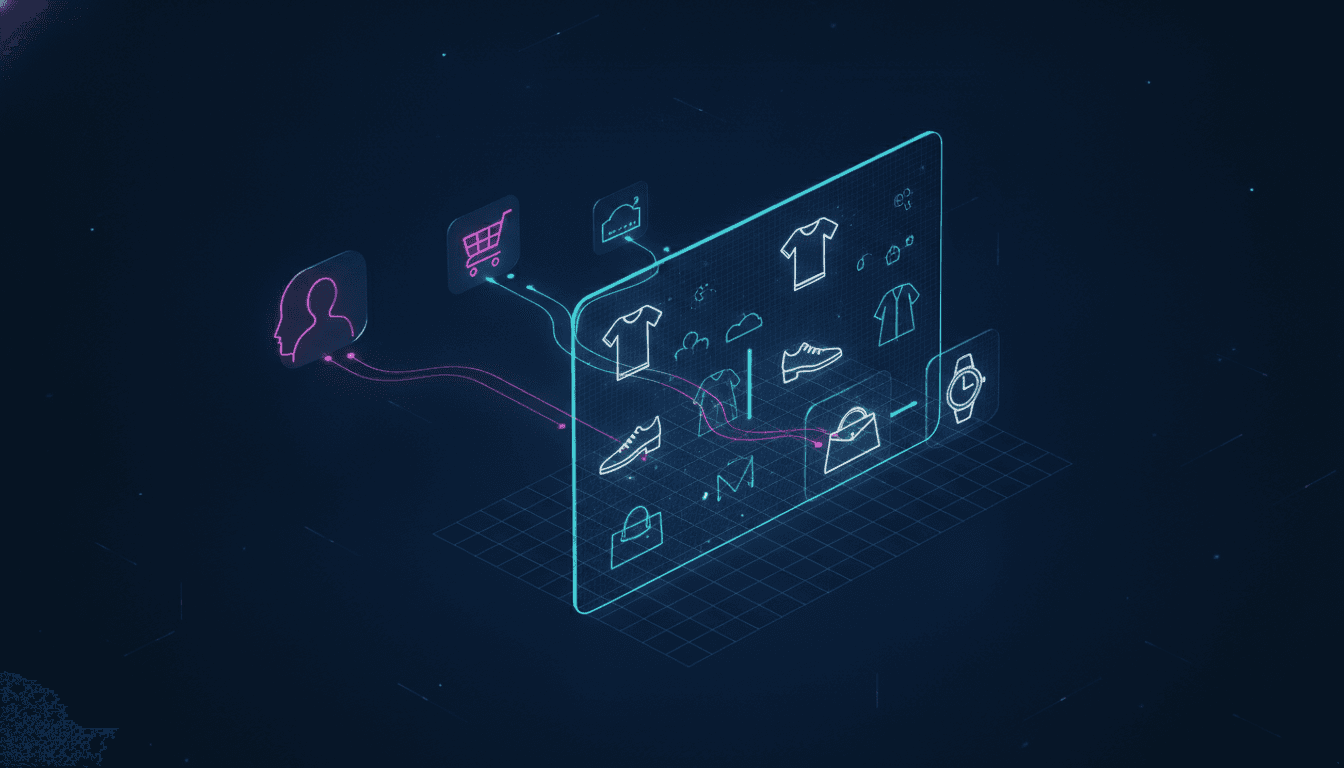
Artificial intelligence isn't theory anymore. It's infrastructure. For e-commerce business owners and marketers, the question has shifted from *if* they should adopt AI to *where* it will make the biggest dent. The market numbers tell the story: valued at over $7 billion in 2024, the AI e-commerce sector is forecast to rocket to nearly $75 billion by 2035. That’s not a trend; it's a fundamental shift.
And this isn't about some far-off concept. It's about what drives revenue today. Companies that nail their AI personalization strategy see serious returns—McKinsey pegs the revenue lift at 10-15%. Meanwhile, Adobe Analytics data from early 2026 shows that website traffic from AI-powered sources converts a whopping 42% more often than traffic that isn't. So let's break down where the real action is.
The New Standard: AI-Powered Personalization
Generic storefronts are dead. Today's consumer doesn't just appreciate a tailored shopping experience—they expect it. A full 91% of shoppers are more likely to buy from brands that get personalization right, while 71% get flat-out frustrated when the experience feels impersonal. This is precisely where AI shines, turning mountains of customer data into one-to-one conversations at scale.
The most obvious application? AI product recommendations. Advanced machine learning algorithms now sift through a user's entire digital footprint—browsing history, past buys, abandoned carts, even what they're clicking on right this second—to put the perfect product in front of them. These aren't the clunky 'customers also bought' widgets of yesterday. We're talking about modern systems from platforms like Bloomreach and Dynamic Yield that can conjure a unique store layout for every single visitor. The impact is huge. As much as 31% of an e-commerce site's revenue can come directly from these recommendations. And shoppers who click on a recommendation are 4.5 times more likely to actually add items to their cart.
Beyond Recommendations: Hyper-Personalization
But true e-commerce personalization AI goes much deeper. It's the engine behind dynamic content, where the very banners and homepage images shift to match different user segments. It drives personalized email and SMS campaigns, optimizing everything from the send time to the subject line for each person. The payoff is clear: fast-growing companies now pull in 40% more of their revenue from these advanced personalization tactics than their slower competition. For any business getting serious about an AI strategy, the first step is always the same: centralize your customer data. Every touchpoint needs to be drawing from the same well of intelligence. You can learn more by reading this guide to building an AI strategy that delivers business value.
Dynamic Pricing: Maximizing Revenue in Real Time
Static pricing is a throwback. A relic of brick-and-mortar thinking. AI e-commerce tools have unleashed dynamic pricing, allowing prices to adjust on the fly based on a whole host of signals. These algorithms chew on competitor pricing, market demand, current inventory levels, and even individual customer behavior to pinpoint the perfect price at any given moment.
Just look at Amazon. The e-commerce behemoth reportedly reprices items millions of times every single day, a strategy that lets them stay hyper-competitive while protecting their margins. But this tech isn't just for giants anymore. AI-powered pricing tools now let retailers of all sizes automate this incredibly complex dance. For instance, a system might nudge a price down for a user who keeps looking at the same product, just to close the deal. Or it could hike the price on a hot item that's about to sell out. Good luck doing that manually. It's an agility that hits the bottom line directly.
Visual Search: When Customers Can Show, Not Tell
A picture is worth a thousand keywords. Visual search technology lets customers upload a photo to find the exact product they want, or at least something strikingly similar. It’s a total transformation for categories like fashion and home decor—anything driven by aesthetics. And customers are here for it. Data from Invesp shows that 62% of Gen Z and Millennial consumers prefer visual search over other technologies.
The technology is also hitting its stride. Fast. The global market for visual search is expected to explode from roughly $40 billion in 2024 to over $150 billion by 2032. Platforms like Pinterest have baked it into their DNA with features like Lens. For retailers, the math is simple: users who try visual search convert at a 30% higher rate than those stuck typing into a search bar. It collapses the journey from inspiration—seeing an item on the street or in a social feed—to purchase. As consumers think more and more in images, visual search is becoming a non-negotiable part of the e-commerce toolkit.
Smarter Customer Service: AI Chatbots That Actually Help
Customer service is essential. It's also expensive. AI-powered chatbots and virtual assistants are storming this space, offering instant, 24/7 support that actually works. Forget the frustrating, dead-end bots of the past. Today's AI chatbots use natural language processing (NLP) to understand what customers are *really* asking, even when the queries get complicated.
They can field an incredible volume of routine questions—everything from 'Where is my package?' to specific product details—which frees up your human agents to handle the truly tough cases. How effective are they? Some advanced AI systems can resolve up to 93% of customer questions without any human help at all. And this efficiency doesn't kill sales; it boosts them. Businesses deploying AI chat solutions have seen conversion rates leap by as much as 4X. A proactive AI chat can even reel back an estimated 35% of abandoned carts by jumping in with a timely offer or a bit of help. For a deeper dive into creating effective AI support, consider this tactical guide to customer service bots people don\'t hate.
So, no, AI isn't some luxury item reserved for the biggest players. It's becoming table stakes. From scrappy startups to established household names, these tools are now essential for creating the kind of smart, personalized, and seamless experiences that today's customers simply demand. The companies that figure this out and lean in? They're the ones who will own the future of retail.
Related Articles



This article was produced with AI assistance under human direction, and reviewed and fact-checked by a named editor before publication. How we work.
Frequently asked questions
- What is the impact of AI on e-commerce sales?
- AI significantly boosts e-commerce sales by enhancing customer experiences and optimizing operations. Companies using AI-driven personalization report revenue increases of up to 40%. Specifically, AI product recommendations can account for up to 31% of a site's revenue, while AI-powered chatbots have been shown to increase conversion rates by as much as four times.
- How does AI improve e-commerce personalization?
- AI improves e-commerce personalization by analyzing vast amounts of customer data—including browsing history, past purchases, and real-time behavior—to deliver unique experiences. This allows for tailored product recommendations, dynamic website content, and personalized marketing messages. With 91% of consumers preferring to shop with brands that offer personalized experiences, AI is crucial for meeting customer expectations and driving loyalty.
- What are the main applications of AI in e-commerce?
- The main applications of AI in e-commerce include personalized product recommendations, dynamic pricing that adjusts to market conditions, visual search allowing users to search with images, and intelligent chatbots for 24/7 customer service. AI is also used for inventory management, demand forecasting, and fraud detection, making operations more efficient and secure.
- Is investing in AI e-commerce tools worth it for a small business?
- Yes, investing in AI e-commerce tools is increasingly worthwhile for small businesses. Many platforms now offer accessible AI features, such as automated product recommendations and customer service chatbots, that can be implemented without a dedicated data science team. These tools can deliver significant ROI by increasing conversion rates, improving customer satisfaction, and saving time on manual tasks.
Sources & further reading
Sources
- triplewhale.com — triplewhale.com
- precedenceresearch.com — precedenceresearch.com
- vovv.ai — vovv.ai
- bloomreach.com — bloomreach.com
- digitalcommerce360.com — digitalcommerce360.com
- sellerscommerce.com — sellerscommerce.com