What Is a Qubit? The Building Block of Quantum Computers
It's not just a fancy bit. To understand the future of computing, you need to understand the strange reality of the qubit, starting with a quantum property called superposition.

Beyond Zero and One: Why a Qubit Isn't Just a Fancy Bit
The device you're reading this on is built on a simple foundation. A rock-solid one, really. The bit. It's a tiny switch that's either on or off, representing a 1 or a 0. Every email, video, and line of code boils down to billions of these binary choices in a system of absolute certainty. But quantum computers are built on something else entirely: the what is a qubit, or quantum bit. This is a leap from the crisp world of digital logic into the strange, probabilistic realm of quantum mechanics.
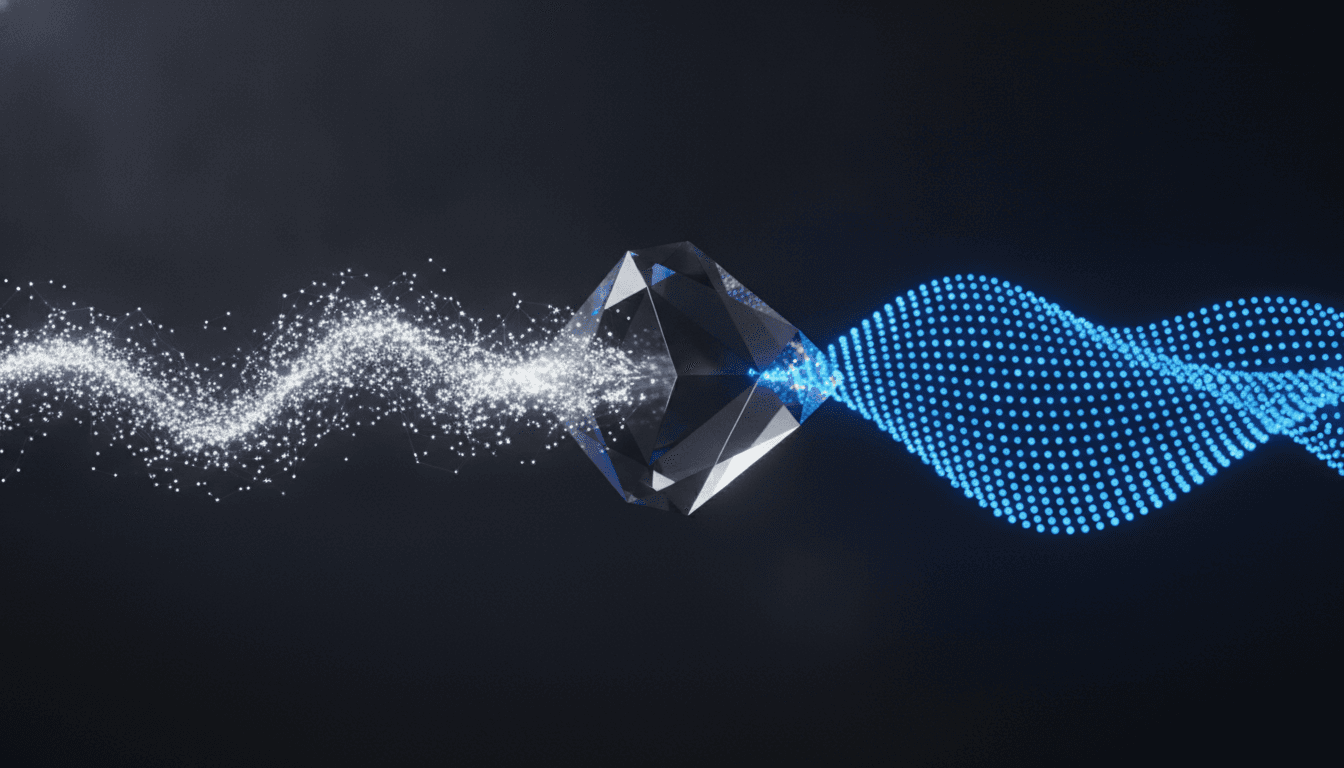
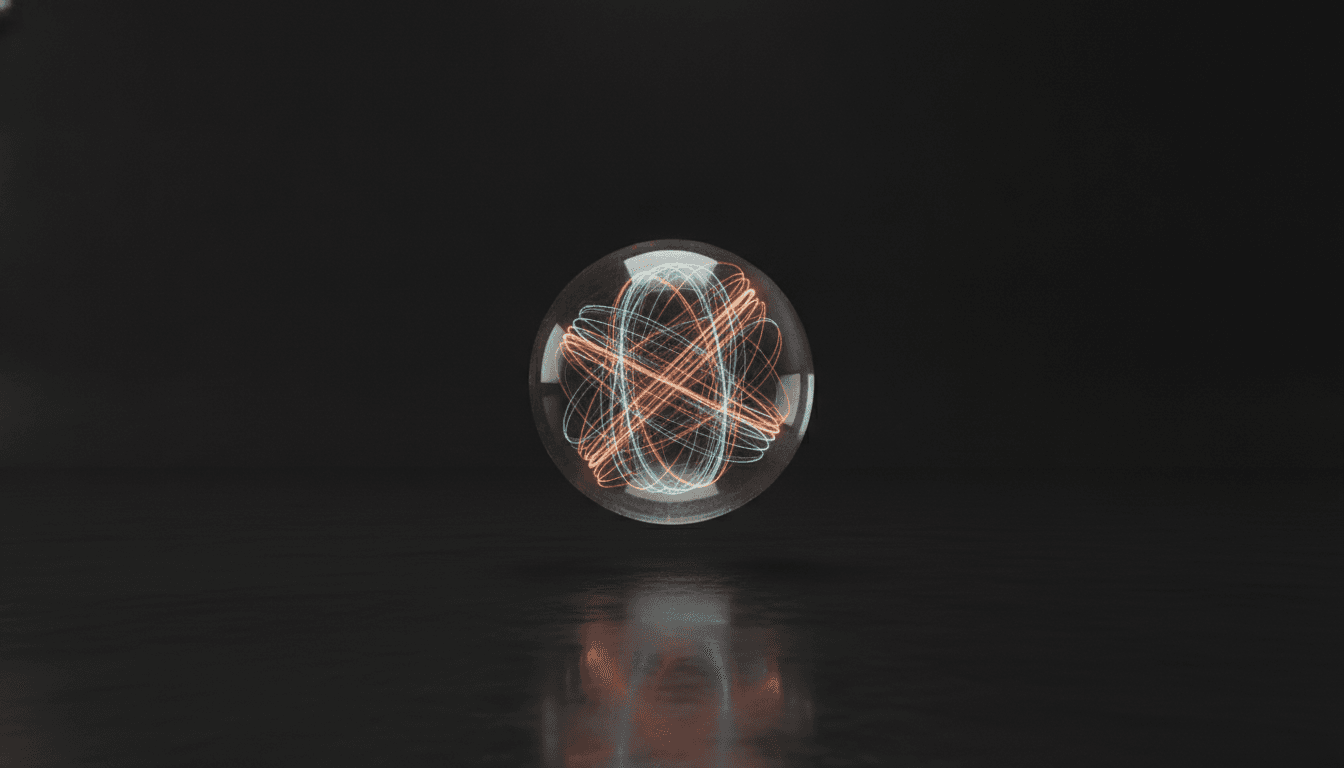
A classical bit is a light switch. On (1) or off (0). Nothing in between. A qubit, however, plays by a completely different set of rules. It can be a 0. It can be a 1. Or—and here’s the twist—it can be an eerie, indefinite combination of both states at the same time, thanks to a property called superposition. Coined by American theoretical physicist Benjamin Schumacher, the term represents the basic unit of information in quantum computing. And unlike a bit, which is just an electrical signal, a qubit is a physical thing. A two-level quantum system. That could be the spin of an electron (up or down), a photon's polarization (vertical or horizontal), or the energy state of an artificial atom forged from a superconducting circuit.
This ability to hold multiple values at once is what gives a quantum computer its horsepower. Think about it. Two classical bits can store just one of four possible combinations (00, 01, 10, or 11) at any single moment. But two qubits in superposition? They represent all four of those combinations simultaneously. As you add more qubits, the computational space explodes exponentially. That’s why these machines promise to solve certain problems—like designing new medicines or cracking today's toughest encryption—that are simply impossible for even our most powerful supercomputers. As physicist and 2018 Australian of the Year Michelle Simmons says, "Every time we add a qubit, we double the computational power."
Superposition Explained Simply: The Quantum Coin Toss
To really get your head around how qubits work, you have to push past the simple analogies. The most common one you'll hear is the spinning coin. It’s neither heads nor tails until it lands, right? It's a decent starting point, but it's also misleading. A spinning coin actually has a definite state; we just don't know what it is. A qubit in superposition doesn't have a secret state. It exists in a genuine, simultaneous blend of all its possibilities.
A better analogy, though a bit more abstract, comes from waves. Picture dropping two pebbles into a still pond. The ripples spread and interfere with one another, creating a complex pattern. The water's height at any given point is a combination of both waves. Superposition is like that. A qubit's state is described by a wave function, which assigns a "probability amplitude" to both its 0 and 1 states. These aren't simple odds, but complex numbers that can reinforce or cancel each other out. According to the Born Rule, a core quantum principle from Max Born back in 1926, the probability of seeing a 0 or a 1 when you finally measure the qubit is the square of its amplitude.
This brings us to Schrödinger's Cat. It's famous, but widely misunderstood. Erwin Schrödinger imagined a cat in a box whose life depended on a random quantum event. Until you open the box, he argued, the cat is in a superposition of being both alive and dead. He didn't mean this literally. Not at all. He meant it as a critique, to show how absurd it was to apply these quantum rules to big, everyday objects. A cat is never both alive and dead. The analogy falls apart because large objects are constantly interacting with their environment, a process called decoherence that forces a quantum system to 'pick' a state.
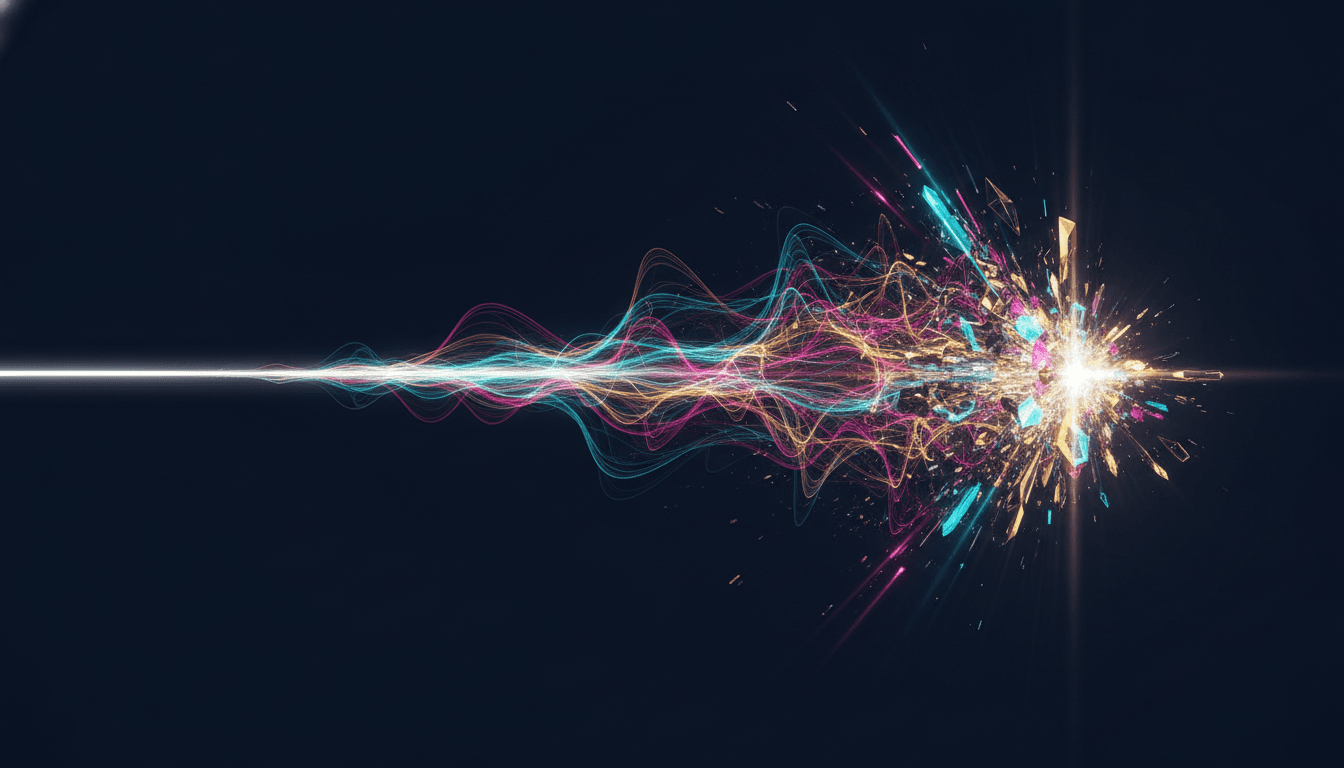
Here's the key takeaway. Superposition isn't about what we don't know. It's a fundamental property of the qubit. Before you look, it holds a rich reality of possibilities. The instant you measure it, that wave of possibilities collapses into a single, definite outcome. A 0 or a 1. That’s it.
How Are Qubits Actually Made and Controlled?
A qubit isn't just an idea on a blackboard. It's a real physical device that engineers have to build and control with almost unbelievable precision. The leading methods today involve either taming individual particles or creating artificial ones in labs, often chilled to temperatures colder than deep space. Two of the most mature technologies are superconducting qubits and trapped-ion qubits.
Superconducting Qubits: The Path of Least Resistance
Companies like Google and IBM have bet big on superconducting qubits. These are basically tiny electrical circuits, made from materials like aluminum and cooled to near absolute zero (around 15 millikelvins). Why so cold? At that temperature, electricity flows with zero resistance. The qubit's 0 and 1 states are just different energy levels of the current running through a critical component called a Josephson junction. To control them, engineers fire carefully tuned microwave pulses into the quantum processor's frigid heart. Google's Sycamore processor and IBM's 127-qubit Eagle are famous examples of this approach.
Trapped-Ion Qubits: Atoms Held in Place by Light
Then there's the other camp. Companies like IonQ and Quantinuum use actual atoms. In their machines, an atom (like ytterbium) is zapped to knock off an electron, turning it into a positively charged ion. That ion is then held floating in a vacuum by electromagnetic fields generated on a microchip. The 0 and 1 states? They're just two different internal energy levels of the ion's electron. Lasers, aimed with pinpoint precision, manipulate the qubit's state and can even entangle them by nudging them into collective motion. As quantum computing pioneer Christopher Monroe explains, atoms are great for this job because they're all perfectly identical—unlike superconducting circuits, which always have tiny manufacturing flaws.
Both methods, however, face the same immense challenge. Decoherence. Qubits are fragile. Incredibly so. Any stray vibration, heat change, or electromagnetic field can shatter their superposition, causing them to collapse into a plain old 0 or 1 and ruin the entire calculation. This is why quantum computers live inside massive, heavily shielded, ultra-cold refrigerators. It's a constant balancing act, as Caltech physicist John Preskill has pointed out. "On the one hand, we want to isolate the qubits very well," he said. "On the other hand, we want to control them from the outside and get them to do what we want them to do." This fight is a huge reason why achieving practical quantum supremacy remains such a monumental task.
From Physical to Logical: The Road Ahead
The number of qubits in a processor gets all the headlines, but raw numbers are deceiving. We're currently in what Preskill famously termed the "noisy intermediate-scale quantum" (NISQ) era. These machines have hundreds, even thousands, of physical qubits. As of early 2026, neutral-atom systems have shown off more than 1,100. But here's the catch: these qubits are error-prone. They're noisy.
The real goal is to create fault-tolerant logical qubits. A logical qubit isn't one thing; it's a robust unit of information built by bundling many physical qubits together, using quantum error-correction codes to shield the group from decoherence. In January 2026, for example, QuEra Computing hit a major milestone, demonstrating 96 verified logical qubits built from 448 physical ones. That ratio of physical to logical qubits is a critical overhead, but it's the only known path toward machines that can run the truly world-changing algorithms. The journey from today's delicate physical qubits to the resilient building blocks of tomorrow's quantum machines—a path that might even lead to new designs like computers modeled on the brain—is really just beginning.
Related Articles

This article was produced with AI assistance under human direction, and reviewed and fact-checked by a named editor before publication. How we work.
Frequently asked questions
- What is the main difference between a qubit and a bit?
- The main difference is that a classical bit can only be in one of two states, either 0 or 1. A qubit, the basic unit of quantum computing, can be in a state of 0, 1, or a 'superposition' of both states at the same time. This allows quantum computers to process a vastly larger amount of information exponentially.
- What is superposition in simple terms?
- Superposition is the ability of a quantum system, like a qubit, to exist in multiple states simultaneously until it is measured. Instead of being definitively a 0 or a 1, a qubit in superposition exists as a combination of probabilities for both outcomes. When measured, this state of possibility 'collapses' into a single, definite result of either 0 or 1.
- How are physical qubits actually made?
- Qubits are made from two-level quantum systems. Two leading methods are superconducting circuits and trapped ions. Superconducting qubits are tiny circuits cooled to near absolute zero, where their energy levels represent 0 and 1. Trapped-ion qubits use individual charged atoms suspended in a vacuum, with lasers manipulating their internal energy states to serve as the 0 and 1.
- Why are quantum computers so hard to build?
- Quantum computers are extremely difficult to build because qubits are incredibly fragile. Their quantum states, particularly superposition, are easily disturbed by tiny changes in temperature, vibration, or electromagnetic fields from the environment. This phenomenon, called decoherence, introduces errors into calculations. Protecting qubits requires extreme isolation, such as ultra-cold refrigeration and extensive shielding, while also allowing for precise control.
- What is the difference between a physical and a logical qubit?
- A physical qubit is the actual hardware component—like a superconducting circuit or a trapped ion—that exhibits quantum behavior. However, physical qubits are noisy and prone to errors. A logical qubit is a more robust, fault-tolerant unit of information created by encoding data across many physical qubits. Using quantum error-correction codes, the system can detect and fix errors in the physical qubits, allowing the logical qubit to perform reliable calculations.
Sources & further reading
Sources
- engineersgarage.com — engineersgarage.com
- wikipedia.org — en.wikipedia.org
- bluequbit.io — bluequbit.io
- medium.com — medium.com
- ibm.com — ibm.com
- singjupost.com — singjupost.com