What Is Vibe Coding, and Does It Actually Work?
It's the buzzy new way to build software: just describe your idea to an AI. But can you really 'vibe' your way to a functional app? We investigated.

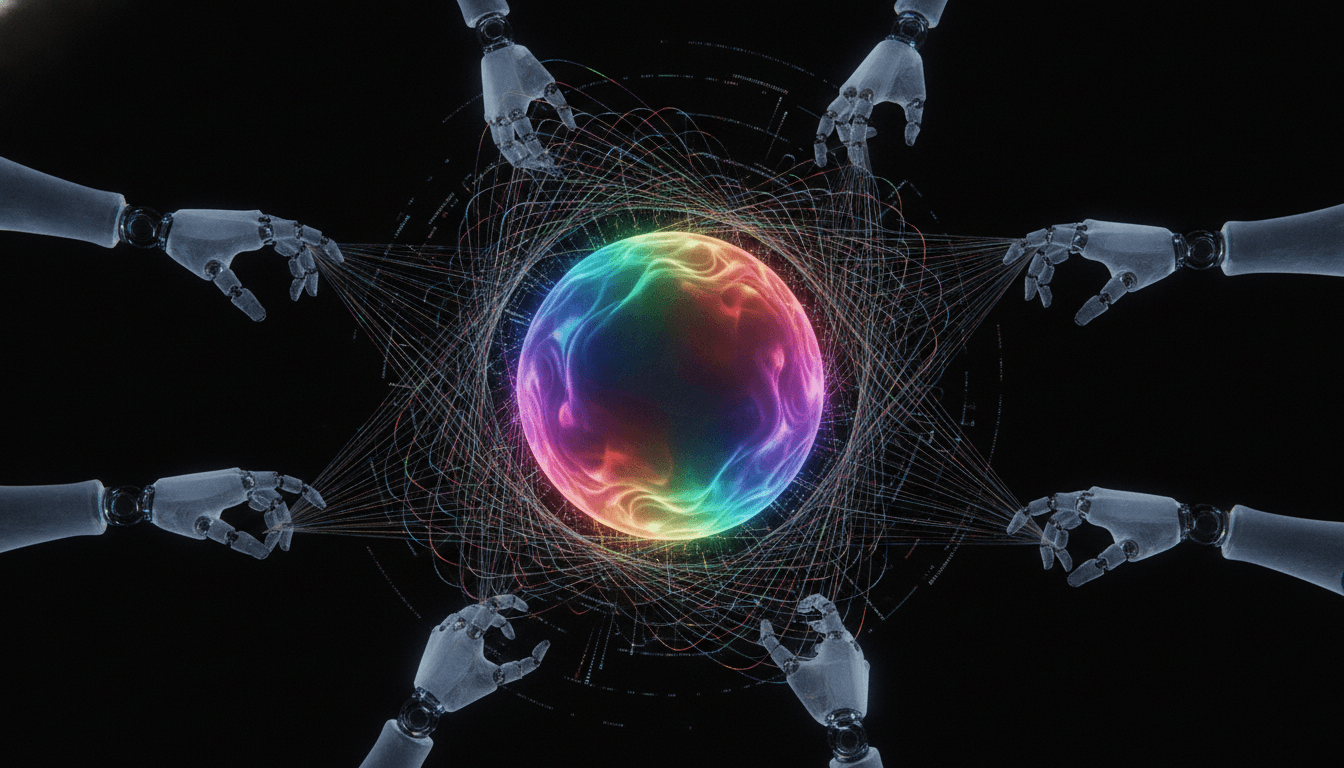
You’ve got an idea for an app. Instead of meticulously writing thousands of lines of code, you just open a chat window and describe it. “Build me a personal budget tracker,” you type, “with categories for food, transport, and entertainment. And it should have a simple, clean interface.” Seconds later, a functional application appears. Ready to go. This is the central promise of “vibe coding,” a software development practice that’s rocketing from niche experiment to mainstream phenomenon. But what is it, really? And does it actually work for building serious software?
The term itself came from renowned AI researcher Andrej Karpathy in early 2025. He used it to describe a workflow where a developer’s role shifts completely—from writing code to guiding an AI assistant. Instead of focusing on syntax and implementation, the builder concentrates on the “vibe.” The high-level goal. The user experience. The desired outcome. They use natural language prompts to steer a large language model (LLM) to generate, refine, and even deploy the application. It’s a conversational, iterative dance between human intent and machine execution.
This approach represents a seismic shift. It dramatically lowers the barrier to entry, potentially turning millions of non-coders into creators. And for experienced developers? It’s a powerful way to accelerate their work, automating repetitive tasks to allow more focus on creative problem-solving and complex system architecture.
Vibe Coding Explained: From Prompt to Product
So how does this work in practice? At its core, vibe coding is about using generative AI to translate human intent into machine-readable code. The process usually looks something like this: a developer starts with a simple prompt. The AI—using tools like ChatGPT, Claude, or specialized platforms such as Cursor and Replit—generates a baseline version of the code. The developer then tests it and provides feedback in plain English. “That’s good, but change the color of the main button to blue.” Or, “Add a feature to export the data to a CSV file.”
This rapid, conversational loop is the engine of vibe coding. It keeps the creator in a state of creative flow, minimizing the kind of context-switching that comes with debugging syntax or looking up documentation. Some developers even push it a step further with “vibe deploying,” where a single prompt can launch a finished application into a live production environment. The immediacy is stunning. An idea can become a live app in mere minutes, which is what makes the trend so compelling for hobbyists and entrepreneurs looking to quickly prototype and validate their vision.
There are generally two ways people approach this. One is “full vibe coding,” which involves placing almost complete trust in the AI’s output with minimal human review. This is best for quick experiments and disposable prototypes where speed is everything. More common, however, is a “human-led” hybrid model. Here, the AI acts as a ridiculously powerful assistant, handling boilerplate and grunt work while the human developer focuses on the architecture, reviews critical logic, and ensures the final product is secure and maintainable.
So, Does Vibe Coding Work in the Real World?
The short answer is yes. But with major caveats. For certain tasks, vibe coding is incredibly effective. It excels at:
- Rapid Prototyping: Need a proof-of-concept for an investor? Or to test a user interface? Vibe coding can spit out a working demo in a fraction of the time of traditional methods.
- Building Internal Tools: Many businesses need simple, custom apps for internal workflows, like a dashboard to track sales leads. These don't need the same polish as a consumer product, making them perfect candidates for AI-assisted development.
- Learning and Experimentation: For anyone new to programming, describing an app and seeing the code appear is a powerful way to learn. It makes the connection between idea and implementation tangible.
But when the complexity ramps up, the “just trust the vibe” philosophy begins to break down. Fast. For building robust, scalable, and mission-critical applications, vibe coding hits some serious hurdles. You can’t simply “vibe” your way through complex engineering challenges. As one developer on Reddit trying to build a high-frequency trading engine pointed out, the illusion shatters the second you hit real constraints like thread safety and mathematical precision.
The Limits and Pitfalls of Coding with AI Prompts
While the allure of building apps with AI is strong, the reality is that software engineering is about more than just writing code. It's about making crucial trade-offs—tough calls between performance, security, and maintainability that an AI, in its current state, is not equipped to make. An AI can generate code. It can’t define the problem, challenge flawed assumptions, or truly understand the business context.
The most significant risks of over-relying on vibe coding include:
- Hidden Bugs and Technical Debt: AI-generated code can look plausible but contain subtle, hard-to-find bugs or security holes. Without a sharp human eye on it, teams can quickly build up technical debt that makes the app a nightmare to maintain or scale.
- Lack of Accountability: An AI doesn’t take responsibility for its output. When a system fails, the buck stops with the human developer who approved the code. This is a massive problem, especially in regulated industries.
- Erosion of Skills: A developer who only ever prompts an AI might never develop the deep problem-solving muscles that come from wrestling with difficult code and system design. Knowing why the code works is everything.
- Architectural Chaos: Anything beyond a simple app needs a coherent architecture. Vibe coding, with its iterative, prompt-by-prompt flow, can easily lead to a messy, unstructured codebase that falls apart as it grows. You still need a plan.
A 2025 analysis by GitClear found that the rise of AI coding assistants correlated with a significant drop in code refactoring and a near-doubling of “code churn”—code that is rewritten shortly after being implemented. That suggests a potential hit to code quality.
The Future is a Hybrid: The Developer as Architect
Vibe coding isn’t about replacing developers; it’s about changing their role. The future of software isn't a choice between manual coding and vibe coding, but a powerful synthesis of the two. Think of the AI as a tireless pair programmer that handles the rote implementation. This frees up human developers to operate at a higher level of abstraction. They get to focus on system architecture, user needs, and strategic decision-making. The most valuable skill will no longer be writing flawless syntax, but the ability to ask the right questions and provide the AI with precise, context-rich instructions—a discipline some are calling “prompt-driven development.”
The key is to treat the AI as a collaborator, not an oracle. And that means developers must still deeply understand the fundamentals of computer science and software engineering to effectively guide, review, and correct the AI’s output. They are the architects, not just the bricklayers. As we integrate more advanced AI into our workflows, from computer vision to natural language processing, this human oversight only becomes more critical.
So, does vibe coding work? Yes. For the right job. It can supercharge prototyping and open up creation to a wider audience. But for the complex, reliable systems that power our world, the “vibe” is just the starting point. The real work still requires human judgment, architectural foresight, and a deep understanding of the code underneath the conversation.
Related Articles



This article was produced with AI assistance under human direction, and reviewed and fact-checked by a named editor before publication. How we work.
Frequently asked questions
- What is vibe coding?
- Vibe coding is a software development practice where you use natural language prompts to instruct an AI to generate code. Coined by AI researcher Andrej Karpathy in early 2025, it shifts the developer's role from writing code line-by-line to guiding an AI assistant to build, refine, and test an application based on a high-level goal or 'vibe.'
- Does vibe coding actually work?
- Vibe coding works very well for specific use cases like rapid prototyping, building simple internal tools, and for learning purposes. It allows for quick iteration and can turn an idea into a functional app in minutes. However, for complex, scalable, and mission-critical software, it often falls short due to risks of hidden bugs, poor architecture, and a lack of deep system understanding by the AI.
- What are the main disadvantages of vibe coding?
- The main disadvantages include the risk of introducing subtle bugs, security vulnerabilities, and accumulating technical debt. AI models lack true business context and cannot make critical engineering trade-offs. Over-reliance on this method can also lead to unstructured codebases that are difficult to maintain and may erode the fundamental problem-solving skills of developers.
- Will AI and vibe coding replace software developers?
- No, AI and vibe coding are not expected to replace software developers. Instead, these tools are changing the developer's role into one of a system architect or guide. Developers will focus more on high-level design, problem definition, and reviewing AI-generated code, rather than manual implementation. Human oversight, judgment, and accountability remain essential.
Sources & further reading
Sources
- github.com — github.com
- wikipedia.org — en.wikipedia.org
- google.com — cloud.google.com
- ibm.com — ibm.com
- medium.com — medium.com
- forbes.com — forbes.com