What Is Machine Learning? Unpacking the Term Everyone in AI Misuses
It's the engine driving today's AI boom, but it is not the same as AI itself. Let's clear up the confusion with simple analogies that finally make the difference click.

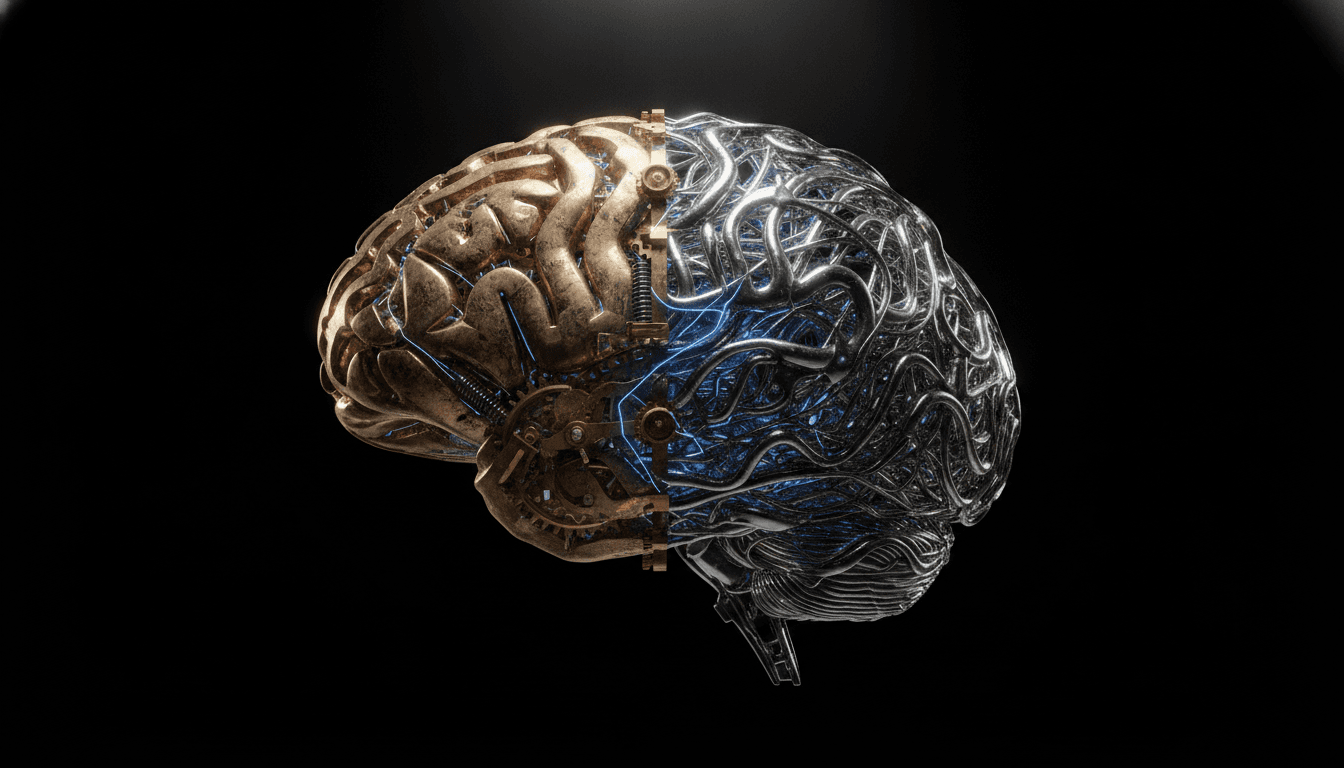
What is Artificial Intelligence (AI), Really?
Before we get to the engine, we have to look at the car. Artificial Intelligence is the car. It’s the grand, decades-old dream of building machines that can mimic how we think—reasoning, solving problems, and, most importantly, learning. So think of AI as the entire field of study. The big tent. It covers a vast range of methods and technologies aimed at creating intelligent systems, a quest that’s been going on since the earliest days of computing, as you can see in the detailed history of AI.
But here’s the one detail everyone misses in the current hype storm: not all AI actually learns. Not by a long shot. For ages, the most successful AI was what some now call “Good Old-Fashioned AI” (GOFAI), or expert systems. These things ran on rules. Thousands of them. A human expert would sit down and painstakingly code a massive library of knowledge into a machine using simple “IF-THEN” logic. IF a patient has a fever AND a cough, THEN they might have the flu. A famous early example from the 1970s, a system called MYCIN, did just this for diagnosing bacterial infections. It was intelligent. It could make sophisticated deductions. But it was also brittle. It couldn’t learn a single new thing on its own; its entire world was confined to the rules it was given.
So, What Is Machine Learning, Explained Simply?
If old-school AI is like giving a computer a detailed recipe, machine learning is like showing it a thousand photos of perfect cakes and telling it to figure out the recipe on its own. Big difference. Machine learning (ML) is a subset of AI. It's just one specific approach to achieving artificial intelligence, but it has become so dominant that it’s now often mistaken for the entire field. The term was coined way back in 1959 by an IBM pioneer named Arthur Samuel, who defined it as the “field of study that gives computers the ability to learn without being explicitly programmed.”
That last part? That's everything. Instead of hard-coding rules, you feed the system enormous amounts of data and let algorithms discover the patterns hidden inside. The process involves training a “model” by showing it example after example. Over time, the model adjusts its internal parameters to get ridiculously good at a specific task, whether that’s identifying a cat in a photo, translating a sentence, or detecting a fraudulent credit card transaction. The output is a system that can make startlingly accurate predictions when it sees new data for the first time.
This whole approach lives and dies by data. Tons of it. High-quality data. According to industry reports, a shocking 85% of machine learning projects fail, and poor data quality is the number one culprit. This ravenous need for information is exactly why any conversation about ML is inseparable from the thorny issues of data privacy and governance.
Machine Learning vs AI: The Core Difference in Action
Let's make this real. The relationship is dead simple: all machine learning is AI, but not all AI is machine learning. One is a tactic; the other is the broader goal. Seeing them side-by-side in the wild makes the distinction click instantly.
Consider your email spam filter. A classic rule-based AI filter would rely on a list of rules made by a human: IF an email contains the word “lottery” or has ten exclamation points, THEN move it to spam. This works for a while. But spammers adapt. A machine learning-powered filter, by contrast, is trained on millions of emails that users have already labeled as spam or not spam. It learns to recognize the subtle, ever-changing characteristics of junk mail on its own. No programmer has to write new rules—the filter just gets smarter.
Or think about Netflix's recommendation engine. Imagine trying to write rules for every user's taste. Impossible. Instead, the platform uses machine learning to analyze your viewing history and compare it to the behavior of millions of others. The system finds patterns—'people who liked Stranger Things and Black Mirror also tended to enjoy The OA'—to make those eerily accurate suggestions. That’s ML in its purest form: automated pattern discovery at a massive scale.
Even a complex AI system like a self-driving car is a hybrid. The overarching goal—navigating a car from point A to point B safely—is an AI problem. But many of the critical sub-tasks get solved using machine learning. The system that recognizes pedestrians, stop signs, and lane markings? That is almost certainly an ML model trained on millions of hours of driving data, much like what we see in the development of how robots learn to walk and interact with the world.
A Quick Peek Inside the Machine Learning Toolkit
Machine learning itself isn't one single thing; it’s a collection of techniques. For beginners, it helps to know the three main flavors they come in.
- Supervised Learning: This is the most common type. Think of it as learning with an answer key. The algorithm is fed data that is already labeled—a million images labeled 'cat' or 'dog,' for example. The goal is to learn the mapping between the input and the correct output so it can label new, unlabeled images correctly. This is the powerhouse behind most classification and prediction tasks.
- Unsupervised Learning: Here, the data has no labels. The algorithm is thrown into the deep end and tasked with finding hidden structures or clusters on its own. A business might use this to discover natural groupings in its customer base (e.g., 'high-spending weekend shoppers' vs. 'weekday bargain hunters') without defining those groups beforehand.
- Reinforcement Learning: This is learning through trial and error, much like training a pet with treats. The algorithm, or 'agent,' exists in an environment and learns by taking actions. Actions that lead to a good outcome get a reward; actions that lead to a bad one get a penalty. It’s the technique used to train AIs to play games like chess and Go, and it’s critical for robotics.
You'll also hear the term Deep Learning thrown around. Just think of it as a supercharged, more complex form of machine learning. It uses structures called 'artificial neural networks' with many, many layers—an architecture inspired by the human brain. This depth allows these systems to learn incredibly intricate patterns from raw, messy data like images, audio, and text. Deep learning is the technology behind today's most advanced AI, from voice assistants to the systems that generate convincing deepfakes.
Look, people will likely keep using AI and ML interchangeably in conversation. That’s probably fine. But knowing the difference is no longer just for engineers. It's about understanding how the smart technologies shaping our world actually work. The old, rule-based AI was about encoding human knowledge. The new AI, powered by machine learning, is about creating systems that can generate knowledge of their own. That distinction changes everything.
Related Articles



This article was produced with AI assistance under human direction, and reviewed and fact-checked by a named editor before publication. How we work.
Frequently asked questions
- What is the main difference between AI and machine learning?
- The main difference is scope. Artificial Intelligence (AI) is the broad concept of creating machines that can simulate human intelligence. Machine learning (ML) is a specific subset of AI that focuses on systems learning from data to identify patterns and make decisions without being explicitly programmed. All machine learning is AI, but not all AI uses machine learning.
- Can you give a simple analogy for AI vs. ML?
- Think of AI as the entire concept of building a car. Machine learning is a specific type of engine, like an internal combustion engine. You can have a car (AI) with a different kind of engine (like a rule-based system), but the modern, powerful cars that dominate today almost all use that specific engine type (ML). The engine is a critical part of the car, but it isn't the whole car.
- Is Siri or Alexa considered machine learning?
- Yes, virtual assistants like Siri and Alexa are prime examples of products that heavily rely on machine learning. They use ML for multiple tasks, including speech recognition (understanding your words), natural language processing (grasping the intent behind your query), and personalizing responses over time. The entire system is an AI application, and machine learning is the core technology that makes it work.
- What is deep learning in relation to machine learning?
- Deep learning is a more advanced and powerful subfield of machine learning. It uses complex, multi-layered structures called artificial neural networks, which are loosely inspired by the human brain. This depth allows it to learn very intricate patterns from large amounts of unstructured data like images, audio, and text. It's the technology behind many of the most recent AI breakthroughs, such as image generation and advanced language models.
- Are there examples of AI that don't use machine learning?
- Yes. Early forms of AI, often called 'expert systems' or 'symbolic AI,' were not based on learning from data. They relied on a vast set of hard-coded rules created by human experts. For example, an early chess program might have rules like 'if the opponent moves their queen here, then move my knight there.' These systems can be intelligent for specific tasks but cannot adapt or learn new strategies on their own.
Sources & further reading
Sources
- google.com — cloud.google.com
- mit.edu — mitsloan.mit.edu
- syracuse.edu — ischool.syracuse.edu
- 3cloudsolutions.com — 3cloudsolutions.com
- teradata.com — teradata.com
- intersog.co.il — intersog.co.il