What Is a Solopreneur? The Rise of the One-Person Business
When you upgrade, your old device embarks on a hidden journey. It could be reborn, or it could poison a village. Here’s what really happens to your e-waste, and how you can change the outcome.
 AI Tech Dialogue Editorial Team6 min read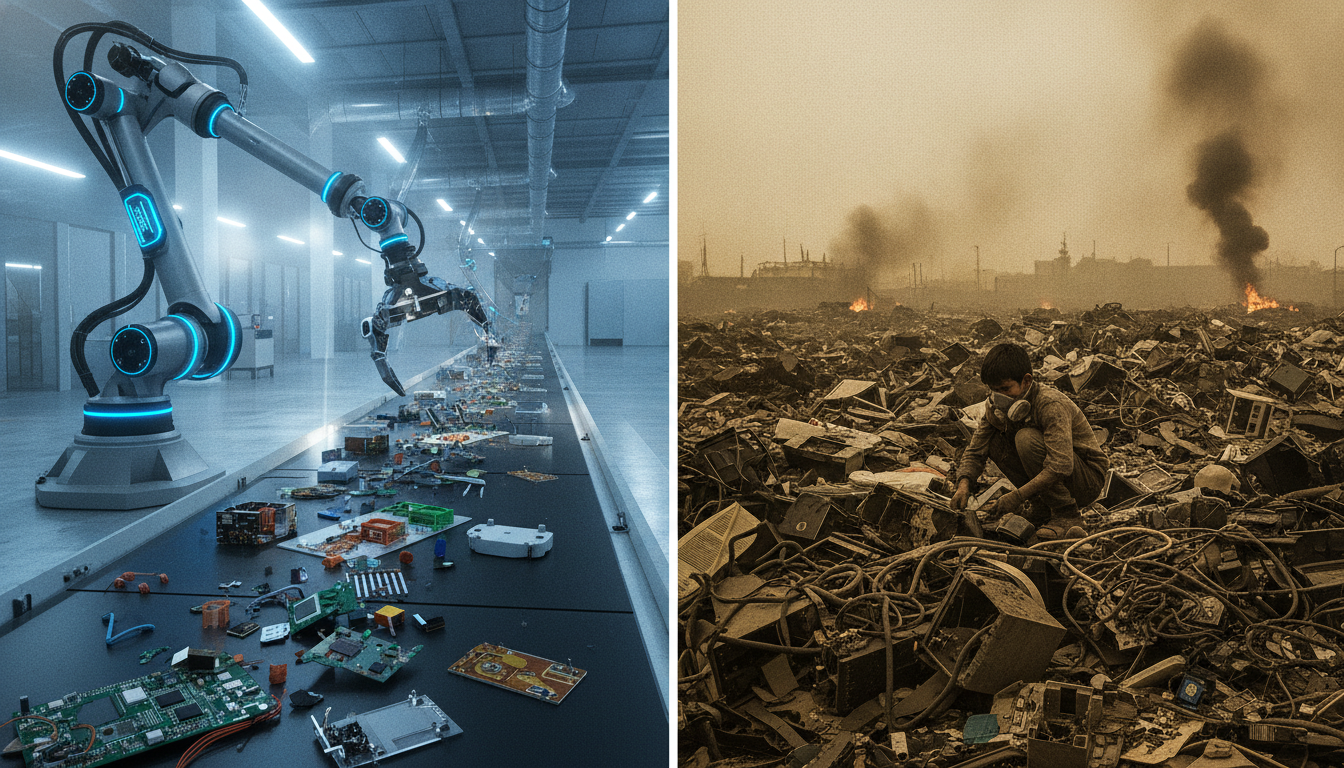
The Great Upgrade and the Great Unseen
That new smartphone feels incredible. A fresh start. Sleek glass, a zippy processor, a camera that practically sees in the dark. But what about the phone it just replaced? Its story is just getting started. Every year, our hunger for the next new thing builds a literal mountain of discarded electronics. We call it e-waste, and it’s growing at a terrifying pace. Just how fast? The UN's Global E-waste Monitor 2024 reported a record 62 million tonnes of the stuff in 2022. Picture this: 1.55 million 40-tonne trucks, enough to circle the entire equator. Here's the truly scary part—the pile is growing five times faster than we're officially recycling it.
So where does it all go? It’s not simple. A shockingly small amount—just 22.3% of that massive heap—was properly collected and recycled. The rest just... vanishes. It disappears into a global shadow economy, a journey that often ends with devastating consequences. Think about your old phone. It's a tiny marvel packed with gold, silver, copper, and palladium. And it faces a fork in the road with three wildly different destinations. The best path? It gets responsibly dismantled, its precious guts rejoining the supply chain or finding new life in a refurbished device. The worst path—and the most common—is a one-way trip to a landfill or a makeshift scrapyard, where it poisons people and the planet.
Path 1: The Responsible Route - Recycling and Rebirth
The best-case scenario is a good one. Your old phone lands at a certified recycler. These aren't just any scrap yards; they're facilities that meet tough standards like e-Stewards or R2, the very ones the U.S. Environmental Protection Agency (EPA) recommends. Inside, the phone's disassembly is methodical, almost surgical. First things first: technicians carefully remove the lithium-ion battery to prevent fires or toxic leakage. Then the real teardown starts.
Technicians take it apart by hand. They separate plastics, glass, and circuit boards. What's left of the phone's husk is fed into a powerful shredder that pulverizes it into tiny bits. From that electronic confetti, a high-tech sorting process kicks in. Giant magnets snag the steel. Eddy currents pull out aluminum and copper. Even water jets and infrared scanners get in on the action, sorting plastics. The whole point is to reclaim the valuables locked inside—and there are plenty. According to the U.S. Geological Survey, recycling a million cell phones yields 75 pounds of gold, 772 pounds of silver, a staggering 35,000 pounds of copper, and 33 pounds of palladium. Those recovered metals are sold back to manufacturers, which means less demand for destructive new mining. It’s the circular economy in action.
Path 2: The Dark Detour - From Your Hand to a Distant Dump
But the responsible path isn't the one most e-waste takes. Not even close. A huge amount of it gets packed up in developed countries and shipped overseas, much of it illegally. The reason is a grim, simple calculation: cost. It's the same logic that sends manufacturing jobs abroad, explains Jim Puckett, executive director of the Basel Action Network (BAN): "lower labor costs and fewer regulatory burdens." It is, quite simply, cheaper to dump our toxic problems on poorer nations.
A lot of this junk ends up in places like Agbogbloshie in Accra, Ghana. It’s one of the world’s largest digital dumping grounds. The 'recycling' that happens here is a world away from those high-tech labs. Here, young men and boys smash devices open with rocks. They burn plastic-coated wires in open fires just to get at the copper inside—often without any protective gear at all. This brutal, low-tech process unleashes a toxic chemical cocktail: lead, mercury, cadmium, and brominated flame retardants foul the air, the soil, and the water.
The human cost is catastrophic. Workers and residents get sick. Julius Fobil, a professor at the University of Ghana's School of Public Health who has studied the site, puts it bluntly: "There are skin diseases and ailments [at Agbogbloshie], but the worst problem here is respiratory illnesses because the amount of pollution here is so high.” He’s not wrong. Research links this constant exposure to neurological damage, cancer, and developmental issues, especially in children. It is a textbook case of environmental injustice—we get the shiny new phones, and they get our poison.
How to Recycle Old Phones Responsibly: Your Small Choices Matter
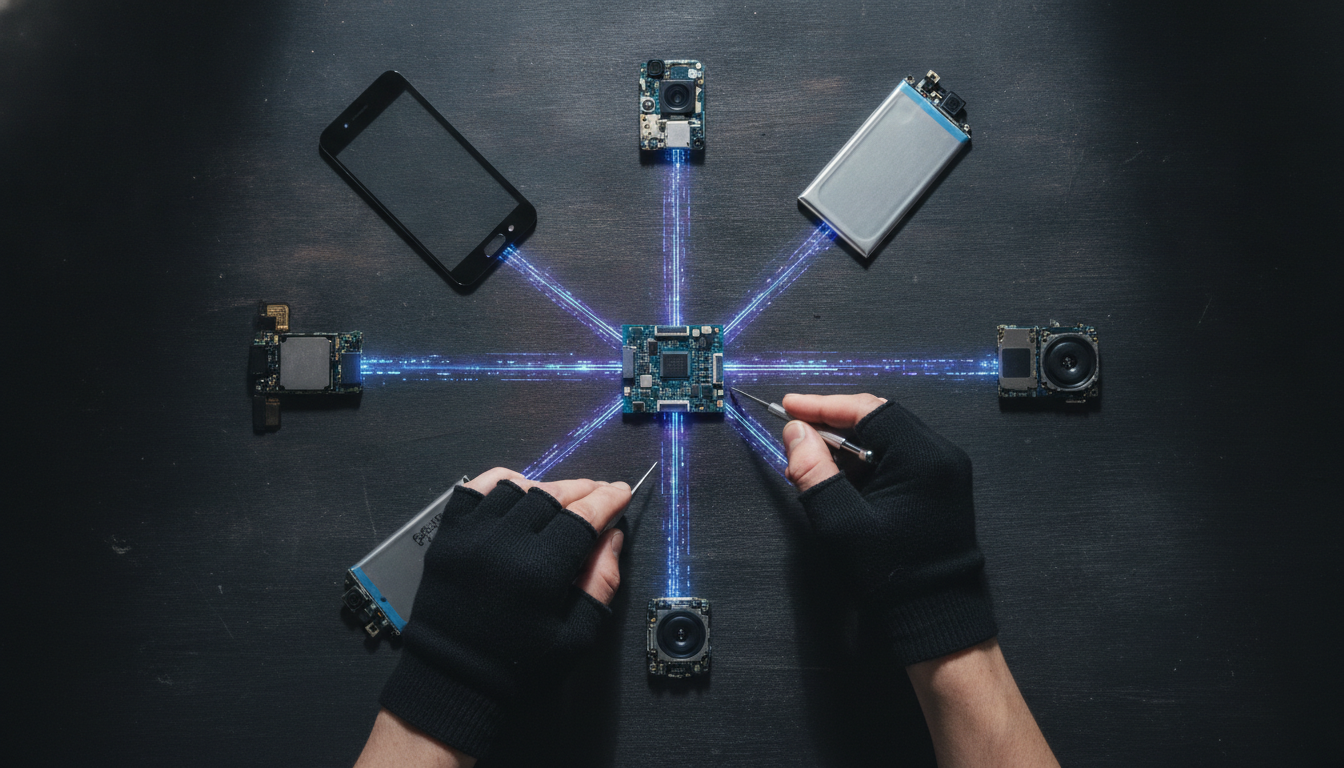
Looking at the scale of this problem, it's easy to feel overwhelmed. But you're not helpless. Individual choices, when multiplied by millions, can actually tip the scales. The single most powerful thing you can do? Consume less. Just hold onto your phone for another year. Resisting that knee-jerk upgrade is a genuinely powerful act. You can learn to take better care of it, too (we have a guide on how to actually extend your gadget's battery life). And when your screen cracks or the battery life wanes, think repair before you think replacement. That's the entire spirit of the growing global Right to Repair movement, which fights to make fixing our stuff easier and cheaper.
Your End-of-Life Checklist for Sustainable Device Disposal
When your device is truly at the end of its life, don't just toss it. Be thoughtful. Here’s your checklist:
- Trade-in or Sell It: Is the phone still in decent shape? This is your best first move. Manufacturers like Apple and carriers like Verizon have solid trade-in programs that can give you credit for a new one, prioritizing reuse over recycling.
- Donate It: A working device you no longer need can be a lifeline for someone else. Organizations like Human-I-T specialize in refurbishing old electronics for communities that need them. The one crucial step: wipe your data completely first.
- Find a Certified Recycler: For a phone that’s truly dead, this is non-negotiable. Whatever you do, don't throw it in the trash. That's a direct route for toxic heavy metals to leach from a landfill into groundwater. Find a recycler certified by e-Stewards or R2—it’s your only guarantee they’re following the strictest standards and not just shipping your problem overseas.
- Wipe Your Data Securely: Protect yourself. Before that phone goes anywhere, back up what you need and then do a full factory reset. This deletes everything—photos, bank info, messages, all of it.
Every single phone sent to a real recycler is a small victory. A real win. It means a few more precious metals recovered. It means one less plume of toxic smoke in a place like Agbogbloshie. It’s a tiny pushback against a system that outsources its poison. That old phone in your drawer? It's not just holding memories. It’s holding a choice about the mark we leave on the world.
Frequently asked questions
- What actually happens to old electronics when they are recycled?
- When properly recycled by a certified facility, old electronics are manually dismantled. Hazardous materials like batteries are removed safely. The remaining components are shredded, and then advanced machinery separates valuable materials like gold, copper, silver, and plastic for reuse in new products, reducing the need for new mining.
- Is it safe to recycle my old phone with my personal data on it?
- No, you should never recycle a device without first wiping your personal information. Before trading in, donating, or recycling, back up all your data (photos, contacts, files) and then perform a factory reset. This erases the device's storage, protecting your privacy from being compromised.
- Why is throwing electronics in the regular trash so bad?
- Electronics contain hazardous materials like lead, mercury, and cadmium. When they end up in landfills, these toxins can leach into the soil and contaminate groundwater, posing serious risks to human health and the environment. Proper recycling ensures these materials are managed safely.
- How can I find a responsible e-waste recycler near me?
- Look for recyclers certified under the e-Stewards or R2 standards. These programs are recognized by the EPA and ensure that the recycler follows strict environmental and safety protocols, including a ban on exporting hazardous waste to developing countries. Many retailers and local municipalities also offer certified collection programs.
- What is the biggest problem with the global electronic waste trade?
- A major issue is the illegal export of e-waste from wealthy nations to developing countries, where it is often processed in informal, unsafe conditions. This practice, driven by lower costs and lax regulations, exposes workers and communities to toxic fumes and chemicals, creating a severe environmental and human health crisis.
Sources & further reading
Sources
- impactpodcast.com — impactpodcast.com
- epa.gov — epa.gov
- wcrecycler.com — wcrecycler.com
- epa.gov — 19january2021snapshot.epa.gov
Further reading
- 01
 Gadgets
Apple's Foldable iPhone Ultra: A 10 Million Unit Bet
- 02
 Gadgets
Samsung Set to Reveal Galaxy Glasses with Gemini AI at July 22 Unpacked Event
- 03
 Gadgets
Noise-Cancelling Headphones That Actually Work: A Real-World Guide
- 04
 Gadgets
The Truth About Wireless Charging: Convenience vs. Reality
- 05
 Gadgets
Right to Repair: Why Fixing Your Own Gadgets Became a Global Movement