Right to Repair: Why Fixing Your Own Gadgets Became a Global Movement
It used to be simple: if it broke, you fixed it. Now, a global consumer movement is fighting corporate giants for the right to repair the things we own.

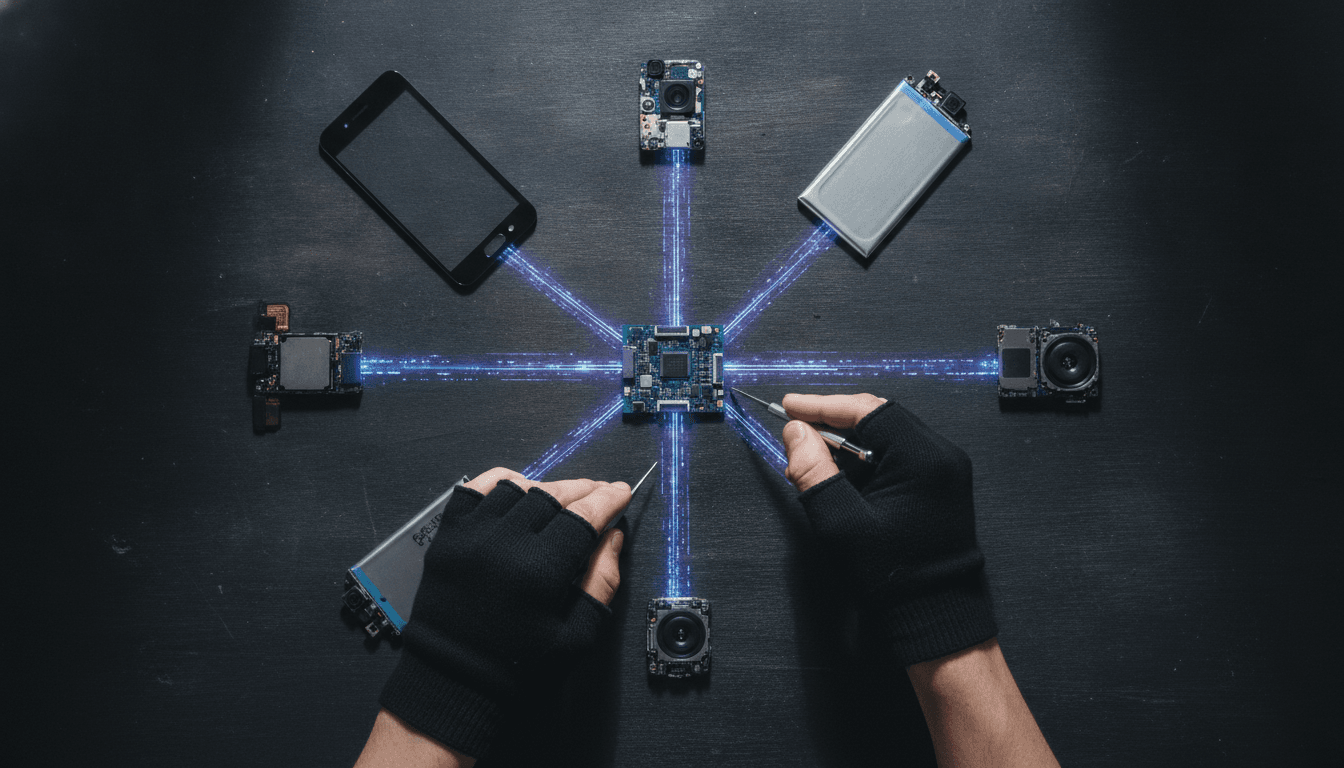
We've all heard it. That sickening crunch of a smartphone kissing the pavement. Annoying, sure, but it used to mean a quick trip to the local repair shop. Not anymore. Today, that sound kicks off a maddening gauntlet of manufacturer-run service centers, eye-watering price quotes, and the quiet, constant pressure to just give up and buy a new one. This shared frustration is the very heart of a global rebellion: the right-to-repair movement. It’s a fight that has erupted from niche internet forums into the halls of government, taking direct aim at a tech industry business model built on new sales, not long-lasting products.
The core idea of the right to repair explained is simple enough: if you own something, you ought to be able to fix it yourself. Or pay someone you trust to fix it for you. Advocates are pushing for laws that force original equipment manufacturers (OEMs) to make parts, diagnostic tools, and repair manuals available to everybody—not just their own authorized networks—on fair and reasonable terms. It's a direct challenge to decades of designing products to be thrown away.
The Manufacturer's Playbook: A History of the Unfixable Gadget
This isn't an accident. It's a strategy. For years, tech companies have deployed a whole arsenal of tactics to create a “repair monopoly,” effectively corralling consumers back to their own expensive services. The strategy has a name—planned obsolescence—and its roots go back to the early days of the auto industry, when companies figured out that complicating repairs was a great way to push customers toward shiny new models. In the digital age, the methods have just gotten a lot more devious.
You’ve probably run into some of these obstacles:
- Proprietary parts and tools: Ever seen those weird, star-shaped screws on a phone? Manufacturers use custom screws and connectors that demand specialized, hard-to-find tools, turning a simple operation into a major headache for you and your local repair shop.
- Glued-in components: Forget screws. Powerful adhesives now seal batteries and screens in place, making replacement a high-stakes, often destructive, operation. Worse, many modern laptops come with memory or storage soldered directly to the motherboard. An upgrade? Impossible.
- Software locks and “parts pairing”: Here's the catch. This is one of the most insidious modern tactics. A manufacturer can use software to digitally “pair” a component—say, a camera—to a device’s unique serial number. If you replace that part, even with a genuine one from an identical gadget, the software can kneecap key functions or flash endless error messages until it's 'blessed' by the manufacturer's own system.
- Limited availability of spare parts: OEMs often just stop making spare parts a few years after a product launch. Once that initial stock is gone, even a simple fix becomes impossible.
What do manufacturers say? They argue these roadblocks are for our own good—for safety, to protect intellectual property, to ward off cybersecurity threats. But a 2021 report from the U.S. Federal Trade Commission (FTC) found “scant evidence” to back up any of that. The reality, the report noted, was just higher costs and longer waits for consumers.
Why Is Right to Repair Important? A Groundswell of Frustration
This push for sustainable electronics repair isn’t just about saving a few bucks on a screen replacement. The movement is powered by three massive concerns that connect with consumers, small businesses, and environmentalists.
Economic and Consumer Choice
Let's start with the obvious: right to repair saves people money. When manufacturers control the entire repair game, they can set whatever prices they want. No competition. This is how you end up with a repair bill that costs almost as much as a new device, conveniently nudging you toward buying a replacement. The movement is a voice for the individual trying to fix their phone, but it’s also a lifeline for thousands of independent repair shops that offer competition and create local jobs.
The Environmental Catastrophe of E-Waste
Our throwaway culture has an environmental price tag, and it's staggering. In 2022, the world generated 62 million tonnes of electronic waste. That's enough to form a line of trucks that could circle the entire equator. A UN report shows this toxic mountain is growing five times faster than our documented recycling efforts can keep up and is projected to hit 82 million tonnes by 2030. Barely a quarter of it gets properly collected and recycled. Make no mistake, e-waste is nasty stuff, full of mercury and lead, and letting it pile up is a real threat to our health and the planet. Keeping our devices alive longer through repair is one of the single most effective ways to fight back. As we get tangled deeper in tech, understanding our unseen digital footprint also demands we face our physical one.
The Principle of Ownership
Beyond the practicalities, there's a philosophical fight at the core of the repairable gadgets movement. It’s about what it means to truly own something. Activists argue that when you buy a product, it's yours. Period. That ownership should include the right to modify it, tinker with it, and, yes, repair it. Manufacturer restrictions, they say, effectively turn us from owners into mere licensees of the very products we paid for.
The Tides Are Turning: A Wave of New Right to Repair Laws
It worked. After years of relentless grassroots advocacy from groups like The Repair Association and iFixit, lawmakers are finally listening. Right to repair laws are no longer just a theory; they're becoming legal reality around the world.
The European Union has been a powerhouse, adopting a sweeping Right to Repair Directive in 2024. The rules, set to take effect by mid-2026, will force manufacturers to offer repair services even after a product's legal guarantee is up. They also mandate that spare parts must be available for years and—get this—will extend a product's warranty by 12 months if a consumer chooses repair over replacement.
In the United States, the fight has been state-by-state, but the momentum is undeniable. A 2012 automotive right-to-repair law in Massachusetts was the first big win. More recently, the focus has shifted to electronics. New York passed its Digital Fair Repair Act in late 2022. California, Minnesota, Colorado, and Oregon quickly followed suit. California's law, which kicked in July 2024, makes manufacturers provide parts, tools, and docs for seven years for products over $100. Then Oregon went even further in 2025, becoming the first state to outright ban the practice of parts pairing.
What This Means for the Future of Your Gadgets
This global movement is fundamentally changing our relationship with technology. For you, the immediate impact is more choice and lower repair bills. You're no longer handcuffed to the manufacturer. These new laws empower independent shops and give you the tools to try your own fixes, which means your expensive gadgets might actually last. This isn't just about reviving old-school repair shops; it's about building a whole new ecosystem of future gadgets that are designed from day one to be sustainable and long-lasting.
And the manufacturers? They're starting to get the message. While some are still fighting it, others see the writing on the wall. Upstarts like Framework are building their whole brand on modular, easy-to-fix laptops. Even a titan like Apple, once a fierce opponent, has launched self-service repair programs and even endorsed some of the recent legislation. That's a huge shift.
The battle isn't over. Not by a long shot. Industry lobbyists are still pushing back hard, and the sheer complexity of our devices will always pose a challenge. But the core idea has taken root. Repair is a right, not a privilege. And the next time your gadget gives up the ghost, you just might have the power to bring it back to life.
Related Articles


This article was produced with AI assistance under human direction, and reviewed and fact-checked by a named editor before publication. How we work.
Frequently asked questions
- What is the core idea of the right to repair movement?
- The right to repair movement's core idea is that if you own a product, you should have the right to fix it yourself or take it to an independent repair shop of your choice. It advocates for laws requiring manufacturers to make parts, tools, and repair information accessible to everyone, not just their authorized dealers, to fight planned obsolescence and promote sustainability.
- Why do manufacturers make electronics so hard to fix?
- Manufacturers often make devices hard to repair to control the profitable aftermarket, encouraging consumers to use their expensive authorized services or simply buy a new product. Tactics include using proprietary screws, gluing components like batteries, limiting access to spare parts, and employing software locks known as "parts pairing" that prevent unauthorized components from functioning correctly.
- Are there actual right to repair laws in place?
- Yes, significant right to repair laws are now in effect globally. The European Union passed a comprehensive directive in 2024 that will be fully implemented by 2026. In the United States, states like California, New York, Minnesota, and Oregon have enacted their own powerful laws requiring manufacturers to provide access to parts, tools, and manuals for consumer electronics.
- How does right to repair help the environment?
- Right to repair significantly helps the environment by reducing electronic waste (e-waste). By making repairs easier and more affordable, it extends the lifespan of devices, meaning fewer are thrown away. This is critical because e-waste is the world's fastest-growing waste stream, containing toxic materials that harm the environment and human health when they end up in landfills.
- What is 'parts pairing' and why is it controversial?
- Parts pairing is a controversial practice where a manufacturer uses software to link a specific component, like a screen or battery, to a device's unique serial number. If a repair is done with a part that hasn't been authorized by the manufacturer's software, key features can be disabled or persistent warning messages may appear. Critics argue it's an unfair tactic to block independent repair and maintain a monopoly, while manufacturers claim it's for security and quality control.
Sources & further reading
Sources
- biztechlawyers.com — biztechlawyers.com
- v2y.si — v2y.si
- wikipedia.org — en.wikipedia.org
- wipo.int — wipo.int
- refurb.me — refurb.me
- britannica.com — britannica.com