Noise-Cancelling Headphones That Actually Work: A Real-World Guide
It's not magic, it's just really cool science. Here’s how to pick a pair that solves your real-world noise problems, from the commute to the open-office chatter.

Active Noise Cancellation Explained: The Science of Silence
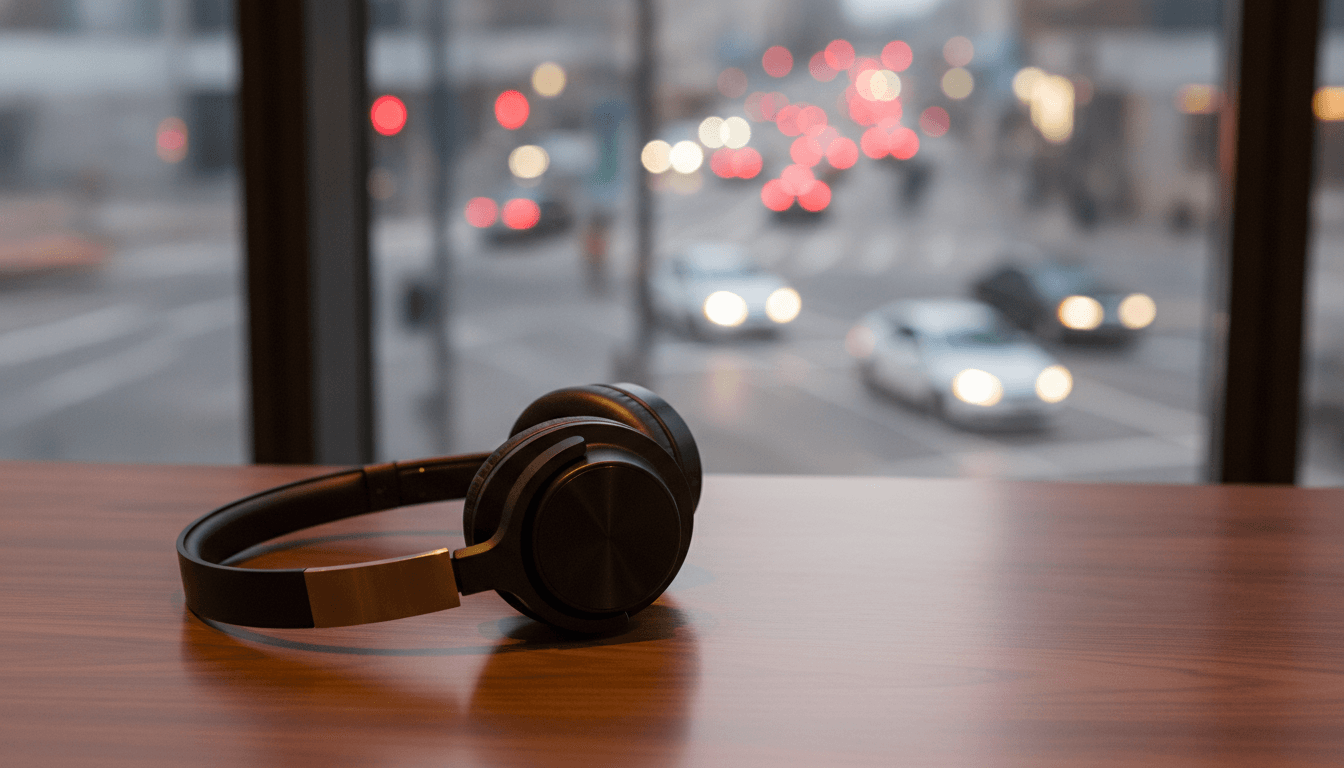
So how do noise-cancelling headphones actually work? It isn't magic. It's about creating sound, not just blocking it. Active Noise Cancellation (ANC) is the secret sauce. Tiny mics on the outside of the headphones listen to the world around you. An internal chip instantly analyzes those sounds and—in less time than it takes to blink—generates the exact opposite sound wave. A perfect inverse. That 'anti-noise' wave gets played through the headphone speakers, collides with the real-world noise, and poof. They cancel each other out before the racket ever hits your eardrum. Science calls it destructive interference.
The whole idea started on a flight back in 1978. Dr. Amar Bose—yes, that Bose—was fed up with jet engine roar drowning out his music. He literally started sketching out the math for ANC right there on the plane. That concept eventually became the first commercial noise-cancelling headset for pilots in 1989.
But don't get this confused with its low-tech cousin: passive noise isolation. That’s not tech, it's just physics. Think cupping your hands over your ears. It’s the simple physical barrier created by thick, sealed earcups on over-ear models or a snug fit from earbuds pushed deep into your ear canal. Every single headphone provides some passive isolation, but true ANC headphones layer that smart electronic cancellation right on top.
ANC vs. Passive Noise Isolation: Where Each One Shines
Here's the key: these two methods fight different kinds of noise. Active Noise Cancellation is a specialist. It's an absolute killer for constant, low-frequency drones. We're talking about the unending roar of a jet engine, the rumble of a bus, or that annoying office HVAC hum. Because those sounds are steady and predictable, the ANC chip has no problem whipping up an anti-noise wave to vaporize them. Some of the best models can slash these noises by a whopping 40 decibels.
Passive isolation? It's the generalist. It’s far better at handling sharp, irregular, high-frequency sounds. Think people talking, a dog barking, the frantic clatter of keyboards. ANC just can't keep up with these sudden, spiky noises—they happen too fast for the system to detect, process, and zap.
And that right there explains a super common complaint. 'Why do my fancy headphones block the fan but make my coworker’s voice sound louder?' It's because once you strip away that low-frequency hum, the sharp, high-frequency sounds you actually want to avoid suddenly pop. The best headphones don't force a choice. They use both methods together: a great physical seal (passive) to muffle the chatter, and powerful ANC (active) to kill the drone underneath it all.
How to Choose Noise-Cancelling Headphones for *Your* Life
Finding the right pair isn't about buying the most powerful ANC on the market. Not at all. It's about matching the features to your actual life. Your daily grind is the only filter that matters.
Best Headphones for Commuting: Awareness is Key
On a train, bus, or crowded city street every day? Then you need a smart balance between blocking noise and staying alive. Here's what to look for.
- Powerful Low-Frequency ANC: That engine rumble is your sworn enemy. Good ANC makes it dissolve, so you can listen to your podcast at a reasonable—and safer—volume.
- Transparency Mode: This is critical. Sometimes called 'Ambient' or 'Aware' mode, it cleverly uses the external mics to pump outside sounds into your ears. Why would you want that? So you can hear the train announcement or the approaching traffic without yanking your headphones off. It's a lifesaver.
- Good Battery Life: Because nothing's worse than your bubble of silence popping halfway to work. Look for at least 20-30 hours of playback with ANC active. A quick-charge feature is a huge plus, giving you hours of juice from just a few minutes plugged in.
For the Open Office Warrior: Comfort and Clarity
Ah, the open office. An acoustic minefield. A 2026 report from Speakwise found that 99% of employees find their concentration is impaired by office noise. Another study showed productivity can plummet by 66% if you're stuck listening to a nearby conversation. Your priorities here are totally different.
- All-Day Comfort: If you're wearing these things for eight hours, they'd better be comfortable. That means a lightweight design, plush memory foam earcups, and a headband that doesn't feel like a vise grip. These are non-negotiable. For a full workday, over-ear designs usually beat on-ear models.
- Effective Mid-Range Attenuation: The ANC will kill the AC hum, sure. But you need great passive isolation from the earcups themselves to dull the sound of human voices. Let's be clear: ANC alone will not silence your chatty deskmate.
- A High-Quality Microphone: On calls all day? How you sound to everyone else is just as important as how they sound to you. Don't skimp here. Look for models that boast multiple mics and some kind of AI noise suppression to isolate your voice from the chaos around you.
For the Frequent Flyer: Maximum Cancellation
Flying is the OG use case. It’s where ANC was born, and it’s still where the technology shines brightest. The mission is simple. Erase the engine drone.
- Top-Tier ANC Performance: This is everything. Your one and only priority. You need headphones engineered from the ground up to create an uncanny pocket of quiet inside a deafening metal tube. Hunt down reviews that test specifically for airplane cabin noise.
- Long-Haul Battery Life: Crossing an ocean? Your battery needs to last the entire trip. Thirty-plus hours of ANC playback is the benchmark you should be looking for. No less.
- Wired Connection Option: Believe it or not, many airline seatback screens still use a dusty old 3.5mm headphone jack. Having a cable option is essential, especially one that works even while the ANC is powered on. Most travel-centric models will even throw in that weird two-prong adapter for you.
Beyond the Noise: Features That Actually Matter
Okay, so you’ve matched the ANC profile to your life. Now let's look at a few other features that can make or break the experience.
Sound Quality: Here's a dirty little secret: super aggressive ANC can sometimes mess with your music. It can introduce a faint hiss or just subtly change the sound profile. If you're an audiophile, look for headphones with adjustable ANC levels or models praised for sounding natural even when the cancellation is cranked up. After all, your headphones are a central piece of your personal tech world—right alongside your smartwatch and smart speakers—so they'd better sound good. (You can learn more about how all these gadgets talk to each other in our guide to smart home devices.)
Connectivity: Bluetooth isn't just Bluetooth. The specific codecs supported—like AAC for Apple gear or aptX for Android—can make a real difference in audio quality and lag. And for anyone juggling work and life, multi-point Bluetooth is an absolute must. It lets you connect to your laptop and phone simultaneously, which is a huge convenience.
Adaptive ANC: This is a newer, smarter trick. Adaptive ANC automatically adjusts the cancellation strength based on your surroundings. It'll go full-blast when your train enters a tunnel, then ease up when you step onto a quiet platform. It's a subtle but powerful feature for a seamless experience.
Personal audio is moving fast. AI is getting baked into everything from voice isolation on calls to these new adaptive sound features. It's all part of a bigger shift toward AI gadgets that are changing how we live.
So in the end, buying the right headphones isn’t about finding total, absolute silence. It’s about curating your own soundscape. Get a handle on the tech, be honest about what you need, and you’ll find a pair that doesn't just block out the world—it lets the right parts of it in.
Related Articles
This article was produced with AI assistance under human direction, and reviewed and fact-checked by a named editor before publication. How we work.
Frequently asked questions
- What is the difference between active noise cancellation and passive noise isolation?
- Active Noise Cancellation (ANC) is an electronic process that uses microphones to detect ambient sound and generates an opposing 'anti-noise' wave to cancel it out. It's best for constant, low-frequency sounds like engines. Passive noise isolation is the physical barrier created by the headphone's design, like cushioned earcups, which physically blocks higher-frequency sounds like voices. Most ANC headphones use both methods.
- Do noise-cancelling headphones block out human voices?
- Not completely. Active Noise Cancellation is not very effective against sudden, high-frequency sounds like human speech. It can muffle them and make them less distracting, but it won't eliminate them entirely. Strong passive noise isolation from a snug fit and well-designed earcups is more effective at reducing the clarity of nearby conversations.
- Are noise-cancelling headphones good for an office?
- Yes, they can be very effective for office use. They excel at cancelling out the low-frequency hum of HVAC systems and other constant background noise. This helps reduce distractions and can improve focus. For blocking out colleagues' conversations, look for a model with a comfortable over-ear design that provides good passive noise isolation, in addition to quality ANC and a clear microphone for calls.
- What is 'Transparency Mode' on headphones?
- Transparency Mode, also called Ambient or Aware mode, does the opposite of noise cancellation. It uses the headphones' external microphones to pick up sounds from your environment and play them into your ears. This allows you to stay aware of your surroundings—like traffic or public announcements—without needing to take your headphones off, which is a crucial safety feature for commuters.
- Can I use noise-cancelling headphones without playing music?
- Yes, absolutely. You can turn on the Active Noise Cancellation feature without any audio playing to simply reduce ambient noise and create a quieter environment. This is a popular use for frequent flyers who want to sleep on a plane or for anyone trying to concentrate in a loud space without the distraction of music.
Sources & further reading
Sources
- bose.com — bose.com
- lg.com — lg.com
- soundcore.com — soundcore.com
- wikipedia.org — en.wikipedia.org
- medium.com — medium.com