How Are Vaccines Actually Made? A Look Inside the Science
It's a journey that can take a decade. From a single idea in a lab to an injection in an arm, making a vaccine is a grueling marathon of science and safety checks. Here’s how it really works.

The Long Road from Lab to Jab: Understanding the Vaccine Development Process
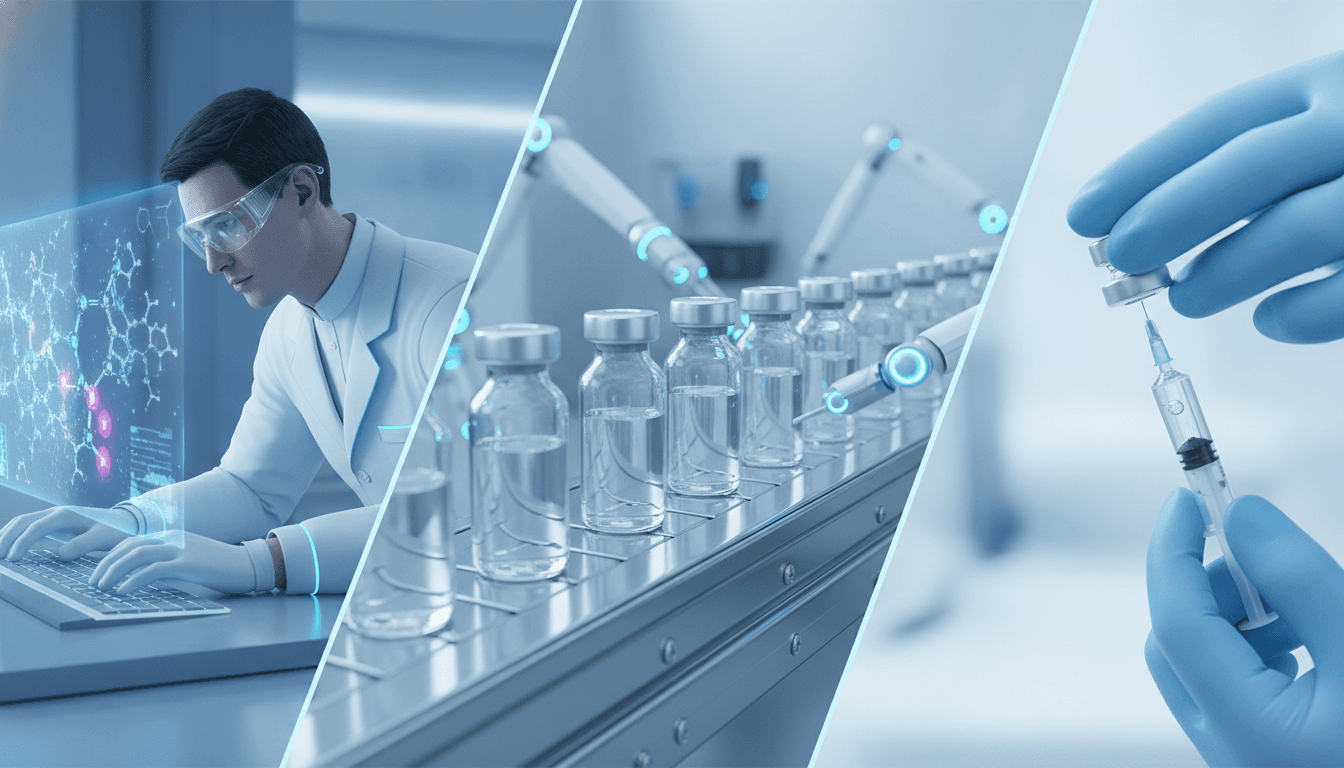
A decade. Sometimes more. That's how long it can take to create a new vaccine, a process involving thousands of scientists, clinicians, and volunteers. It’s one of modern science's most complex undertakings. Forget the single eureka moment. Understanding how vaccines are made is about appreciating a deliberate, methodical march through years of painstaking research where safety and efficacy are the guiding principles every single step of the way.
The journey doesn't start with a human trial. Not even close. It starts with years of basic science. In labs at universities and government institutions, researchers get intimate with a pathogen—a virus or a bacterium. They have to understand its structure, how it attacks us, and most importantly, which parts (known as antigens) can provoke our immune system into building a defense. This whole initial hunt, the Exploratory Stage, can take two to four years. The goal? To find a promising antigen, whether it’s a weakened germ, a piece of its protein, or just its genetic blueprint.
From Petri Dish to People: Pre-Clinical and Clinical Trials
With a promising candidate in hand, the work moves into the Pre-Clinical Stage. No humans allowed. For one to two years, testing is confined to cell cultures and animals like mice or monkeys. The researchers are looking for two things: does it trigger the right immune response (a quality called immunogenicity), and are there any signs of toxicity? A lot of candidates fail right here. Only the safest and most effective get the nod to continue.
So, can they start testing on people now? Not yet. First, the vaccine developer has to submit a massive Investigational New Drug (IND) application to a regulatory body like the U.S. Food and Drug Administration (FDA). It's a comprehensive file stuffed with all the pre-clinical data and meticulous plans for human trials. Only after the FDA gives its green light can the vaccine finally enter clinical development—a three-phase gauntlet designed to answer the biggest questions about its safety and effectiveness.
The Three-Phase Gauntlet
Human testing isn't a free-for-all; it's a methodical escalation. As the vaccine development process explained here shows, scrutiny and scale increase with each step. You can't move on to the next phase until you've passed the one you're in.
- Phase I: A tiny group of people. Usually 20 to 100 healthy adult volunteers. The goal here is simple and singular: check for safety. Researchers watch for any adverse reactions and collect early data on the immune response, sometimes tinkering with different dosages. And a crucial rule: if the vaccine is for kids, adults always go first.
- Phase II: Assuming Phase I went well, the trial expands to several hundred people. This group looks more like the target population—a wider range of ages and health profiles. The focus is still on safety, but now researchers dig deeper for data on the ideal dose and vaccination schedule.
- Phase III: This is the big one. Thousands, sometimes tens of thousands, of volunteers. The question now is blunt: does it work? To find out, these trials are the gold standard—randomized, double-blind, and placebo-controlled. Participants are randomly given either the real vaccine or a placebo (like a simple saltwater shot). Here's the catch: nobody, not the participant and not the person giving the injection, knows who got what. This design is the best way to crush bias and get a clean answer. You just compare the infection rates between the two groups. This massive scale is also how you spot rare side effects that would never show up in smaller trials. It's no surprise this phase can take years.
Modern breakthroughs are also changing the game, with gene-editing principles influencing new vaccine designs. If you're curious how those precise genetic tools work, check out our guide on the topic: What Is CRISPR? A Plain-English Guide to the Gene-Editing Revolution.
The Finish Line: Regulatory Approval and Manufacturing
A successful Phase III trial feels like the finish line. It isn't. Now comes the paperwork—a mountain of it. The developer compiles a massive dossier of data, sometimes hundreds of thousands of pages long, and submits it to regulators like the FDA in what's called a Biologics License Application (BLA). This file has everything: all the pre-clinical and clinical results, plus exhaustive details on the manufacturing process.
At the FDA, teams of physicians, statisticians, and chemists pour over every page. Their job is to answer one fundamental question: do the benefits of this vaccine clearly outweigh its risks? The scrutiny doesn't stop with the data, either. The FDA also dispatches inspectors to the manufacturing plants. They have to ensure the facilities meet brutally strict standards for quality and consistency, because every single batch, or 'lot,' must be identical to the one tested in the trials. Only after this all-encompassing review can a vaccine finally be licensed for public use.
This whole system of checks and balances is the bedrock of public trust. That's the core of understanding vaccine safety testing. It is built to be deliberate. To be careful. Not to be fast. The science relies on a methodical, repeatable process to ensure a reliable outcome—not unlike how our brains build lasting habits through consistency, a concept we explore in The Science of Habit Formation: Why Willpower Is Not the Answer.
Beyond Approval: The Unseen Fourth Phase
The safety monitoring doesn't stop once a vaccine is approved. Not by a long shot. Welcome to Phase IV, also known as post-market surveillance. In this ongoing final stage, agencies like the Centers for Disease Control and Prevention (CDC) use a whole suite of systems to track a vaccine's performance and safety out in the real world.
How do they do it? Through systems like the Vaccine Adverse Event Reporting System (VAERS), which lets anyone report a potential side effect, creating a massive early-warning network. The Vaccine Safety Datalink (VSD) goes a step further, using the electronic health records of millions to proactively scan for safety signals in near-real time. Then there's the CDC's V-safe program, which uses simple smartphone check-ins. This continuous oversight is absolutely essential. It’s how we spot extremely rare side effects that could only ever surface once millions of people have received the vaccine. This is the final commitment in a long scientific marathon, all aimed at one goal: preventing disease as safely and effectively as possible.
Related Articles
This article was produced with AI assistance under human direction, and reviewed and fact-checked by a named editor before publication. How we work.
Frequently asked questions
- What are the main stages of the vaccine development process?
- The vaccine development process begins with an exploratory stage for basic research (2-4 years), followed by a pre-clinical stage using cell cultures and animal models (1-2 years). It then moves to three phases of human clinical trials to test safety and efficacy, which can take many years. The final stages involve rigorous regulatory review and approval, large-scale manufacturing, and continuous post-market safety monitoring.
- How do vaccine clinical trials work?
- Vaccine trials are conducted in three phases. Phase I involves a small group of healthy adults to test safety and dosage. Phase II expands to several hundred people to further assess safety and immune response. Phase III is a large-scale trial with thousands of participants, often using a placebo control, to confirm the vaccine's effectiveness at preventing disease and to detect less common side effects.
- How is vaccine safety tested and ensured?
- Vaccine safety is tested at every step. It begins with pre-clinical animal studies to check for toxicity. In human trials, safety is the primary goal of Phase I and is continuously monitored through Phases II and III with increasingly larger groups. Before approval, regulatory bodies like the FDA conduct an exhaustive review of all data. After a vaccine is licensed, safety is continuously monitored through systems like VAERS and the Vaccine Safety Datalink.
- How long does it typically take to make a new vaccine?
- The traditional timeline for developing a new vaccine is a long and complex process, typically taking 10 to 15 years from initial research to public distribution. This includes years of exploratory and pre-clinical research, followed by multi-year, multi-phase clinical trials, regulatory review, and scaling up manufacturing. While processes can be accelerated in emergencies, the fundamental steps for ensuring safety and efficacy remain.
Sources & further reading
Sources
- aimst.edu.my — aimst.edu.my
- historyofvaccines.org — historyofvaccines.org
- jhu.edu — coronavirus.jhu.edu
- healthychildren.org — healthychildren.org
- concept2clinic.com — concept2clinic.com
- fda.gov — fda.gov