What Is CRISPR? A Plain-English Guide to the Gene-Editing Revolution
It’s a medical miracle. It's an ethical minefield. It's complicated. Here’s what the gene-editing tool CRISPR actually does, how it’s already wiping out diseases, and where the real fight is.

It All Starts with a Bacterial Immune System
Your DNA is a three-billion-letter encyclopedia. It contains the instructions for everything you are. But what if there's a typo? A single mistake in one volume that causes a devastating disease. For decades, scientists could read the book but couldn't fix the error. The task was clumsy, often impossible.
Then came CRISPR.
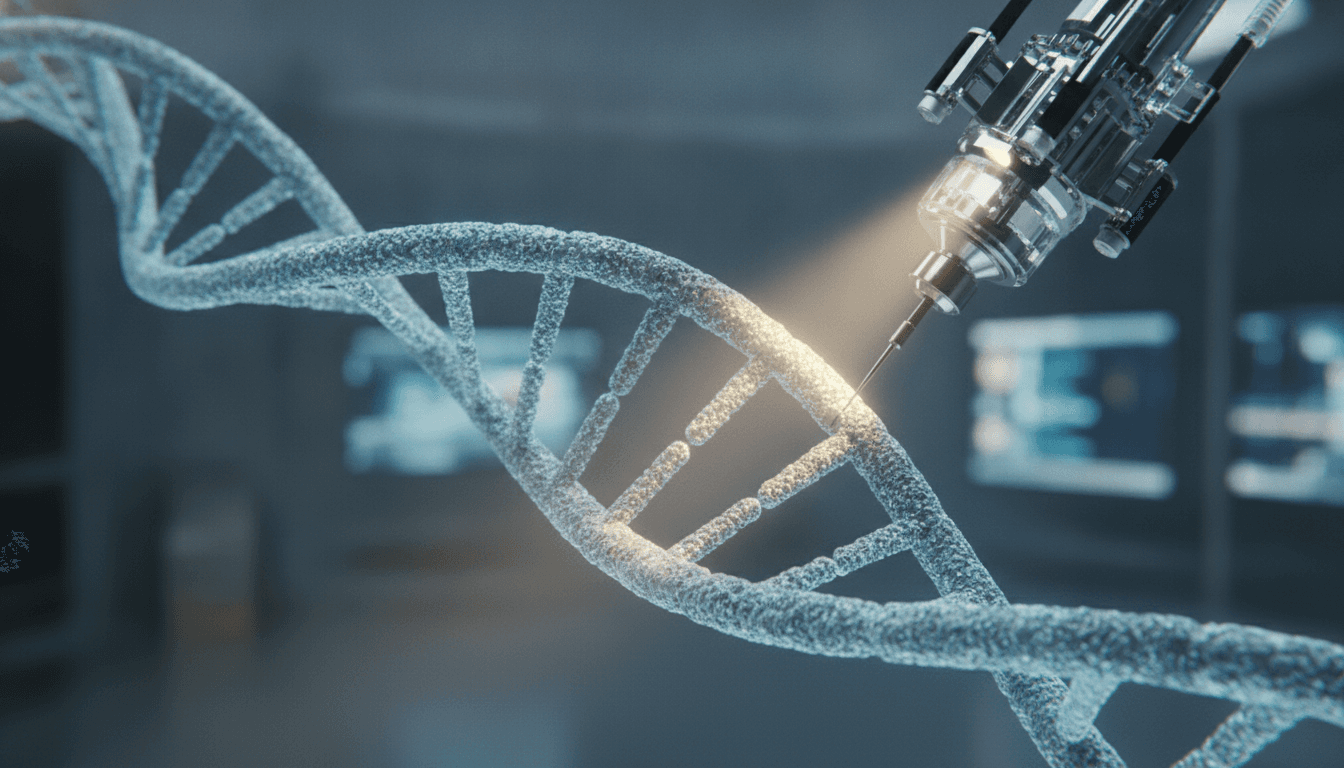
The answer to 'what is CRISPR explained simply?' starts with bacteria. An unlikely origin story. CRISPR—short for Clustered Regularly Interspaced Short Palindromic Repeats—is basically a bacterial immune system. When a virus attacks, the bacterium snips a piece of the invader's DNA and saves it. A genetic mugshot. If that same virus shows up again, the bacterium uses that saved snippet to create a guide molecule (an RNA strand) that partners with a DNA-shredding protein called Cas9. This little complex patrols the cell. If it finds a perfect match—the signature of the virus—Cas9 snips the viral DNA. Threat neutralized. It’s a brutally effective defense.
Then, in 2012, biochemist Jennifer Doudna and microbiologist Emmanuelle Charpentier figured out they could hijack it. They realized you could swap out the bacteria's viral guide RNA for one of your own design. Suddenly, you could send the Cas9 protein to cut nearly any DNA sequence in a plant, an animal, or us. They'd created a biological word processor. A true 'find and replace' for the code of life. The CRISPR technology basics are just that two-part system: a guide RNA to find the target, and a Cas protein, usually Cas9, to make the cut. Once Cas9 makes that precise cut, the cell's own repair crew takes over. Scientists can either let the break get patched up crudely—which usually disables the gene—or they can supply a new, correct DNA template for the cell to use. Paste in a fix.
From Lab Bench to Life-Saving Cures
For years, gene editing was just a theory. Not anymore. Just look at sickle cell disease. It's a painful, life-shortening blood disorder that all comes down to a single genetic typo. In December 2023, the U.S. Food and Drug Administration (FDA) approved a treatment called Casgevy. Developed by Vertex Pharmaceuticals and CRISPR Therapeutics, it's the first-ever CRISPR-based therapy to get the green light in the United States. A historic moment.
So, how gene editing works here is pretty incredible. Doctors harvest a patient's own hematopoietic stem cells from their bone marrow. In the lab, they use CRISPR-Cas9 to edit a specific gene, BCL11A. Think of this edit as flipping a dormant switch. It tells the cells to start churning out fetal hemoglobin—the kind of oxygen-carrying protein we all have in the womb but which our bodies turn off after birth. Crucially, fetal hemoglobin doesn't cause sickling. The newly edited, super-powered cells are then infused back into the patient's body. The results? For many, they've been transformative. The excruciating pain crises that define the disease just... stop. And by July 2026, the FDA had expanded its approval of Casgevy down to children as young as two, for both sickle cell and another blood disorder, transfusion-dependent beta thalassemia.
But sickle cell is just the start. Clinical trials are already using CRISPR to attack a whole host of other conditions. We're talking about genetic blindness. Cancers. Even high cholesterol. One of the newest frontiers—and maybe one of the most surprising—is autoimmune disease. Early trials using CRISPR to treat conditions like lupus are already showing real promise. The pace is just staggering. From a basic science discovery to an approved medicine in just over a decade. Breathtaking.
Rewriting the Code of Our Food Supply
While medicine gets all the headlines, CRISPR's impact on agriculture might prove just as massive. For thousands of years, we've tweaked our crops and livestock the old-fashioned way: slow, patient selective breeding. CRISPR hits fast-forward on that entire process. The examples are already here, moving from lab to field:
- Disease Resistance: Researchers are editing plants to withstand fungal and viral infections that can wipe out entire harvests, like Fusarium wilt in bananas or Verticillium dahliae in potatoes.
- Climate Resilience: As temperatures rise and water becomes scarcer, CRISPR is being used to develop crops that are more drought-tolerant or can thrive in high-salinity soil.
- Enhanced Nutrition: The technology can boost the vitamin content of staple foods, like creating 'golden bananas' with more beta carotene, or remove allergens, with researchers working on gluten-free wheat and hypoallergenic peanuts.
- Reduced Waste: By editing the genes responsible for browning, scientists have created mushrooms that have a longer shelf life, a small but meaningful step in combating food waste.
Of course, this all sparks the GMO debate. But here's a key distinction proponents make: many CRISPR edits don't shove foreign DNA from one species into another. That's old-school GMO. Instead, this is more like making a tiny, precise surgical tweak to a plant's own genes, a process closer to hyper-accelerated natural breeding. That's a critical difference, one that’s shaping policy and public debate—a conversation that sounds a lot like the one we're having about governing other powerful tools like AI, as a recent UN report on AI risks pointed out.
The Elephant in the Genome: Navigating the Ethical Maze
And then there's the elephant in the room. The huge, unavoidable ethical maze of gene editing ethics. The entire debate hinges on one critical distinction: somatic versus germline editing. Everything approved today, like Casgevy, is a somatic cell therapy. This means the edits are made to a patient's body cells—blood stem cells, for instance. They are not heritable. They die with the patient. If that person has kids, they pass on their original, unedited genes.
Germline editing, on the other hand, is the bright red line nobody is supposed to cross. This means editing reproductive cells. Sperm. Eggs. Embryos. Any change made here gets passed down to every subsequent generation, forever altering the human gene pool. This is where the sci-fi nightmares of 'designer babies' and a new eugenics creep in. And it's not a hypothetical. In November 2018, Chinese scientist He Jiankui announced he'd already done it. He created the world's first gene-edited babies, twin girls named Lulu and Nana. His goal? He used CRISPR to try and disable a gene called CCR5, hoping to make them resistant to HIV. The reaction from scientists and ethicists was swift, global, and furious. Condemnation was universal. He's work was blasted as reckless, medically unnecessary, and an ethical train wreck. He was eventually sentenced to prison in China for illegal medical practices.
The whole affair was a five-alarm fire for the scientific community. As Jennifer Doudna herself has said, “The power to control our species' genetic future is awesome and terrifying. Deciding how to handle it may be the biggest challenge we have ever faced.” It boils down to a few terrifying concerns:
- Safety and Unforeseen Consequences: We don't yet fully understand the long-term effects of altering the human germline. Off-target edits or other unintended changes could introduce new diseases into a family line.
- Justice and Equity: If germline editing for enhancement ever became available, it could create a genetic divide, a world where the wealthy can afford to buy biological advantages for their children, exacerbating social inequalities.
- Consent: An embryo cannot consent to having its DNA altered. The decision to make heritable changes imposes a permanent biological future on an individual and all their descendants without their input.
For now, the global consensus is clear and strong: editing the human germline for reproduction is off-limits. It’s the ultimate reminder that for tools this powerful—from gene editors to the quantum systems we explore in our guide to quantum computing—the most important question isn't 'Can we?' It's 'Should we?' The future of CRISPR won't just be written in the lab. It will be hammered out in ethics committees, regulatory bodies, and public debate.
Related Articles


This article was produced with AI assistance under human direction, and reviewed and fact-checked by a named editor before publication. How we work.
Frequently asked questions
- What is CRISPR explained in simple terms?
- CRISPR is a gene-editing tool that acts like molecular scissors. It's composed of a guide molecule (guide RNA) that finds a specific spot in an organism's DNA and a cutting protein (like Cas9) that snips the DNA at that location. This allows scientists to turn genes off, fix harmful mutations, or insert new genetic information with high precision. It was originally discovered as a natural immune system in bacteria.
- Is CRISPR being used on humans today?
- Yes, CRISPR is being used to treat human diseases. In late 2023, a therapy called Casgevy became the first FDA-approved CRISPR treatment. It is used for sickle cell disease and beta thalassemia by editing a patient's own blood stem cells outside their body to produce a healthier form of hemoglobin. Many other CRISPR-based therapies for cancer, genetic blindness, and autoimmune diseases are currently in clinical trials.
- What is the main ethical concern with CRISPR?
- The primary ethical concern revolves around 'germline editing'—making genetic changes to human embryos, sperm, or eggs. Unlike 'somatic editing,' which affects only the individual patient, germline edits are heritable and would be passed down to all future generations. This raises fears of unforeseen health consequences, a 'slippery slope' to non-medical enhancements or 'designer babies,' and the potential to create new forms of social inequality.
- How does gene editing work in agriculture?
- In agriculture, CRISPR is used to make precise changes to plant DNA to improve crops. Scientists can edit genes to make plants more resistant to diseases, pests, and drought. It can also be used to enhance nutritional value, such as increasing vitamin content, or to improve traits like shelf life by preventing browning in mushrooms. This process is much faster and more targeted than traditional selective breeding.
Sources & further reading
Sources
- stanford.edu — news.stanford.edu
- nsf.gov — nsf.gov
- frontlinegenomics.com — frontlinegenomics.com
- jax.org — jax.org
- nih.gov — pmc.ncbi.nlm.nih.gov
- innovativegenomics.org — innovativegenomics.org