Our Silent Engine: The Ocean Runs the Planet. We're Breaking It.
It covers 70% of our world, produces the oxygen for every other breath we take, and swallows our carbon. But this engine is sputtering. And its future is ours.

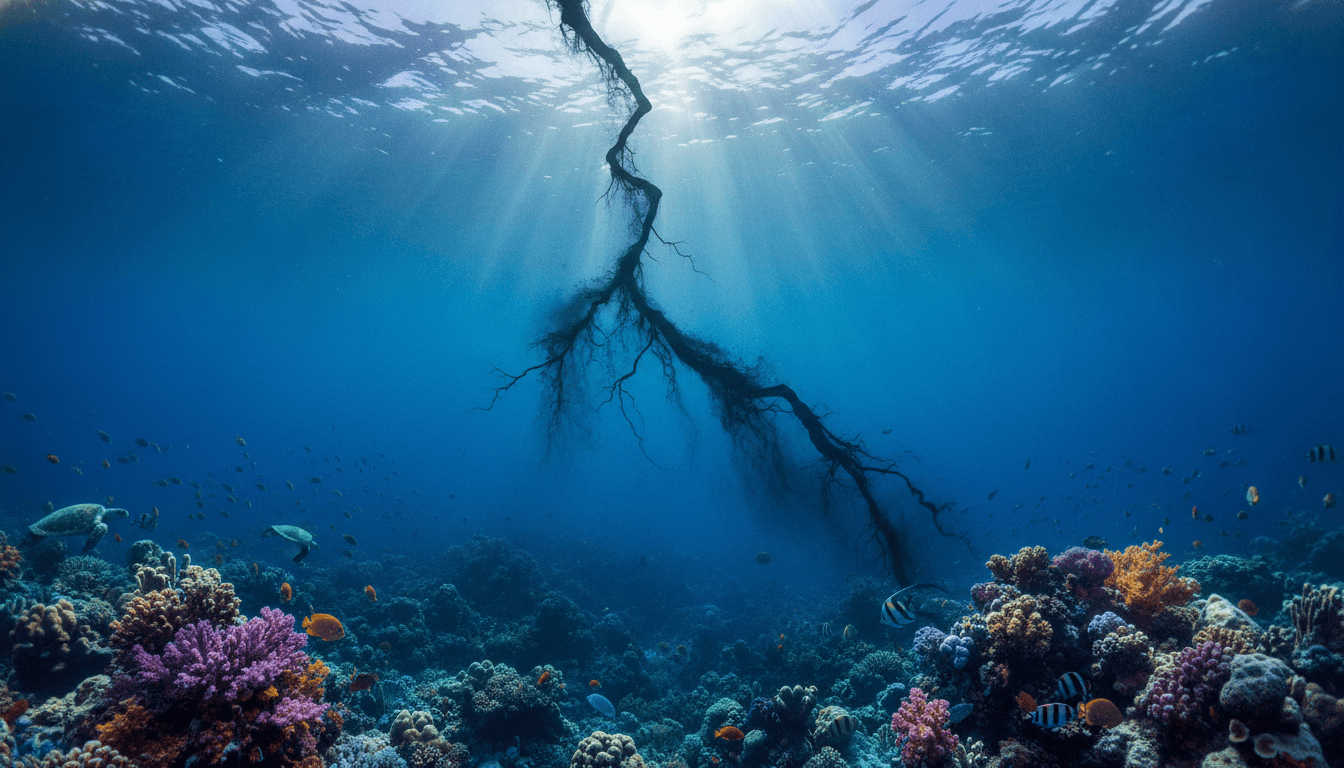
It’s absorbed more than 90% of the excess heat from our greenhouse gas emissions. One single species of bacteria living in it produces up to 20% of the oxygen in the whole biosphere. Talk about an overachiever. This is the ocean—the silent, sprawling, and deeply misunderstood engine of our planet. The truth is simple: without it working properly, Earth as we know it would be unrecognizable. Its currents are our climate control. Its microscopic life is our oxygen supply. Its ecosystems feed billions.
For most of human history, we’ve treated the ocean as either a boundless resource or a convenient dump. A dangerous assumption. A colossal miscalculation. Those intricate systems that regulate our world? They’re now under unprecedented strain from climate change, pollution, and our own over-exploitation. Understanding what makes the ocean tick isn't just an environmental issue. It’s a question of our own survival.
Earth’s Climate Control System
Forget complex machinery. Earth's most effective climate regulator is the ocean. It’s a massive thermal battery, absorbing, storing, and moving solar energy across the globe. The United Nations confirms it has soaked up over 90% of the excess heat trapped by greenhouse gases. Think about that. That single service has dramatically slowed the warming of our atmosphere. Without that immense aquatic heat sink, land temperatures would be catastrophic.
And this heat isn't just sitting there. It's on the move. A vast network of currents—the “global ocean conveyor belt,” or thermohaline circulation—is constantly transporting warm surface water from the equator to the poles, sending cold, dense water back along the seafloor. This is the system that shapes weather worldwide, influencing everything from summer in Europe to the Indian monsoon.
The ocean is also the planet’s largest carbon sink, having absorbed an estimated 25-30% of all CO2 we've pumped out since the industrial revolution. An absolutely vital function. But it comes at a steep chemical cost. As the ocean takes in more CO2, it becomes more acidic. This isn't some abstract problem. Ocean acidification is a direct threat to marine life, making it harder for creatures like corals and shellfish to build the very shells and skeletons they need to live.
The Blue Lung: Our Planet's Primary Oxygen Source
Ask someone where oxygen comes from. They'll probably say the Amazon rainforest. A good guess, but incomplete. While forests are obviously critical, scientists estimate that a staggering 50-80% of the oxygen on Earth originates in the ocean. And the vast majority of it doesn't come from kelp or seagrass. It comes from billions upon billions of microscopic drifters: phytoplankton.
These tiny powerhouses use sunlight to turn carbon dioxide into organic matter, releasing oxygen in the process. Photosynthesis 101. One of the most important is a cyanobacterium called Prochlorococcus. It's the smallest and most abundant photosynthetic organism on the planet. Invisible. But its collective contribution is anything but. According to NOAA, Prochlorococcus alone produces up to 20% of the biosphere's oxygen. That's more than all the world’s tropical rainforests combined.
We can't take this for granted. The health of these phytoplankton populations hinges on a delicate balance of temperature, sunlight, and nutrients. A balance that climate change is now threatening, putting the source of every other breath we take at risk.
The Planet's Pantry and Economic Engine
The ocean’s importance is also on our dinner plates. Over 3.3 billion people get at least 20% of their daily animal protein from the sea. For hundreds of millions in coastal communities, it's their primary source of everything. And the industry behind it all—fisheries and aquaculture—supports the livelihoods of somewhere between 10-12% of the entire world's population.
The economic value is hard to wrap your head around. One World Wildlife Fund (WWF) report pegged the ocean's total assets at over $24 trillion. Its annual output? $2.5 trillion. If the ocean were a country, it would be the world's seventh-largest economy. This isn't just about fishing; it's the entire 'blue economy' of tourism, shipping, and new energy sectors. But this engine is sputtering. Badly. The UN's Food and Agriculture Organization warns that most global fish stocks are now either fully exploited or flat-out overfished. That’s a threat to both our food security and economic stability.
Marine Ecosystems Explained: The Coral Reef Canary
Want to see the fragility of ocean health in living color? Look at a coral reef. These intricate structures are biodiversity hotspots. They cover less than 1% of the ocean floor yet support a mind-boggling 25% of all marine species. They’re nurseries for fish, barriers against storm surge, and the foundation for billions in tourism.
And today, they’re in crisis. The main culprit is rising sea temperatures, which triggers a process called coral bleaching. Here’s what happens: stressed by heat, corals expel the tiny algae living in their tissues. Those algae provide their food and color. Without them, the coral turns bone-white and begins to starve. Lethally. While a reef can sometimes recover from a mild event, the prolonged, severe mass bleachings that were once rare are now hammering iconic systems like the Great Barrier Reef with terrifying regularity.
Ocean acidification only makes things worse, slowing coral growth and weakening their skeletons. The plight of coral reefs isn’t just a sad story; it’s a global alarm bell. Their decline is the most visible symptom of an ocean whose capacity to buffer climate change is hitting its limit. Some researchers are even exploring advanced gene-editing techniques like those in 'What Is CRISPR? A Plain-English Guide to the Gene-Editing Revolution' to see if they can help corals adapt faster—a desperate race against time.
The Rising Tide of Threats
The challenges don't exist in a vacuum; they're all connected. Beyond the giant crisis of climate change, a flood of other pressures is bearing down on marine ecosystems.
Plastic pollution is the most visible offender. Every year, an estimated 8 to 11 million tons of it enter the ocean. It’s everywhere, from the surface to the deepest trenches, entangling animals and degrading into microplastics that have now infiltrated the entire food web. The whole thing. And the starkest projection warns that by 2050, the ocean could contain more plastic than fish by weight.
At the same time, overfishing decimates populations while destructive practices like bottom trawling literally scrape habitats off the map—damage that can take centuries to heal. Then there’s the chemical runoff from farms and factories, creating vast, low-oxygen “dead zones” where most marine life simply can't survive. Trying to model these interlocking crises is so complex it pushes the boundaries of our current technology, hinting at a future need for things like those discussed in 'Quantum Computing Explained Simply: What It Actually Promises'.
This is a pivotal moment. The United Nations declared 2021-2030 the Decade of Ocean Science for Sustainable Development for a reason. It's a global push, a rallying cry for scientists, policymakers, and the public to finally generate the knowledge we need to reverse this decline. It’s a recognition that our future depends on seeing the ocean not as a pretty backdrop, but as what it truly is. The quiet, powerful, and absolutely indispensable heart of our living planet.
Related Articles



This article was produced with AI assistance under human direction, and reviewed and fact-checked by a named editor before publication. How we work.
Frequently asked questions
- How much oxygen does the ocean produce?
- Scientists estimate the ocean produces between 50% and 80% of the Earth's oxygen. The majority of this comes from microscopic marine organisms called phytoplankton, which generate oxygen as a byproduct of photosynthesis, similar to plants on land.
- How does ocean health affect climate change?
- The ocean plays a crucial role in regulating the climate by absorbing over 90% of the excess heat and about 25-30% of the carbon dioxide from human emissions. This service slows global warming, but it also leads to ocean acidification and rising sea temperatures, which damage marine ecosystems like coral reefs.
- What is the biggest threat to ocean health?
- Climate change is widely considered the greatest global threat to ocean ecosystems. Its effects, including rising ocean temperatures causing coral bleaching and ocean acidification disrupting marine life, are widespread and severe. Other major threats include plastic pollution, overfishing, and habitat destruction.
- Why are coral reefs so important to the ocean?
- Coral reefs are vital to ocean health because they support an incredible amount of biodiversity. Despite covering less than 1% of the ocean floor, they are home to about 25% of all marine species. They also protect coastlines from storms and provide livelihoods for millions of people through fishing and tourism.
- How many people depend on the ocean for food?
- The ocean is a critical food source for a large portion of the global population. Over 3.3 billion people rely on seafood for at least 20% of their daily intake of animal protein. Fisheries and aquaculture also provide jobs and economic support for hundreds of millions of people worldwide.
Sources & further reading
Sources
- un.org — un.org
- noaa.gov — oceanservice.noaa.gov
- ucar.edu — scied.ucar.edu
- noaa.gov — gfdl.noaa.gov
- wikipedia.org — en.wikipedia.org