OLED vs. QLED vs. Mini-LED: Which TV Tech Is Actually Best?
Don't get lost in the alphabet soup. We cut through the noise to explain the only TV display differences that matter for your room, your eyes, and your wallet.

The Alphabet Soup of Modern TVs
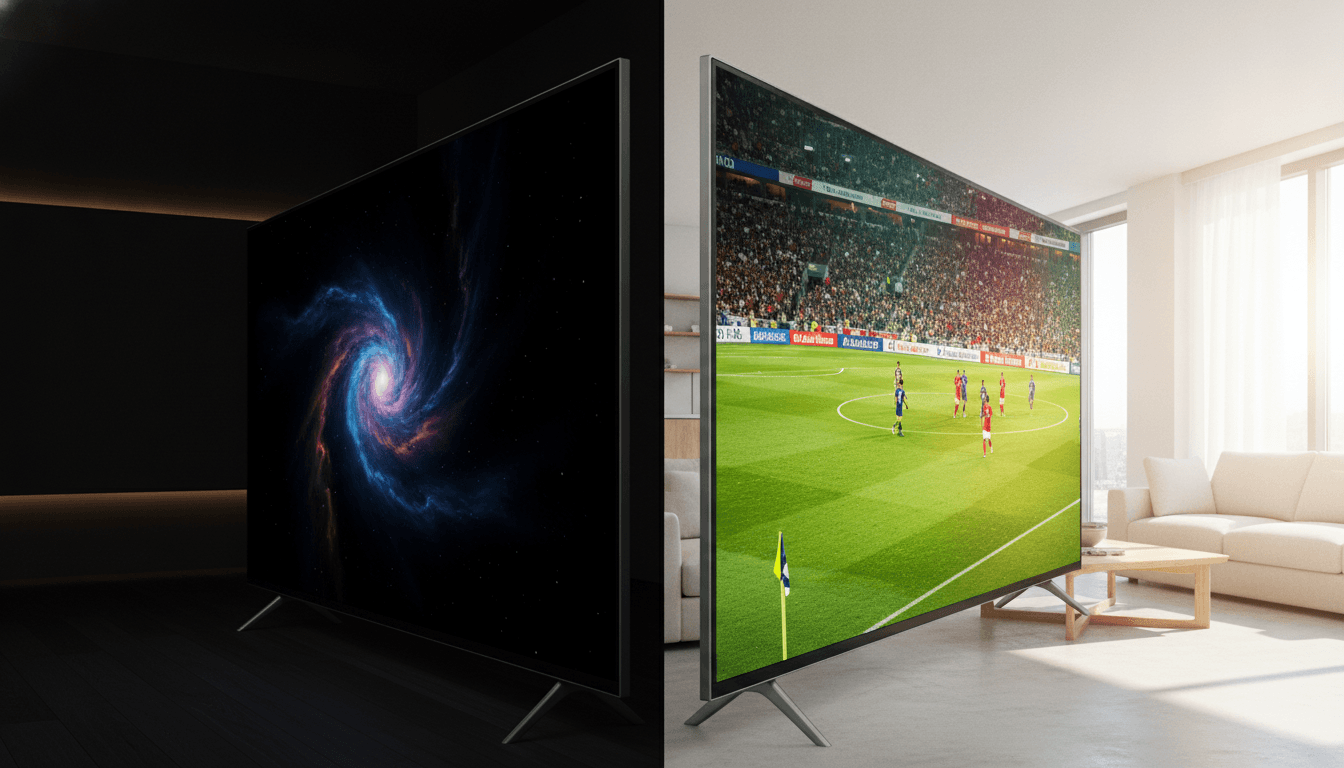
Buying a new TV feels like a vocabulary test. You failed. OLED, QLED, Mini-LED—the acronyms are a dizzying blur, and every single one promises to be the best. But here's the secret: there is no 'best' TV. Not really. The right one for you comes down to where you'll put it, what you watch, and what your wallet can handle. This guide will help you pick a winner.
The whole OLED vs QLED vs Mini-LED fight is about one thing. Light. How a TV creates and manages light defines everything about how it will look in your living room. So let's see what these technologies do—and where they triumph.
OLED: The Cinema Lover's Choice for Perfect Blacks
OLED means Organic Light-Emitting Diode. The magic is in that middle word: 'Emitting.' Unlike other technologies, every single pixel on an OLED screen is its own tiny light source—millions of them. When part of the image needs to be black, those pixels just... switch off. Gone. Completely dark.
That ability to hit true, absolute black is OLED's superpower. It creates what the pros call an 'infinite' contrast ratio, the gap between the most brilliant white and the deepest black the screen can produce. The result is a jaw-droppingly deep, vibrant picture that feels almost three-dimensional, a quality that really sings in a dark room. For a proper movie night, nothing else comes close. And for gamers and sports fans? The pixel response time is nearly instant, meaning motion is incredibly smooth.
Where OLED Falls Short
But they're not flawless. OLEDs have two main weaknesses: peak brightness and the (dreaded) risk of burn-in. Because every pixel has to do its own work with organic compounds, they just can't get as retina-searingly bright as LCD-based TVs that have a massive backlight pushing things along. Modern OLEDs are much better than they used to be—the gap has closed—but the brightest Mini-LEDs still win the brightness war.
And then there's burn-in. Permanent image retention. It's a real thing. Leave a static image on the screen for too long—a channel logo, a news ticker, a video game health bar—and the organic pixels can age unevenly, leaving a ghostly impression behind. Sure, manufacturers have built in all sorts of safety nets like pixel shifting and refresh cycles, and the panels themselves are tougher now. But the risk, however small, is still there. It's something to think about if you watch the same news channel all day.
QLED & Mini-LED: The Bright Room Champions
Okay, this is where it gets a little tricky, because QLED and Mini-LED aren't enemies. They're partners. Most of the best 'QLED' TVs today are actually Mini-LED TVs, too.
First, What Is QLED?
QLED stands for Quantum Dot Light-Emitting Diode. Don't let the name fool you; it's completely different from OLED. At its heart, a QLED TV is a souped-up LCD TV. It uses an LED backlight that shines through a liquid crystal panel. The magic 'Quantum Dot' part is a film packed with tiny semiconductor particles sandwiched in there. When the backlight's blue light hits these dots, they glow with intensely pure reds and greens. This trick creates a wider, more accurate spectrum of colors and much higher brightness than older LCD TVs could ever manage.
Enter Mini-LED: The Backlight Revolution
Mini-LED isn't a new kind of screen. Think of it as a revolutionary upgrade to the backlight that powers QLEDs and other LCDs. An old-school LED TV might have a handful of LEDs lighting the picture. Dozens, maybe. A Mini-LED TV has thousands. Teeny, tiny ones.
Why does this matter? Control. All those tiny LEDs let the TV manage its light with incredible precision across hundreds or even thousands of 'local dimming zones.' It can crank the lights to full blast behind a firework in the night sky while keeping the LEDs for the sky itself completely dim. This is a huge deal. It massively boosts contrast, crushes the annoying 'halo' or 'blooming' effect you see on lesser TVs, and makes HDR content pop with blinding highlights. This is the tech that brought LCDs back into the ring to fight OLED.
The QLED + Mini-LED Advantage
Put these two technologies together and you get today's top-tier LCD TV: a Samsung Neo QLED, a TCL Q-Class, or a powerhouse Hisense U-Series. These things are absolute light cannons. Their sheer brightness makes them the undisputed kings of the sun-drenched living room, cutting through glare like it's not even there. Colors just pop, even in the middle of the day. Plus, they're often cheaper than OLEDs at giant screen sizes, and there is zero risk of burn-in. Ever.
What's the trade-off? Blacks. As good as they are, Mini-LEDs simply can't match the pixel-perfect light control of an OLED. There's always a tiny bit of light bleed, a faint halo in the trickiest high-contrast scenes. It's massively better than it used to be, but it's not perfect. Viewing angles can also be narrower than what you get on an OLED. All this complex lighting control requires serious processing power, and if you're curious about the brains behind the brawn, our guide to the NPU, the AI chip in your next laptop, dives into that world of specialized processors.
Which TV Technology Is Best for You? A Practical Breakdown
So, who wins? Wrong question. The right TV is the one that fits your life. Let's make this simple.
You should buy an OLED if:
- You're a movie nut who watches in the dark. Nothing beats OLED's perfect blacks and insane contrast for that true cinema experience.
- You're a competitive gamer. That lightning-fast pixel response means your motion is buttery smooth. You'll see every detail lurking in the shadows.
- Your couch is long and your friends are many. OLEDs have fantastic viewing angles, so nobody gets a washed-out picture.
You should buy a QLED / Mini-LED if:
- You live in a bright room. The pure power of a Mini-LED backlight slices through glare, keeping the picture bright and punchy all day long.
- You want to go big without going broke. Mini-LED gives you more massive screen for your money, especially at 75 inches and up.
- You leave the news on all day or love long gaming sessions. No burn-in. No worries. Ever.
Here's the good news. You can't really go wrong. The fierce competition between OLED and Mini-LED QLED has pushed TV performance to amazing places. The differences are real, but they're about picking the right tool for the job. Focus on your room, your habits, and your budget, and you'll cut right through the marketing noise to find the perfect screen. And once you've got that beautiful new display, make sure your Wi-Fi can keep up with our guide to Wi-Fi 6 vs. Wi-Fi 7.
Related Articles


This article was produced with AI assistance under human direction, and reviewed and fact-checked by a named editor before publication. How we work.
Frequently asked questions
- What is the main difference between OLED, QLED, and Mini-LED?
- The main difference is how they create light. OLED pixels create their own light, allowing them to turn off completely for perfect black levels. QLED is a type of LCD TV that uses a backlight and a 'quantum dot' film for better color and brightness. Mini-LED is an advanced backlight technology with thousands of tiny LEDs for more precise brightness control, and it's often combined with QLED technology.
- Which TV technology is best for a bright room?
- Mini-LED TVs (which often include QLED technology) are generally the best choice for bright rooms. Their key advantage is superior peak brightness, which allows them to overcome glare from windows and ambient light much more effectively than OLED TVs, ensuring a vibrant and visible picture even during the day.
- Is burn-in still a problem for OLED TVs in 2026?
- Yes, the risk of burn-in still exists for OLED TVs, but it is much lower than in previous years. Manufacturers have implemented advanced protective features, and panel materials are more durable. For most users with varied viewing habits, it's not a major concern. However, for those who display static content like news tickers or game HUDs for many hours daily, a QLED or Mini-LED TV remains a safer choice.
- For gaming, is OLED or QLED/Mini-LED better?
- Both technologies are excellent for gaming, but they cater to different priorities. OLED offers superior contrast for cinematic games and has a near-instant pixel response time for unmatched motion clarity. QLED/Mini-LED TVs offer higher brightness for impactful HDR effects in bright rooms and have zero risk of burn-in from static game interfaces, which is a benefit for marathon gamers.
- Do I need to choose between QLED and Mini-LED?
- Not usually. Today, most premium TVs marketed as 'QLED' from major brands also use Mini-LED backlighting. Mini-LED is the technology that controls the light source with high precision, while QLED is the technology that enhances the color. They work together to create a bright, colorful, and high-contrast image on an LCD panel.
Sources & further reading
Sources
- samsung.com — samsung.com
- oled-info.com — oled-info.com
- ossila.com — ossila.com
- smarthomesounds.co.uk — smarthomesounds.co.uk
- reddit.com — reddit.com