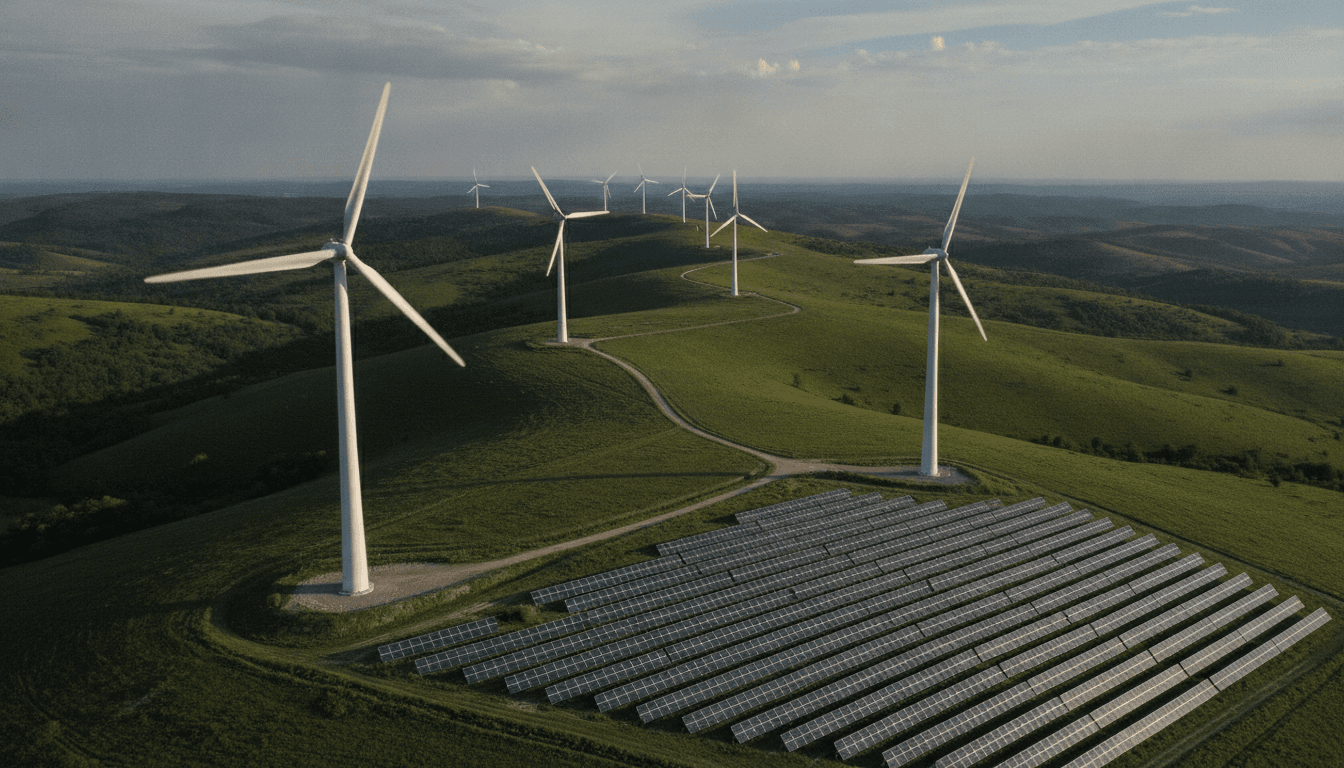
The Quiet Revolution Above Our Heads: How AI Is Transforming Space Science and Satellite Technology
Forget Mars. The real space race is happening right now, hundreds of miles overhead, and it's changing everything from your morning commute to our planet's climate.

The New Space Race Is for Earth
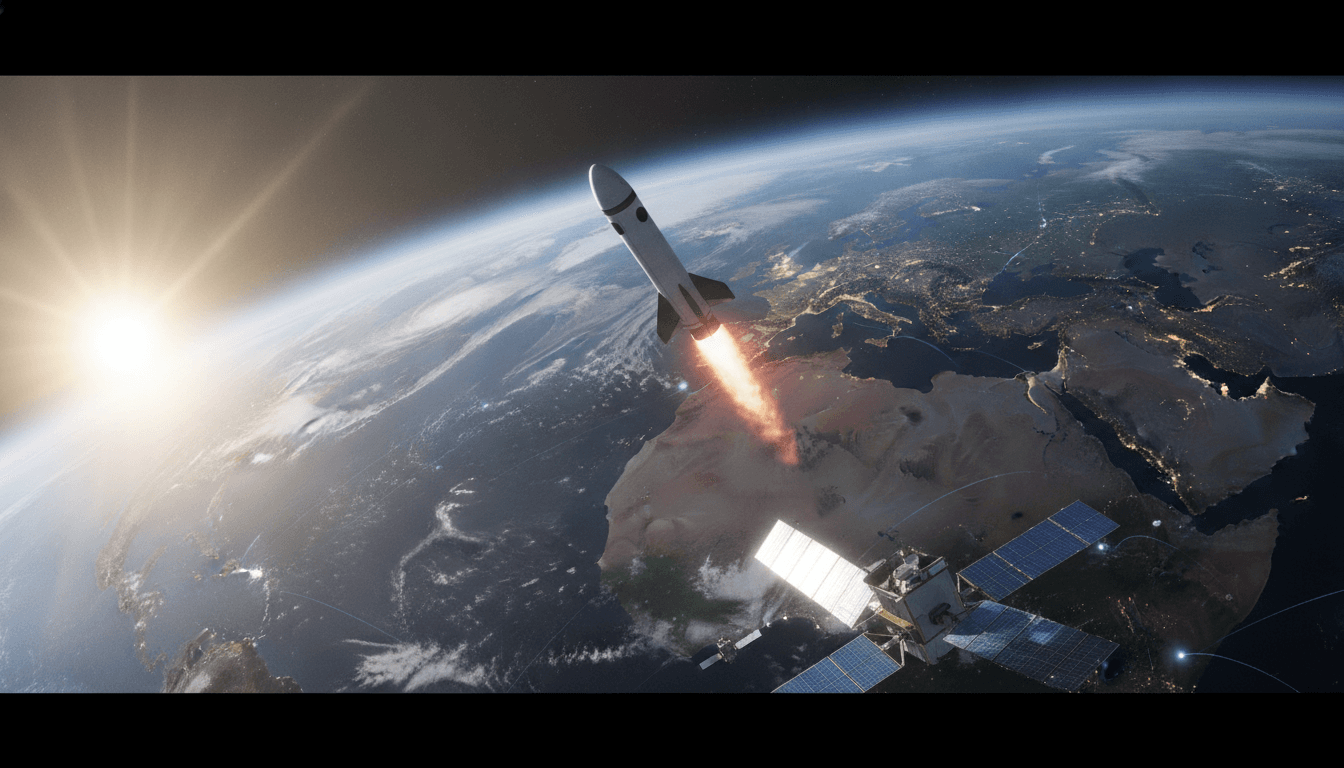
Forget the Moon. Today's most important space race isn’t about planting flags; it's about deploying infrastructure. Hundreds of miles above us, a quiet revolution is unfolding, powered by private cash and relentless innovation. It’s the engine behind your weather forecast. The reason your Uber finds you. A vital tool in the fight against climate change. This isn't science fiction. The real payoff of modern space tech is happening right here, right now, on the ground.
At the heart of it all? Reusable rockets explained. Think of them as delivery trucks for a new space economy. For decades, we treated rockets like disposable packaging. Use once, then burn up or plunge into the sea. An astronomically expensive model. But SpaceX, with its workhorse Falcon 9, blew that model to bits. They designed first-stage boosters that fly themselves back to Earth for a pinpoint landing. Then they get refurbished and launched again. And again. This is more than some nifty engineering trick—it completely rewrites the economics of space. A reusable rocket can slash launch costs by up to 65%, dropping the price of putting a satellite in orbit from hundreds of millions to just tens of millions. That price drop threw the doors to orbit wide open.
Your Life, Powered by Satellites
Cheaper access to space meant one thing: satellites. Lots of them. The impact of satellites and everyday life is now everywhere you look. The global space economy hit $630 billion in 2023. Projections? A staggering $1.8 trillion by 2035, with commercial companies driving nearly 80% of that growth. This isn't your grandfather's space race, dominated by government spy satellites. No. This is the backbone of modern life.
Just look at your phone. That little blue dot on your map? It comes from the Global Positioning System (GPS), a constellation of about 30 satellites zipping around in medium Earth orbit. Remember paper maps and wrong turns? Gone. What does GPS do now? It optimizes UPS delivery routes, powers ride-hailing apps, helps paramedics locate 911 callers, and even enables precision agriculture, letting farmers manage their fields with an accuracy that was once pure fantasy.
And it’s not just about finding your way to brunch. Satellite internet constellations—most famously SpaceX's Starlink—are deploying thousands of small satellites in low-Earth orbit (LEO). Their mission: beam high-speed internet to the rural and remote towns the fiber-optic revolution forgot. And when disaster strikes, wiping out ground communications? These networks become a lifeline for first responders and survivors. A literal one.
An Eye on the Planet
But the most critical space technology impact on Earth might be its role as our planet’s watchdog. From orbit, satellites give us a global, real-time perspective on our changing climate. It's a view we simply can't get from down here. Right now, more than 150 Earth observation satellites are up there tracking key climate variables. It’s essential work. As Jean-Marc Astorg of the French space agency CNES explained, “Climate change can only be monitored with satellites. We have 50 parameters capturing climate change, and 25 are coming from satellites.”
What are these orbital watchdogs seeing? A whole lot.
- They pinpoint greenhouse gas hotspots, right down to individual industrial sites.
- With stunning precision, they monitor the health of polar ice sheets and glaciers—giving us an undeniable measure of sea-level rise.
- They give us early warnings for extreme weather, tracking a hurricane's path and intensity in real time.
- And they watch for deforestation, pollution, and the spread of wildfires, enabling smarter resource management and faster disaster response.
This isn't just academic data. It's ammunition. It's the hard evidence needed to verify emissions pledges and hold nations—and corporations—accountable. But how do we manage this flood of information? The only way is through advanced AI applications. These systems autonomously sift through satellite imagery to find what matters, from the early signs of a wildfire to the health of a single farmer's field.
AI: The Expanding Universe of Intelligence
AI's job doesn't stop at Earth's atmosphere. It's also indispensable for protecting the infrastructure we've put in orbit. Space is junk. Thousands of pieces of debris are hurtling around up there. Specially trained algorithms track it all, predicting potential collisions with active satellites and spacecraft so they can move out of the way. This critical scientific research is the only thing preventing a catastrophic cascade of impacts.
And on the farthest frontiers, AI is completely changing astronomy. Telescopes now generate petabytes of data. Far too much for any team of humans to analyze. So AI does the heavy lifting. It processes that torrent of information, spotting exoplanets, classifying galaxies, and even detecting the faint whisper of gravitational waves. It’s making us smarter about the universe, faster.
The Private Space Industry Explained
Why is all this happening now? Because of a massive shift in who is going to space. NASA isn't the only game in town anymore. Not even close. The field now belongs to a dynamic private space industry explained by one thing: fierce competition fueled by a firehose of venture capital. Between 2020 and 2023, more than $50 billion was poured into private space companies. That cash isn't just funding bigger rockets; it's also funding smaller satellites. Much smaller. The rise of 'SmallSats' and 'CubeSats'—some no bigger than a shoebox—has demolished old development costs and timelines. A satellite that once took a decade and a giant team to build can now be ready in under two years.
The headlines might be filled with billionaire space tourism and grand ambitions for Mars. That's fine. But the real story, the true legacy of this era, is being written much closer to home. Falling costs and rising capabilities have created a powerful feedback loop. Cheaper launches lead to more satellites. More satellites generate more data. That data creates new services and economic opportunities right here on Earth. This is the quiet revolution. It's less about the final frontier and much more about building a better, safer, and more connected world. For us. Right here.
Frequently Asked Questions About AI in Space
Q: How is AI being used in space science?
A: In a huge number of ways. It sifts through massive amounts of telescope imagery, predicts collisions with space debris, spots wildfires from orbit, and generally processes mission data much faster than human scientists ever could.
Q: What role does AI play in satellite operations?
A: It’s becoming central. Onboard AI helps with autonomous navigation and course correction, detects system anomalies before they become critical failures, and performs real-time analysis of the images it captures.
Q: How is AI changing astronomy?
A: It’s like giving every astronomer a super-powered assistant. AI algorithms are finding exoplanets, classifying distant galaxies, and even spotting faint gravitational waves in datasets that are simply too enormous for people to search through manually.
Related Articles



This article was produced with AI assistance under human direction, and reviewed and fact-checked by a named editor before publication. How we work.