The Renewable Energy Revolution: Solar, Batteries, and the Future of Clean Power
Forget the distant dream. Breakthroughs across solar, battery storage, and intelligent grids aren't just incremental steps; they're utterly overhauling how we power our lives, forging a cleaner, more resilient future today.

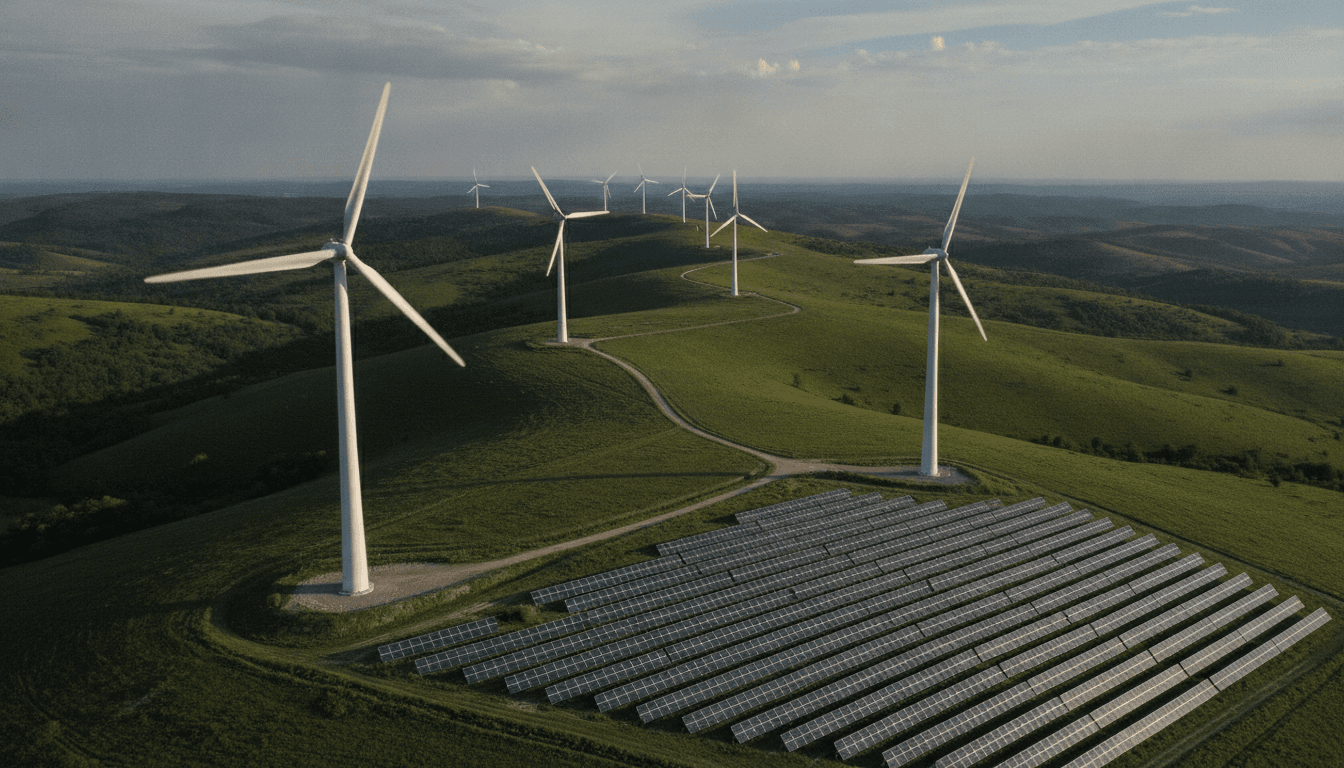
A seismic shift. The world's power grid is undergoing a complete overhaul, right now. Just last year, in 2025, something truly remarkable happened: for the first time since the age of the steam engine, renewable energy sources—primarily solar and wind—officially seized the crown from coal. They generated a stunning 33.8% of global electricity. This isn't merely a statistic on a spreadsheet; it's the culmination of relentless, often unsung, technological breakthroughs. They're rewriting the very rules of energy.
Solar's Staggering Efficiency Gains
Forget everything you thought about solar. Seriously. This isn't some niche, rooftop hobby anymore. The revolution isn't simply more panels, you see. It's better ones. Wildly, unbelievably better. The industry's in a dead sprint, pushing power conversion efficiency, smashing through silicon's old physical limits. Who's leading the charge? Perovskite solar cells, especially when they're paired with silicon in a "tandem" setup. Get this: in April 2025, Chinese manufacturer LONGi logged an NREL-certified world record of 34.85% efficiency for one of these tandem cells. That's a huge deal. It rockets right past the theoretical Shockley-Queisser limit for silicon alone, which maxes out at around 33.7%.
And the records just keep tumbling. Fast. Just last July, in 2026, German scientists from Helmholtz-Zentrum Berlin (HZB) and Humboldt-Universität measured a certified 25.5% efficiency. That was for a different kind of tandem cell, mind you—this one layered perovskite over a copper indium gallium selenide (CIGS) film. Why does this frantic, record-breaking chase even matter? Simple. We can extract more power from smaller footprints. That makes solar viable in almost any locale. And this isn't just some lab daydream. UK-based Oxford PV was already dispatching its 24.5% efficient tandem 72-cell panels to the U.S. for utility-scale projects way back in September 2024. That's real world impact.
Energy Storage Innovation: Batteries Powering Reliability
But here’s the rub: what happens when the sun isn't shining? Or the wind doesn't blow? That’s always been the Achilles' heel for renewables. Intermittency. No storage, and the grid goes wobbly. The solution? Batteries, obviously. And they’ve advanced at a truly staggering clip. Since 2010, the cost of lithium-ion batteries has plummeted a staggering 90%. Think about that. And it isn't stopping there; analysts project yet another 40% price reduction by 2030. That'll finally make massive, grid-scale storage a no-brainer, financially speaking.
You see colossal utility-scale battery projects emerging all over the map. But while lithium-ion grabs most of the headlines, the really juicy developments are unfolding in next-generation chemistry:
- Solid-State Batteries: These ingenious cells ditch the flammable liquid innards of conventional batteries, opting for a solid material instead. The payoff? They're inherently safer, pack more energy density, and promise extended lifespans. This is enormous for urban areas, enabling utilities to deploy substantial high-capacity storage without the fire risks associated with older designs.
- Flow Batteries: Want storage built for the long haul? Flow batteries are your answer. They cleverly decouple their power and energy components, allowing for independent scaling. Companies, Lockheed Martin among them, are championing flow batteries capable of constant charge-discharge cycles for a full two decades. Perfect for soaking up prodigious amounts of renewable power and keeping local microgrids purring along.
The U.S. government, for its part, is absolutely committed. The Department of Energy’s Storage Innovations 2030 (SI 2030) initiative has set an audacious target: cutting the cost of long-duration storage—we're talking ten hours or more—by a whopping 90% before the decade is out.
Smarter Power Grids: The Digital Backbone
Okay, so you’ve got all this groundbreaking solar and battery power. Fantastic. But here’s the practical snag: how do you actually plug it into a power grid essentially engineered a century ago? The blunt truth? You don't. You need a smarter grid. A significantly smarter grid. This is where Artificial Intelligence (AI) and the Internet of Things (IoT) step in. They're transforming our old, one-way power lines into dynamic, two-way superhighways for both electricity and critical data.
Picture it: myriad sensors sprinkled across the entire network act as the grid's eyes and ears. They’re ceaselessly gathering real-time data, covering everything from generation output to granular consumption patterns. AI? That's the brains of the operation. It chews through that data, forecasts demand with startling accuracy, and automatically reroutes power. The goal? To head off blackouts before they even begin. This is about nimble, proactive management, not just scrambling in a crisis.
Microgrids offer a vivid illustration of this intelligence at work. These aren't miniature main grids; they're small, localized energy systems designed to operate independently or connect to the broader network. By deftly integrating local renewables, dedicated energy storage, and sophisticated smart controls, they can keep critical facilities powered up. Even when a major storm knocks out the larger grid. That’s a profound advantage, particularly in an era of increasingly volatile weather.
So, let's be clear: these aren't just minor tweaks or incremental advancements. We're talking hyper-efficient solar. Inexpensive, brawny batteries. Grids that can practically heal themselves. This represents nothing less than a fundamental reordering of how we generate and consume energy. It points unmistakably toward a future that’s both more secure and considerably cleaner. The technology? It's here, make no mistake. The real battle now is simply getting it deployed with enough speed—and, of course, revamping the antiquated wires and substations still clinging to the past.
Frequently Asked Questions
Q: What is the fastest-growing renewable energy source? A: Solar power. Utility-scale solar costs have plummeted over 90% in the last decade, establishing it as the cheapest form of new electricity generation in history across most global regions.
Q: How do batteries solve the intermittency problem with solar and wind power? A: Grid-scale batteries store surplus energy harvested during peak sun or wind periods. They then discharge it precisely when generation dips—guaranteeing reliable, 24/7 clean power delivery, even after sundown.
Q: When will renewable energy replace fossil fuels? A: The IEA projects renewables could furnish 80% or more of global electricity by 2050 under accelerated transition scenarios. However, a full replacement of fossil fuels in heavy industry, shipping, and aviation will still require further technological breakthroughs.
Related Articles



This article was produced with AI assistance under human direction, and reviewed and fact-checked by a named editor before publication. How we work.