Smartwatch Health Tracking: How Your Watch Became a Medical-Grade Monitor
It wasn't one big leap. Not at all. The journey from a simple step-counter to a serious health monitor was a slow burn, turning that gadget on your wrist into a device that's surprisingly powerful.

From Steps to Vitals: The Quiet Revolution
10,000 steps. That single, slightly arbitrary number from the 1960s launched an entire industry. The fitness tracker boom. Remember those early Fitbit devices back in 2007? They were simple clips for your jeans, gamifying your walk. But then, a quiet shift began. The pedometer grew up, morphing into a sophisticated health monitor bristling with sensors that used to be clinic-only hardware.
These days, wearables are more than just a nudge to take the stairs. Much more. They're conduits for constant health awareness.
This wasn't some single, magical breakthrough. It was a steady creep. An evolution. In 2014, the Fitbit Charge HR gave us 24-hour heart rate monitoring, a massive leap beyond just tracking steps. Then 2018 rolled around, and things got serious. Really serious. Apple dropped the Apple Watch Series 4, complete with an FDA-cleared electrocardiogram (ECG) function. Suddenly, the gadget on your wrist was a legitimate health tool.
How Smartwatches Monitor Health
What's the secret sauce? Sensors. A whole lot of them. Today's smartwatches from Apple, Samsung, and Google aren't just telling time; they're jammed with advanced tech giving us an unprecedented look inside our own bodies.
The Heart: More Than Just a Beat
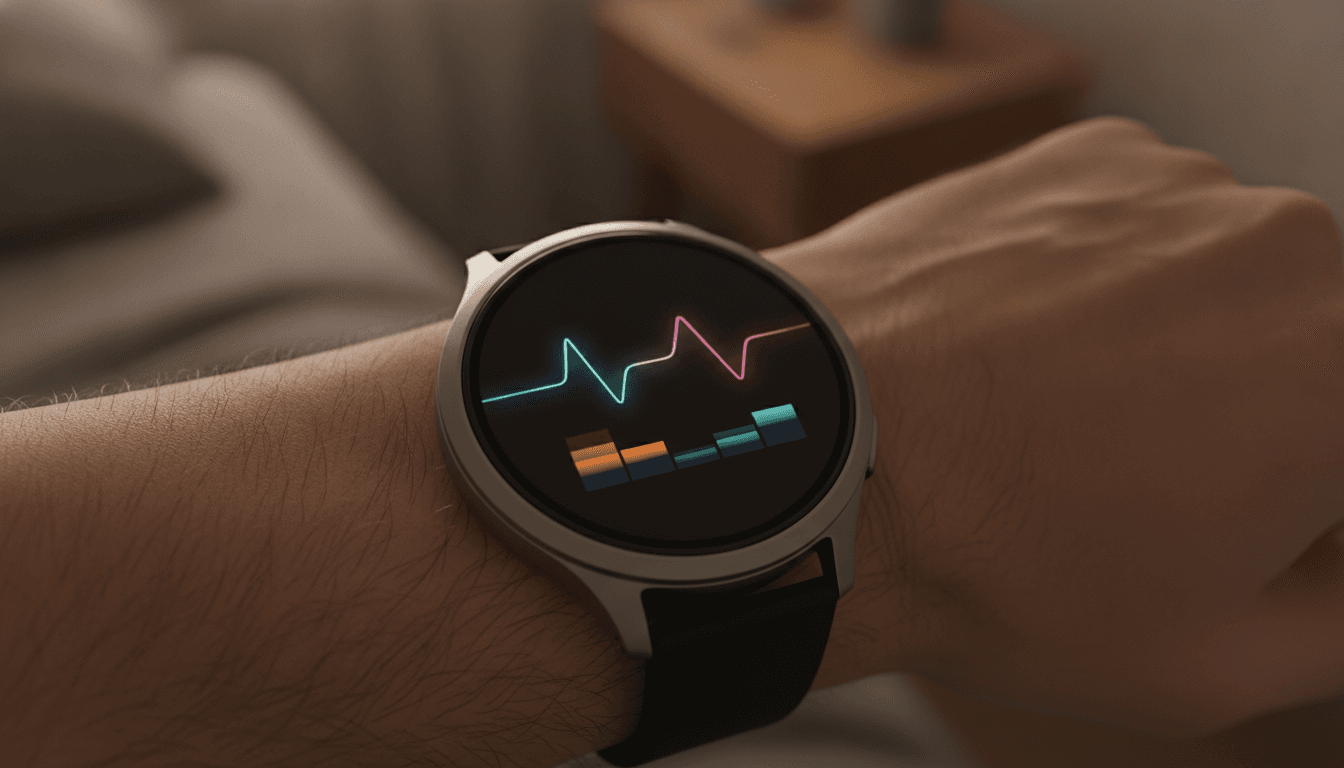
The single-lead ECG is probably the biggest leap. So how does it even work? You just touch the watch's digital crown for 30 seconds. That's it. This simple action completes an electrical circuit through your body, allowing the watch to record the heart's electrical pulses. The software then scans that recording for hints of atrial fibrillation (AFib)—a common irregular heart rhythm that's a major risk factor for stroke. Now, let's be clear: this isn't replacing a 12-lead ECG from the hospital. Not even close. But it's a powerful piece of data you can walk right into your doctor's office with.
Blood Oxygen and Sleep Quality
Next up: blood oxygen saturation, or SpO2. It's standard issue on most wearables now. The watch pulls off a clever trick called reflective photoplethysmography (PPG). It shines red and infrared light onto your wrist and measures what bounces back. Why? Because the very color of your blood changes depending on its oxygen level, a physical fact that algorithms can use to estimate your SpO2 percentage. This data is particularly useful for spotting overnight trends, giving you clues about sleep quality or even potential breathing issues.
And what about sleep tracking? It has gotten ridiculously specific. Gone are the days when your watch just guessed you were asleep because you stopped tossing and turning. Now, it uses a whole cocktail of data—heart rate, heart rate variability (HRV), sometimes even skin temperature—to map out your night in detail: light, deep, and REM sleep.
The Real-World Impact and Its Limits
All this data isn't just for show. It has a real impact. For many, it's about motivation. Pure awareness. Seeing how a late-night pizza torpedoed your sleep score, or watching your resting heart rate spike during a tense meeting—that's powerful information. It empowers you to connect the dots and maybe make a different choice next time. The entire focus can shift from treatment to prevention.
But here's the catch.
You have to be smart about the data.
Even with an FDA nod for certain features like ECG, these aren't medical devices in the classic sense. Not yet, anyway. Their accuracy is improving, but the limitations are very, very real.
"Wearable fitness technology can motivate users to engage in physical activities and adopt healthier lifestyles," notes a Consensus academic review, but also points to "accuracy issues" and the risk of "over-reliance on devices."
Take sleep stage tracking, for instance. It's an educated guess. At best. A real clinical sleep study uses an EEG to measure your brain waves. Your watch? It's just inferring sleep stages from proxy signals—your heart rate, how much you move. The reported accuracy is all over the map, from a dismal 50% to a more respectable 86%, depending entirely on the device and the specific sleep stage it's guessing. It's the same deal with SpO2 readings. They're for spotting wellness trends, not diagnosing conditions, and something as simple as a loose band, movement, or even your skin temperature can throw them way off.
So think of your watch as a powerful tool for awareness. Not a doctor on your wrist. An odd reading is a great reason to call a professional, but it's just one data point in a much bigger picture. What's next on the horizon? Better sensors, almost certainly. Maybe tech that can track biomarkers in sweat or even noninvasive glucose monitoring. As these devices continue to weave themselves into our lives, their greatest gift might just be teaching us to speak the language of our own health a little more fluently.
Frequently Asked Questions
Q: How accurate is smartwatch health tracking?
A: It varies wildly. Step counts? Usually over 95% accurate. Resting heart rate is also quite reliable. But sleep stage tracking is a different story, with accuracy anywhere from 50% to 86%, depending on the watch and what it's measuring.
Q: Can a smartwatch detect a heart attack?
A: Absolutely not. A smartwatch ECG can flag signs of atrial fibrillation (AFib), which is a risk factor for stroke. It cannot detect a heart attack. If you have any cardiac symptoms, you need emergency medical help immediately.
Q: Which smartwatch has the best health features in 2026?
A: The top contenders are the Apple Watch Series 9 (and newer models), the Samsung Galaxy Watch 6, and the Google Pixel Watch 2. They're the leaders, packing in features like FDA-cleared ECG, SpO2 sensors, detailed sleep analysis, and skin temperature tracking.
Related Articles
This article was produced with AI assistance under human direction, and reviewed and fact-checked by a named editor before publication. How we work.