AMD and Cerebras Forge Alliance on 'Helios' to Challenge Nvidia
The two chipmakers are betting that a radical 'disaggregated' design—pairing GPUs with a monster wafer-scale chip—can finally give the market a real alternative to Nvidia's AI stranglehold.
 AI Tech Dialogue Editorial Team6 min read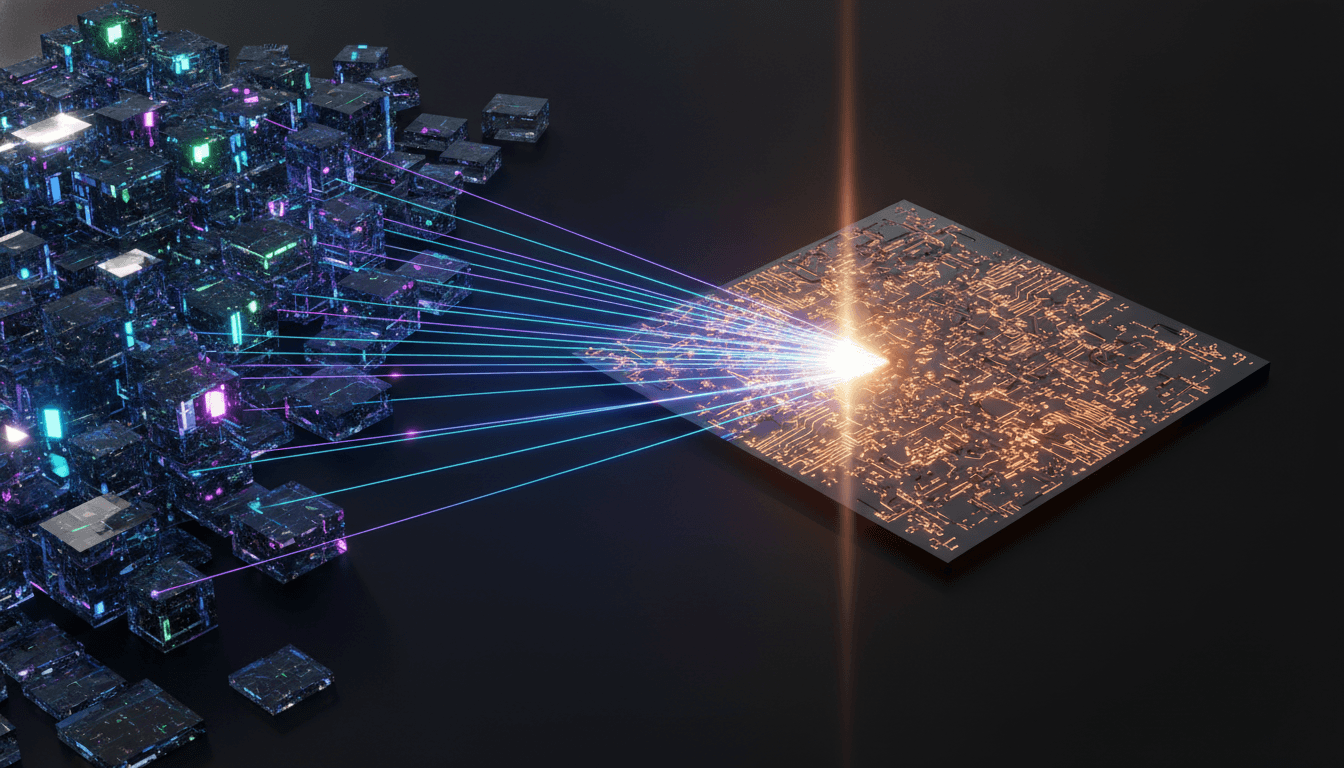
A New Alliance Forms to Topple a King
Nvidia has a target on its back. In a direct challenge to the company's AI empire, AMD just announced a major technical partnership with AI chip startup Cerebras Systems. Their joint effort, unveiled at the Advancing AI 2026 conference in San Francisco, is a new class of AI hardware called Helios, which marries AMD's potent Instinct GPUs with Cerebras's exotic Wafer-Scale Engine. The goal is as simple as it is audacious: build an AI inference system that crushes Nvidia on both speed and cost, and start stealing a market share that some say is as high as 80%.
But this isn't just another competitor tossing a new GPU into the ring. Not even close. It's a ground-up rethinking of how AI workloads get done. The whole idea is to deliver ridiculously low latency for the toughest AI jobs by splitting tasks between the hardware that's actually best suited for them. AMD CEO Dr. Lisa Su put it this way: “AI inference is becoming one of the largest infrastructure opportunities in AI and its growing diversity requires a more flexible approach.” For an industry absolutely starved for options beyond Nvidia's expensive—and frequently backordered—hardware, the AMD Cerebras Helios system is a very big deal.
How 'Disaggregated Inference' Actually Works
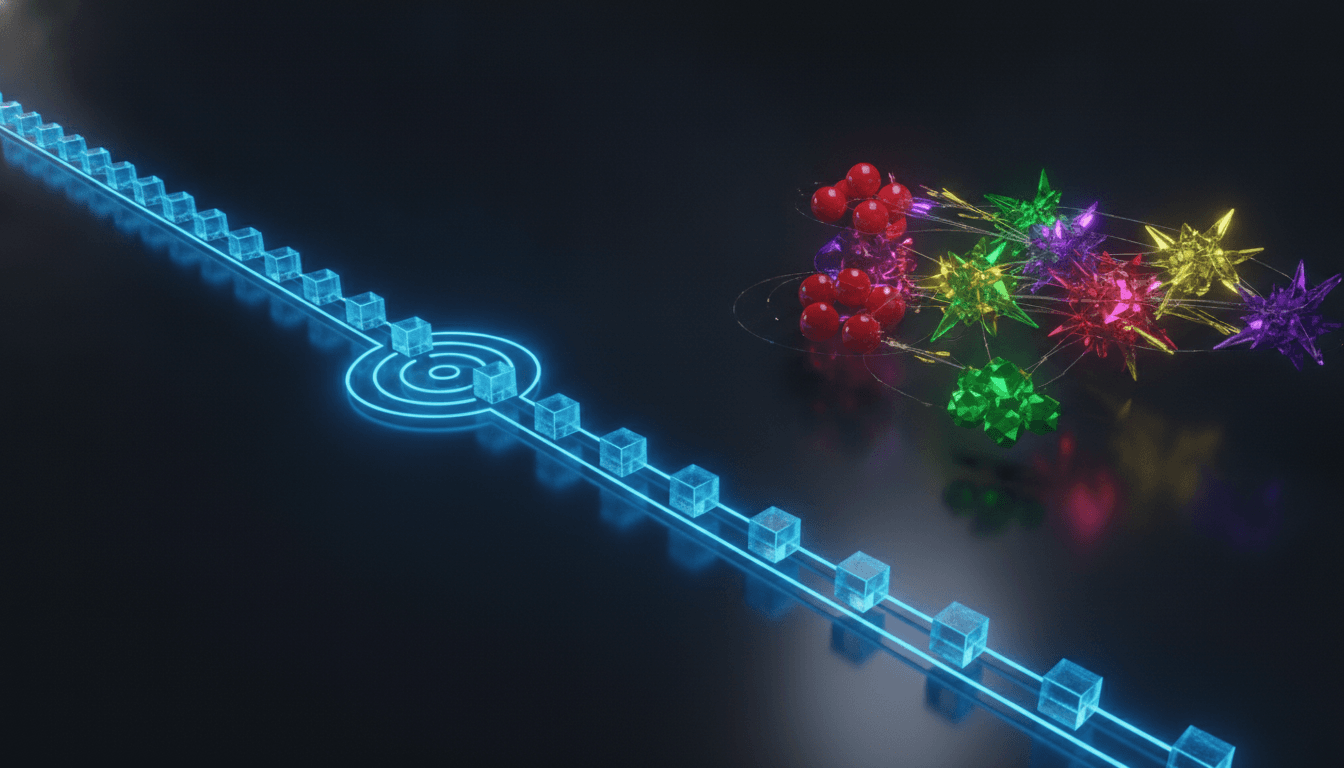
The magic behind the Helios system is a concept called 'disaggregated inference.' Here's how it works. When you ask a large language model a question, two things happen. First comes 'prefill,' where the model gobbles up your prompt—a compute-heavy job that demands massive parallel processing to get its head around a large context. Then comes the 'decode' phase, which spits out the answer one token (think: a word) at a time. This part isn't about raw power; it's all about memory bandwidth. How fast can the system fetch the model's parameters to guess the next word? That's a classic bottleneck.
Most systems use the same GPUs for both jobs. That's just inefficient. It’s like using a sledgehammer to do fine carving. The Helios architecture, however, splits these duties.
- The Prefill Stage: This is handled by AMD's Helios racks, which are packed with powerful AMD Instinct MI300X GPUs, designed for high-throughput parallel computation.
- The Decode Stage: This is where Cerebras's unique hardware shines. The latency-sensitive token generation is offloaded to the Cerebras Wafer-Scale Engine (WSE-3), a single, massive chip the size of an entire silicon wafer.
This specialization avoids the typical one-size-fits-all compromise. It's a critical change, according to Cerebras CEO Andrew Feldman, especially as the industry's demands keep shifting. “The demand for ultra-fast inference is growing at an unprecedented pace,” he said. “Partnering with AMD gives us an incredible opportunity to bring that performance to even more customers.”
The Cerebras Advantage: A Chip Like No Other
To get the Helios strategy, you first have to get the Cerebras WSE-3. It’s an absolute monster. A complete break from traditional chip design. How? Instead of carving a silicon wafer into hundreds of little chips, Cerebras uses the entire 300mm wafer as one giant, monolithic processor. The results are just staggering. The WSE-3 crams 4 trillion transistors and 900,000 AI-optimized cores onto a single slab of silicon. This gives it a colossal on-chip memory bandwidth: 21 petabytes per second. That's thousands of times faster than a normal GPU, and it's precisely what makes the WSE-3 so good at the memory-choked job of generating tokens.
So, the alliance believes it has a winning formula: pair this freakishly fast token-generating engine with AMD's more conventional—but still very powerful—GPUs. The companies' initial modeling looks promising. They suggest the combined system could deliver up to five times higher tokens per second per watt than a Cerebras-only setup. That's the kind of efficiency that makes CFOs and data center architects sit up and take notice, and maybe—just maybe—look for an escape from Nvidia's CUDA-locked ecosystem. It's a huge part of what it takes to build an AI strategy that delivers business value.
A Direct Shot at Nvidia's Throne
Let's be clear about the target here. Nvidia. The company has a near-monopolistic grip on AI hardware, with some analysts putting its inference chip market share at 74% or even higher. Plenty have tried to compete, even cloud giants building their own custom silicon. But Nvidia's powerful hardware, combined with its deeply entrenched CUDA software platform, has created a formidable moat. This new alliance? It might be the most credible threat to that dominance anyone has seen yet.
It's all about the money. AMD's data center chief, Forrest Norrod, isn't shy about the company's focus on total cost of ownership. “We're very focused on providing the best total cost of ownership, the lowest cost per token, all in,” Norrod told CNBC. “And our customers are telling us that we're achieving that.” The Helios system's claimed 30% improvement in performance per dollar is a direct pitch to companies buckling under the economic pressure of scaling their AI infrastructure. And it seems to be working. Customers like Microsoft, Meta, and Oracle are already committing to the platform, giving the challenger real momentum. But this isn't just about chips. It's a skirmish in the larger war over the future of open-source AI, a fight where Nvidia is also a central figure, as the debate over Nvidia, Microsoft & Meta's defense of open-source AI shows.
The joint solution is slated to hit the Cerebras Cloud in the second half of 2026. Will Nvidia's empire crumble overnight? Of course not. But the AMD-Cerebras partnership has fired a powerful warning shot across the bow. For the first time in a long while, customers might finally have a real, competitive, high-performance choice for their biggest AI jobs. The AI hardware race just got interesting again.
Related Articles


Frequently asked questions
- What is the AMD Cerebras Helios system?
- Helios is a new AI inference solution developed through a partnership between AMD and Cerebras. It combines AMD's Instinct GPUs with Cerebras's massive Wafer-Scale Engine in a 'disaggregated' architecture, where each component handles the specific part of the workload it's best suited for, aiming for ultra-low latency and high efficiency.
- How does the Helios system challenge Nvidia?
- The Helios system challenges Nvidia by offering a fundamentally different architecture designed for better performance and cost-efficiency in AI inference. By splitting workloads, it targets lower latency and is projected to offer up to 30% better performance per dollar, providing a competitive alternative to Nvidia's market-dominant hardware.
- What is disaggregated AI inference?
- Disaggregated AI inference is an architecture that separates the two main phases of processing a language model request: 'prefill' (reading the prompt) and 'decode' (generating the answer). Each phase is run on separate, specialized hardware—for example, GPUs for the compute-heavy prefill and a different accelerator for the memory-bound decode—to optimize overall performance and efficiency.
- What is the Cerebras Wafer-Scale Engine?
- The Cerebras Wafer-Scale Engine (WSE) is a unique processor built from an entire silicon wafer, rather than a small diced chip. The latest version, WSE-3, contains 4 trillion transistors and 900,000 AI cores, giving it immense on-chip memory bandwidth. This makes it exceptionally fast at memory-intensive tasks like generating tokens for AI models.
- When will the AMD Cerebras Helios solution be available?
- The joint AMD and Cerebras Helios solution is expected to become available for customers initially through the Cerebras Cloud platform during the second half of 2026. Cerebras plans to deploy AMD's Helios systems within its own data centers to facilitate this offering.
Sources & further reading
Sources
- AMD and Cerebras Announce Industry-Leading Ultra-Low-Latency and High Throughput AI Inference Solution — GlobeNewswire
- AMD & Cerebras Helios AI System Takes on Nvidia — Briefs Finance
- AMD inks deal with AI chip startup Cerebras — Axios
- AMD and Cerebras Launch AI Inference Solution — HPCwire
- amd.com — ir.amd.com