The Best Smartwatches for Health Tracking: An Honest Comparison
Your wrist can tell you a lot about your health. A whole lot. But how much of it can you actually trust? We dig into the top smartwatches from Apple, Garmin, and Samsung to separate the life-saving data from the noise.

The Data-Driven Self: Can You Trust Your Wrist?
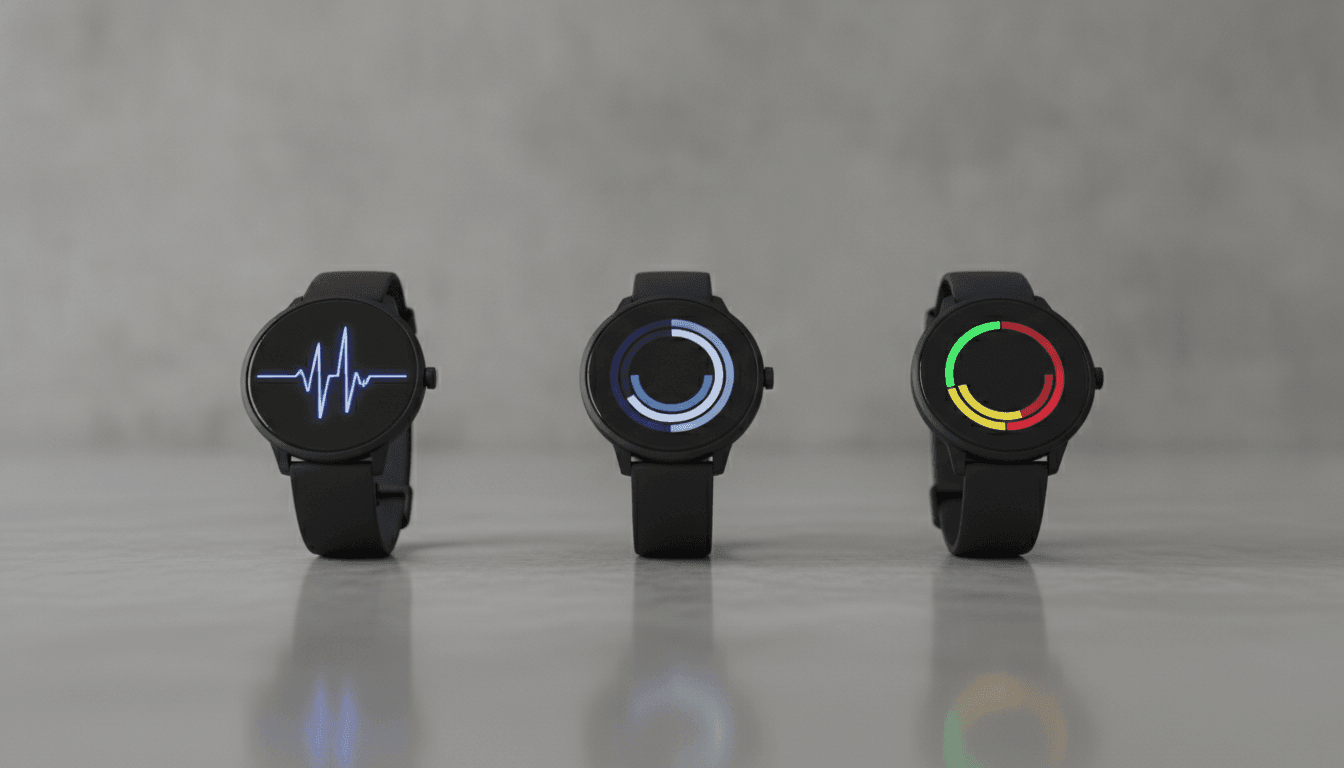
Step counters are ancient history. Today’s top wearables from Apple, Garmin, and Samsung are sophisticated sensor hubs, tracking everything from your heart rate variability to your blood oxygen levels around the clock. They promise big things. We're talking atrial fibrillation (AFib) detection and even sleep apnea risk assessments. But here’s the rub: as these gadgets tiptoe from the world of best smartwatches for health tracking into the medical realm, how good is their data, really?
So how do they work? Mostly, it’s magic with light. A technology called photoplethysmography (PPG) uses optical sensors to shine a light into your skin, measuring changes in blood flow to estimate your heart rate. Pricier models add electrocardiogram (ECG) sensors to read your heart's electrical signals directly. Sounds impressive, right? It is. But it’s not medical-grade. Not even close. Fitbit itself has clarified that its products aren’t meant to compete with scientific instruments. And the data backs that up—studies show these heart monitors can be off by 10-20%, with factors like a loose band, wrist tattoos, or darker skin tones capable of throwing off PPG readings.
A Fitness Tracking Smartwatch Comparison: The Top Contenders
Three companies own this space. Apple, Garmin, and Samsung. Each brings a different philosophy to the table, a unique mix of features and accuracy tied to its own ecosystem. Your best choice depends entirely on what you want to achieve—are you training for a marathon, watching a health condition, or just trying to get a better night’s sleep?
Apple Watch: The Polished All-Rounder
For most people, this is the one. The Apple Watch Series 9 and Ultra 2 are kings of polish, blending a dead-simple interface with some seriously powerful health tech. Apple made waves with its FDA-cleared ECG app for AFib detection way back in 2018, and it's only gotten more serious since, adding clearances for sleep apnea detection (2024) and hypertension notifications (2025). It’s not perfect; some studies suggest its deep sleep tracking lags competitors like Oura, though it’s great at knowing when you’re awake. For iPhone users, nothing else comes close. The catch? The battery. You'll be charging it every day or two, a massive drawback next to its fitness-focused rivals.
Garmin: The Athlete's Data Powerhouse
Then there's Garmin. If you’re a serious athlete or an outdoor fanatic, just buy one. Models like the Forerunner and Fēnix series are built for performance. And the battery life is just absurd—we’re talking weeks, not days. The data they provide is staggering, from VO2 Max and Training Readiness Scores to its Body Battery feature that estimates your daily energy reserves. Sure, its 'smartwatch' features feel a bit clunky next to an Apple Watch, but its GPS is legendary and its health tracking is exhaustive. For endurance and pure training data, nobody else comes close.
Samsung Galaxy Watch: The Android Champion
What about Android users? Your champion is the Samsung Galaxy Watch 6 and its successors. Running a slick version of Google's WearOS, it goes toe-to-toe with Apple, offering an FDA-cleared ECG and irregular rhythm notifications. But Samsung has a major bragging right: in February 2024, it scored the first-ever FDA De Novo authorization for sleep apnea detection on a smartwatch. It also throws in some cool extras like body composition analysis and even blood pressure monitoring (though you have to calibrate it with a real cuff). Battery life is, unfortunately, just as mediocre as Apple's. Still, for the Android faithful, this is the premium pick.
Fitbit & Others: Focused Specialists
Don't count out the specialists. The big three get all the attention, but sometimes a niche device is the better tool. The Fitbit Sense 2, for instance, is fantastic for stress management thanks to its unique 'Body Response' sensor. Want the best sleep and recovery data without a screen? The Oura Ring is the minimalist favorite, with independent studies frequently praising its sleep stage accuracy. And if you want truly accurate heart rate during a hard workout? Forget the wrist. A dedicated chest strap like the Polar H10 is the gold standard, giving you ECG-grade data that optical sensors just can't touch.
Smartwatch Heart Rate Accuracy and Medical Caveats
Let's talk about the single biggest feature in any best health smartwatch: heart rate. At rest, the top watches from Apple, Garmin, and Samsung are impressively accurate—often within a single beat per minute of a real ECG. But start moving hard, and the story can fall apart. During a sprint or a heavy lift, wrist-based optical sensors can suffer from 'cadence lock,' mistaking your steps per minute for your heartbeat, or they just lag behind rapid changes. For serious training, a chest strap wins. Every time.
And what does 'FDA-cleared' even mean? It's not the same as 'FDA-approved.' 'Cleared' just means the FDA agrees a feature is 'substantially equivalent' to something else already on the market. Think of these features as screening tools, not diagnostic machines. An Apple Watch can *flag* a potential issue like AFib; it cannot *diagnose* it. That's a doctor's job. Getting this wrong can lead to a false sense of security from a missed problem or a ton of unnecessary anxiety from a false alarm. It's a consumer wellness device, period. To see where AI is making real inroads in medicine, check out our guide on AI in Healthcare: What It Can and Can't Do Yet.
The future is exciting. Companies are chasing the holy grail: non-invasive blood glucose monitoring and even more incredible sensor tech. But for now, remember what these watches are. They are amazing assistants. They're incredible for seeing trends, motivating you to move, and flagging things that seem off. What they are not is a replacement for your doctor.
Related Articles



This article was produced with AI assistance under human direction, and reviewed and fact-checked by a named editor before publication. How we work.
Frequently asked questions
- What is the most accurate smartwatch for health tracking?
- For all-around health tracking with FDA-cleared features like ECG and irregular rhythm notifications, the latest Apple Watch (for iPhone users) and Samsung Galaxy Watch (for Android users) are top contenders. For serious athletes prioritizing GPS and detailed performance metrics, Garmin watches are often considered the most accurate and reliable. However, for heart rate during intense exercise, a dedicated chest strap monitor like the Polar H10 remains the gold standard.
- Can a smartwatch really detect heart problems?
- Smartwatches with FDA-cleared ECG and irregular rhythm notifications can detect signs suggestive of conditions like atrial fibrillation (AFib). They are powerful screening tools that can alert you to potential issues you might not otherwise notice. However, they are not diagnostic devices. Any alert from your smartwatch should be considered a prompt to consult a healthcare professional for a proper medical evaluation and diagnosis.
- How accurate is smartwatch sleep tracking?
- Modern smartwatches are quite good at tracking sleep duration, typically showing over 95% sensitivity in detecting sleep versus wakefulness. However, their accuracy in differentiating between sleep stages (light, deep, REM) is more variable. Studies show devices like the Oura Ring can be more consistent across all sleep stages, while the Apple Watch excels at detecting awake time but may be less accurate for deep sleep. They are useful for tracking trends but are not a substitute for a clinical sleep study.
- Are health tracking smartwatches worth it?
- For many people, a health tracking smartwatch is a valuable tool for increasing awareness of daily activity, sleep patterns, and heart health trends. They can motivate healthier habits and provide data that can be shared with a doctor. While they are not medical-grade devices, the insights they provide into your overall wellness and potential health irregularities can be well worth the investment, provided you understand their limitations.
Sources & further reading
Sources
- thebettersleepclinic.com — thebettersleepclinic.com
- oxitone.com — blog.oxitone.com
- ecri.org — members.ecri.org
- seniorliving.org — seniorliving.org
- pulsenexa.com — pulsenexa.com
- cls.health — cls.health