Smart Glasses Buyer's Guide: What to Know Before You Buy
They won't give you a sci-fi interface, but today's smart glasses are surprisingly useful for audio, photos, and AI. Here’s the reality check you need before you spend a dollar.

Forget the Holograms. What Can Smart Glasses *Actually* Do Today?
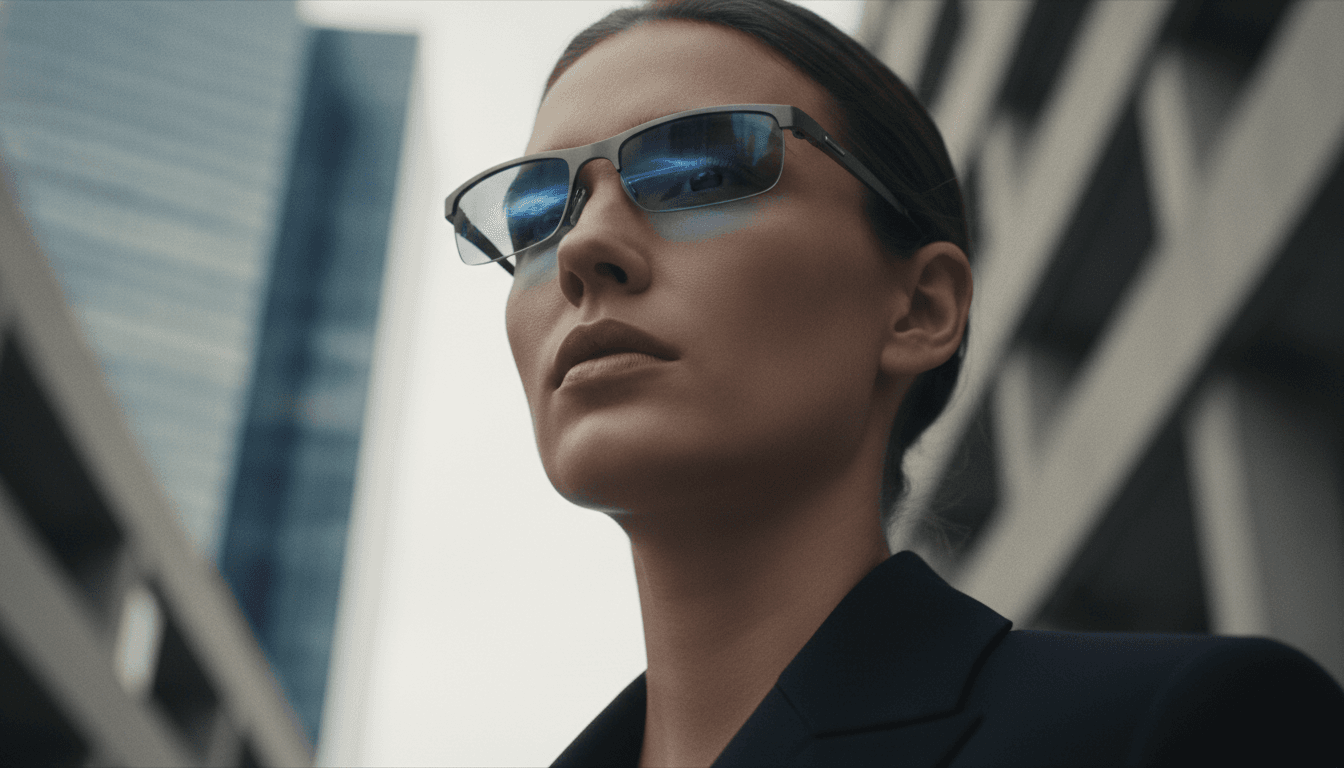
Let's get one thing straight. The smart glasses on sale today are not the augmented reality future from the movies. You won't be swiping through holographic menus. You won't be identifying strangers in a crowd. So what are they? Basically, wearable extensions of your phone, led by devices like the Ray-Ban Meta glasses and Amazon’s Echo Frames. Their real purpose is less about changing what you see and more about freeing up your hands. Internalizing that is the first, most critical step in any smart glasses buying guide.
So, what can they do? Three things. That's it.
First up: audio. They're essentially high-tech headphones without anything in your ears. Discreet open-ear speakers pipe music, podcasts, and calls right to you, but you can still hear the world around you. Next, a camera. With a tap on the frame or a quick voice command, a tiny integrated lens captures photos and videos from your exact point of view. [11] It’s a genuinely new way to record a moment without grabbing your phone. Finally—and this is becoming the main event—an AI voice assistant. [21] You can ask for directions, send texts, get translations, and hear notifications, all without ever pulling out a screen. [25] Think of them as a conversational interface, not a visual one.
Smart Glasses vs. AR Glasses: A Crucial Distinction
People throw around 'smart glasses' and 'AR glasses' like they're the same thing. They're not. Not even close. Getting this distinction right is the most important part of deciding if a pair is right for you.
Smart Glasses are all about ambient computing. [6] Think of them as normal glasses, just with some tech tucked away inside—speakers, mics, a camera, all hidden as much as possible. [11] Their whole point is to feed you audio and let you give commands without using your hands. Take the Ray-Ban Meta or the Oakley Meta HSTN. [33] Style first, tech second. They're built to be worn all day, hooked up wirelessly to your phone.
AR (Augmented Reality) Glasses are a different beast entirely. [4, 5] Their defining feature? A visual display. We're talking devices like the XREAL One or Viture Beast, which use fancy optics—waveguides, micro-OLED projectors—to splash digital information right over your view of reality. [8, 9] Sometimes it’s just a simple notification panel; other times it’s a giant virtual screen for your laptop or PlayStation. [9, 23] All that visual firepower demands more processing and bulkier hardware, which means they're heavier and way more obvious than their audio-first cousins. They aren't for wearing all day. They're tools. [4]
The Hard Truths: Battery Life, Privacy, and Social Acceptability
Beyond the spec sheet, three practical considerations will determine whether smart glasses fit into your life. This is where the hype meets the pavement.
How Long Do The Batteries *Really* Last?
Battery life. It's the Achilles' heel of almost every wearable, and smart glasses are no different. Don't trust the manufacturer claims. [20] Real-world use tells another story. For an audio-focused pair like the Ray-Ban Meta, you're looking at maybe four to six hours of mixed use—a couple of calls, some music, a handful of photos. [9] That's it. And while the Gen 2 models are better, go hard on them and they'll be dead before dinner. [31] The saving grace is the charging case, which works just like one for your wireless earbuds and can give you a few recharges. [20] Of course, some minimalist, screen-free AI glasses from brands like Dymesty claim a wild 48 hours of use, but they do it by stripping out the power-hungry parts. [10]
AR glasses? Even worse. [6] Powering a bright, high-resolution screen absolutely torches the battery, so you’ll be lucky to get two to four hours out of a single charge. That’s enough for a movie on a plane, maybe, but forget about using them for a full workday unless you’re tethered to a power source. For a deeper dive into wearable power management, see our analysis in The Best Smartwatches for Health Tracking: An Honest Comparison.
Are They Socially Awkward? The Privacy Question
The biggest problem with smart glasses isn't the tech. It's people. A camera on your face, no matter how tiny, immediately creates a privacy minefield for you and everyone around you. [1, 13] We’ve been here before. Remember Google Glass and the 'Glasshole' fiasco? [3] That shadow still looms. In 2026, the backlash is real, with some outlets reporting that users are actually hesitant to wear their devices in public. [32] *Engadget* even found some owners who say social pressure has turned their expensive gadget into little more than a 'fancy paper weight.' [32] Ouch.
Sure, manufacturers put a tiny LED on the front that lights up when you record. [15] But is that enough? Critics say no—it’s too subtle to be a real warning. [30] It all boils down to consent. People just don't want to be recorded without being asked, and that creates a very real social tension. [1] The problem is serious enough that, as reported by Futurism, misuse has earned them the ugly moniker 'pervert glasses,' creating a massive stigma. [32] So ask yourself: are you really prepared to deal with all that social baggage?
So, Are Smart Glasses Worth It in 2026?
So what's the verdict? Are they worth it? It completely depends on what you want them for. If you're dreaming of a device that will paint your world with digital overlays, stop. The answer is a hard no. That tech lives in the world of bulky, pricey AR glasses, and it’s nowhere near ready for prime time. You’re better off waiting or just putting that money toward The Best Smartphone for Your Money in 2026.
But what if you think of them as a hands-free accessory for specific tasks? Then we’re talking. [18, 26] They can be incredibly useful. Content creators can get that authentic, first-person footage that’s impossible otherwise. A busy professional can take calls and handle messages without ever reaching for their phone—a genuine convenience. For the tech-curious, just talking to an AI assistant offers a peek at what's next. Just remember, the best smart glasses features right now are all about your ears and your voice, not your eyes. [14]
Make no mistake, the market is heating up. A 2025 report showed the Extended Reality (XR) market exploded by 41.6% in one year, and smart glasses were almost entirely responsible for that jump. [9] All the heavy hitters—Meta, Google, Samsung, and Apple—are pouring money into this space, so the tech is evolving fast. [9] So yes, for early adopters who get what these things are (and what they aren't), today's smart glasses are a genuinely useful, compelling gadget. Just check your sci-fi fantasies at the door.
Related Articles



This article was produced with AI assistance under human direction, and reviewed and fact-checked by a named editor before publication. How we work.
Frequently asked questions
- What's the main difference between smart glasses and AR glasses?
- Smart glasses are primarily audio-first devices that act as a hands-free extension of your smartphone for things like calls, music, photos, and AI assistance. AR (Augmented Reality) glasses are defined by a visual display that overlays digital information, like a virtual screen or 3D models, onto your real-world view. Smart glasses look like normal eyewear, while AR glasses are typically bulkier.
- How long do smart glasses batteries really last?
- Battery life varies significantly. Audio-focused smart glasses like the Ray-Ban Meta typically last 4-6 hours with mixed use, relying on a portable charging case for all-day power. AR glasses that have to power a visual display have a much shorter battery life, often just 2-4 hours of continuous use, making them less practical for all-day wear without a connected power source.
- Are people accepting of smart glasses in public?
- Social acceptance is a major challenge. Many people have significant privacy concerns about being recorded without their knowledge, leading to social friction and stigma. The term 'Glasshole' from the Google Glass era persists, and some users report feeling uncomfortable wearing camera-equipped glasses in public. This social hurdle is one of the biggest practical considerations before buying.
- Can I get smart glasses with my prescription?
- Yes, many of the most popular smart glasses, including the Ray-Ban Meta and Amazon Echo Frames, are available with prescription lenses. You can typically order them through the manufacturer or partnered lens providers. This allows you to combine your everyday corrective eyewear with smart functionality, which is a crucial factor for widespread adoption.